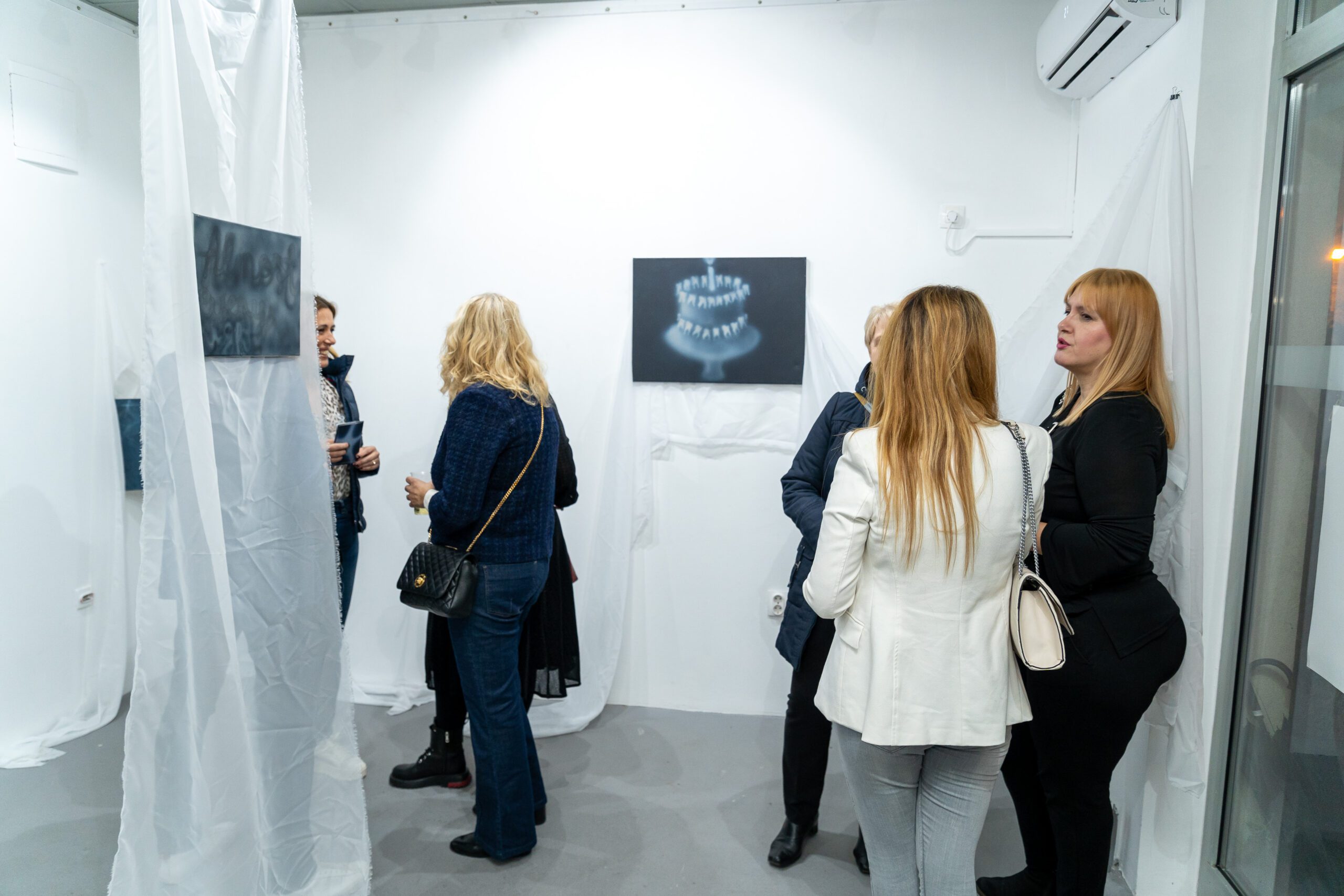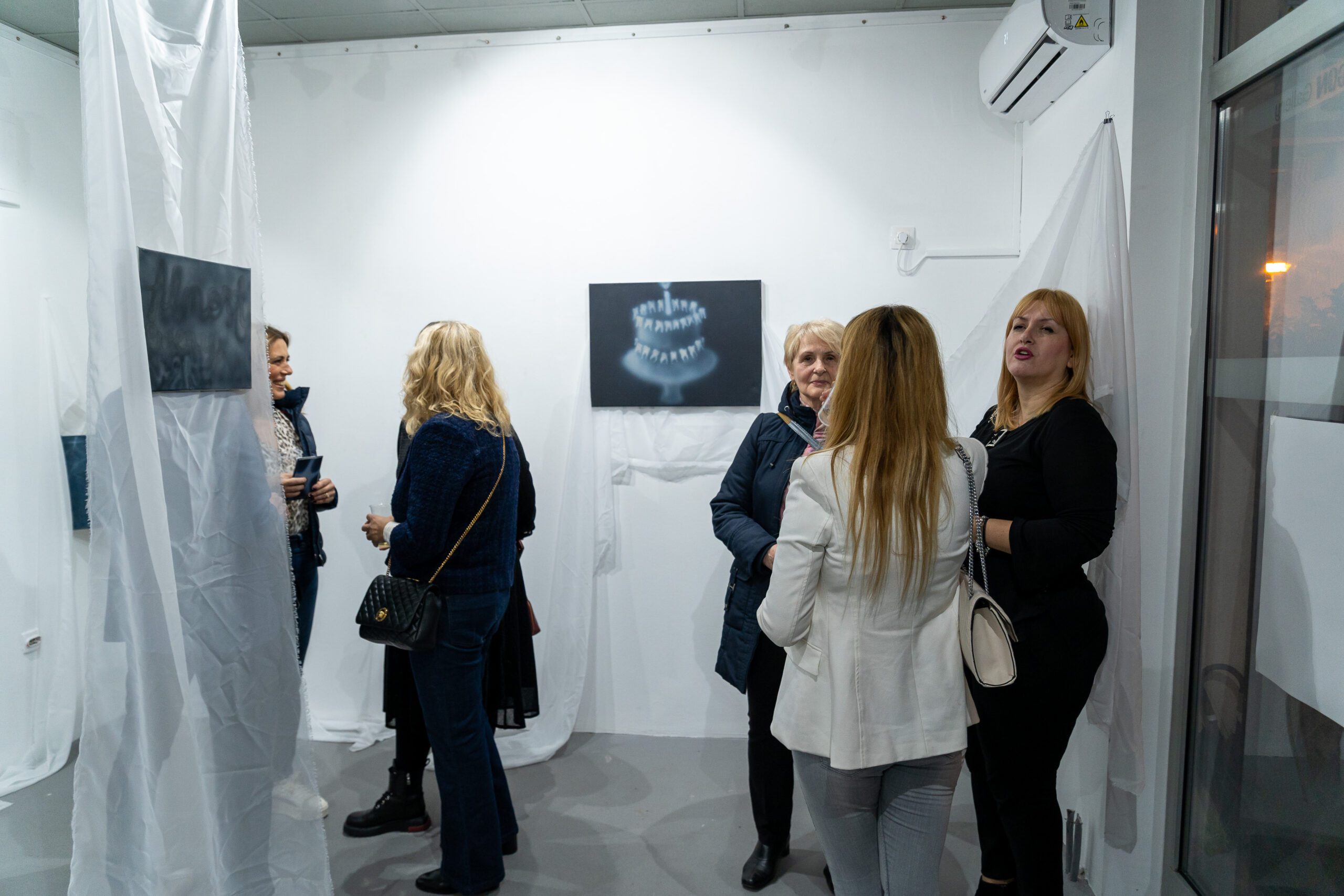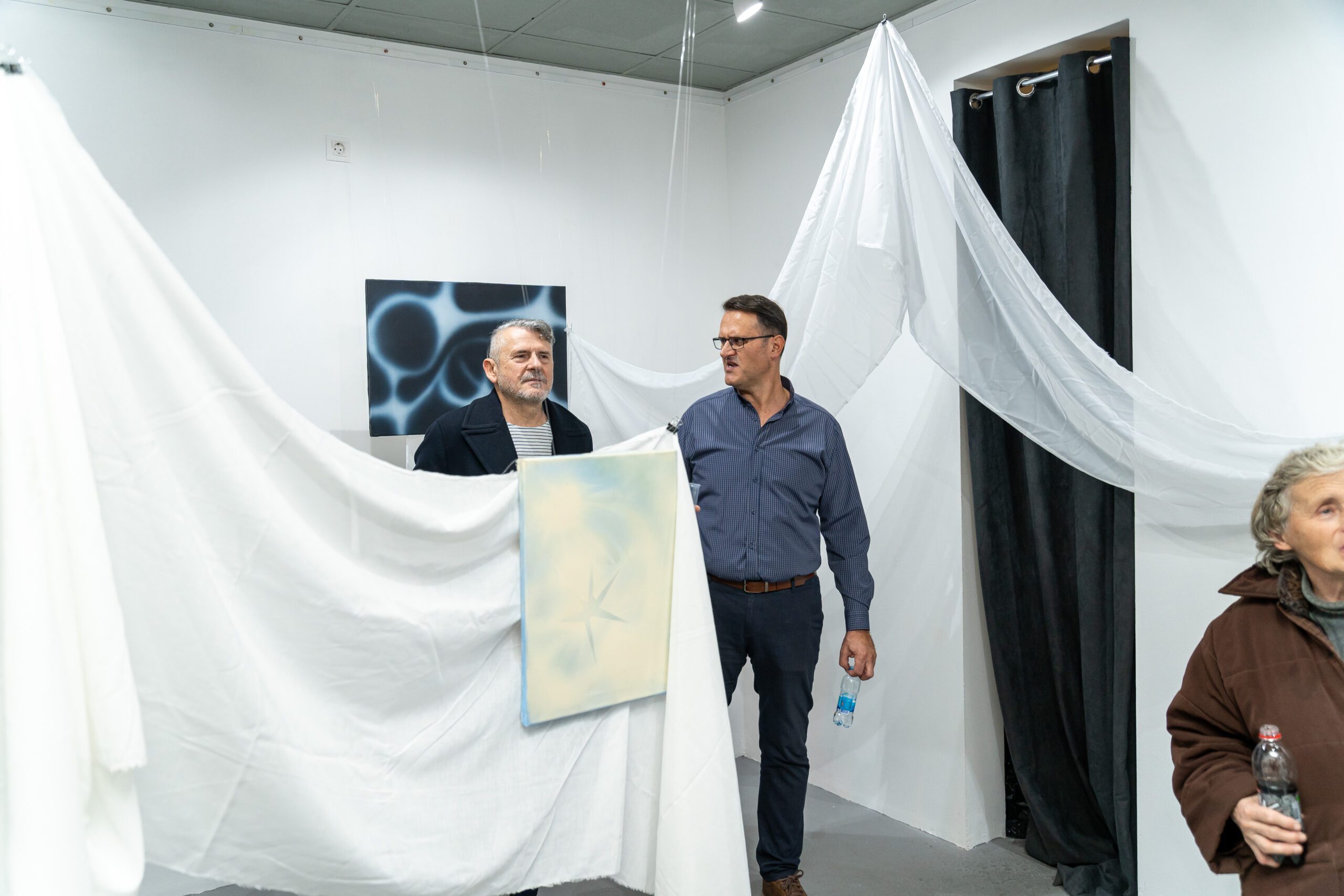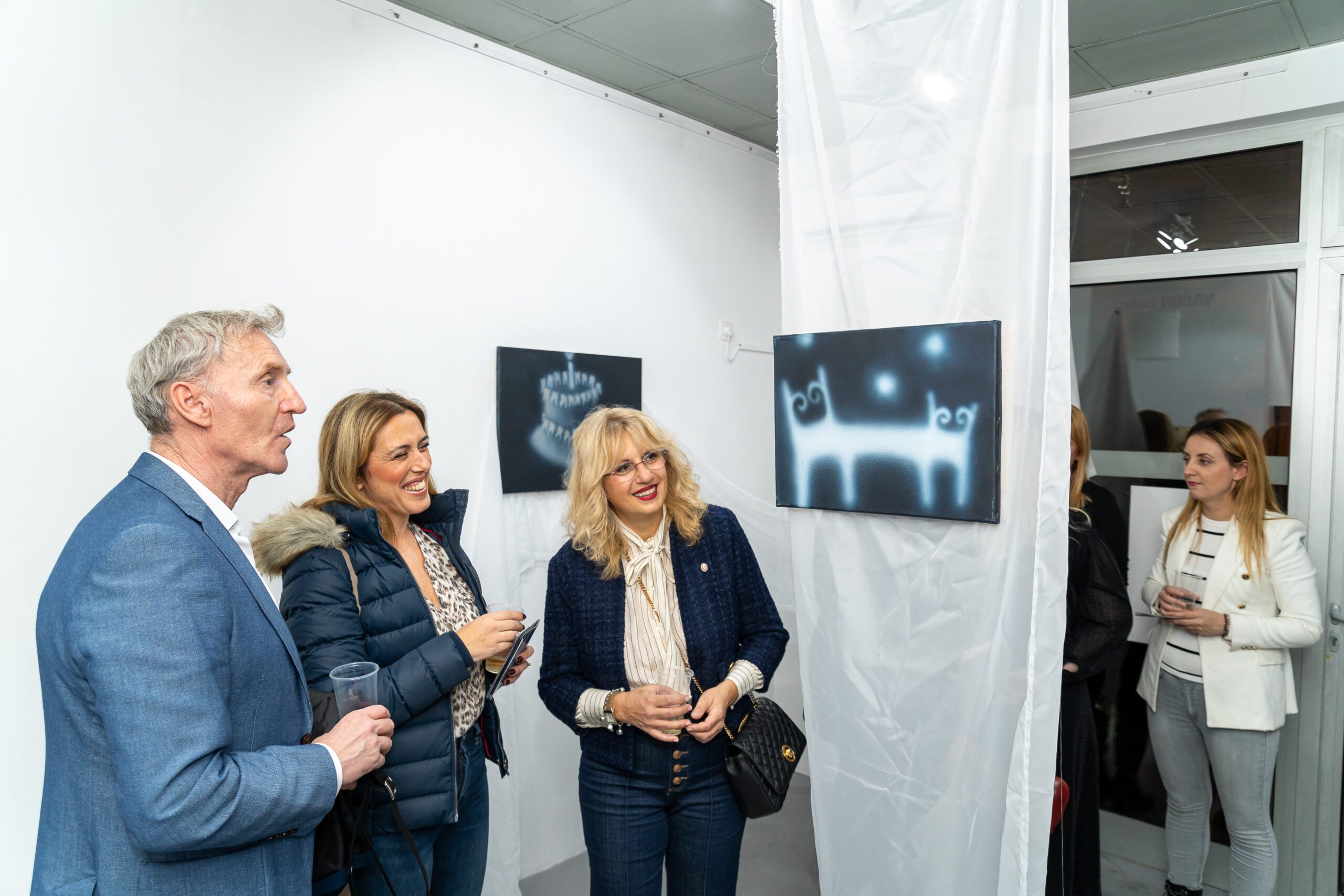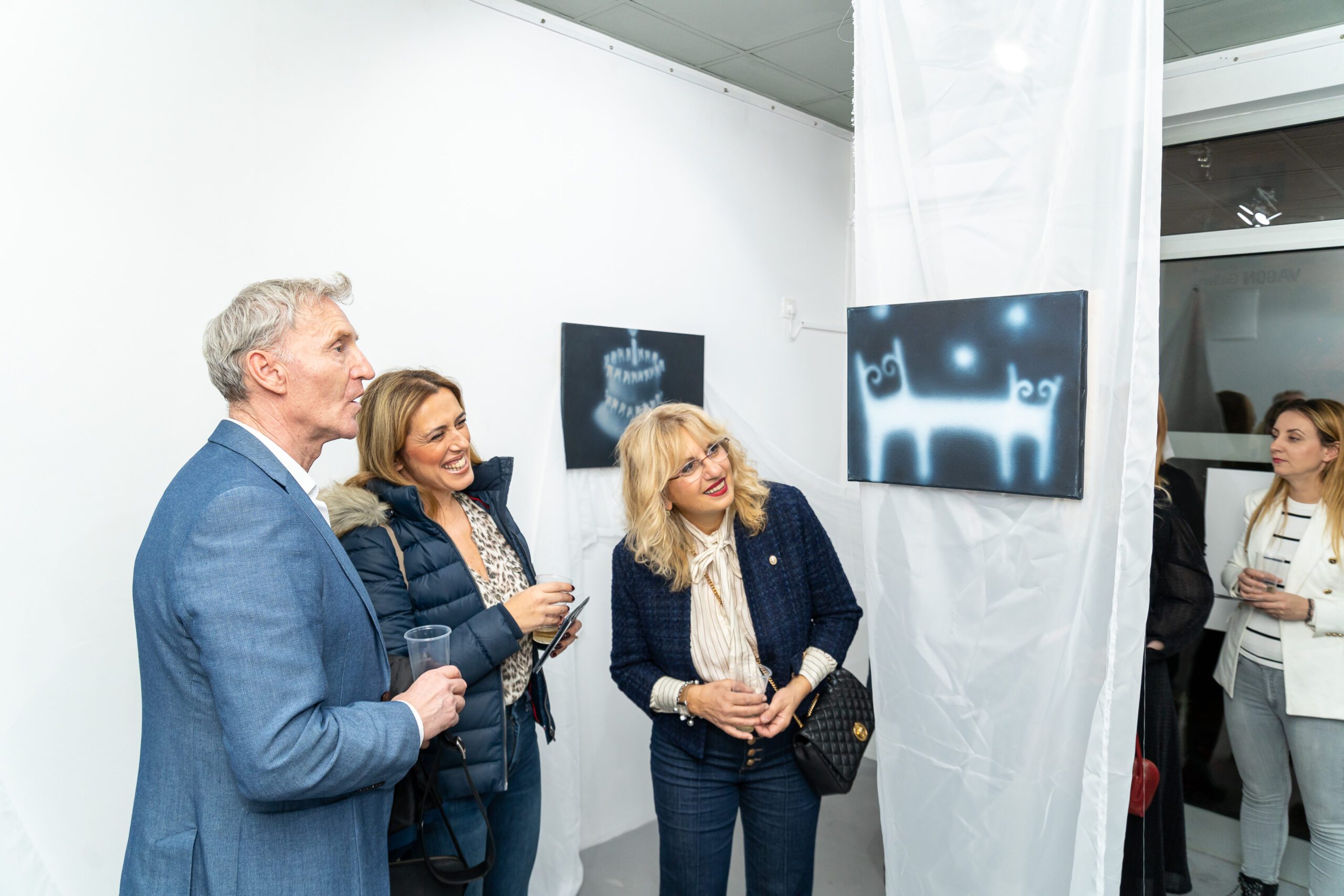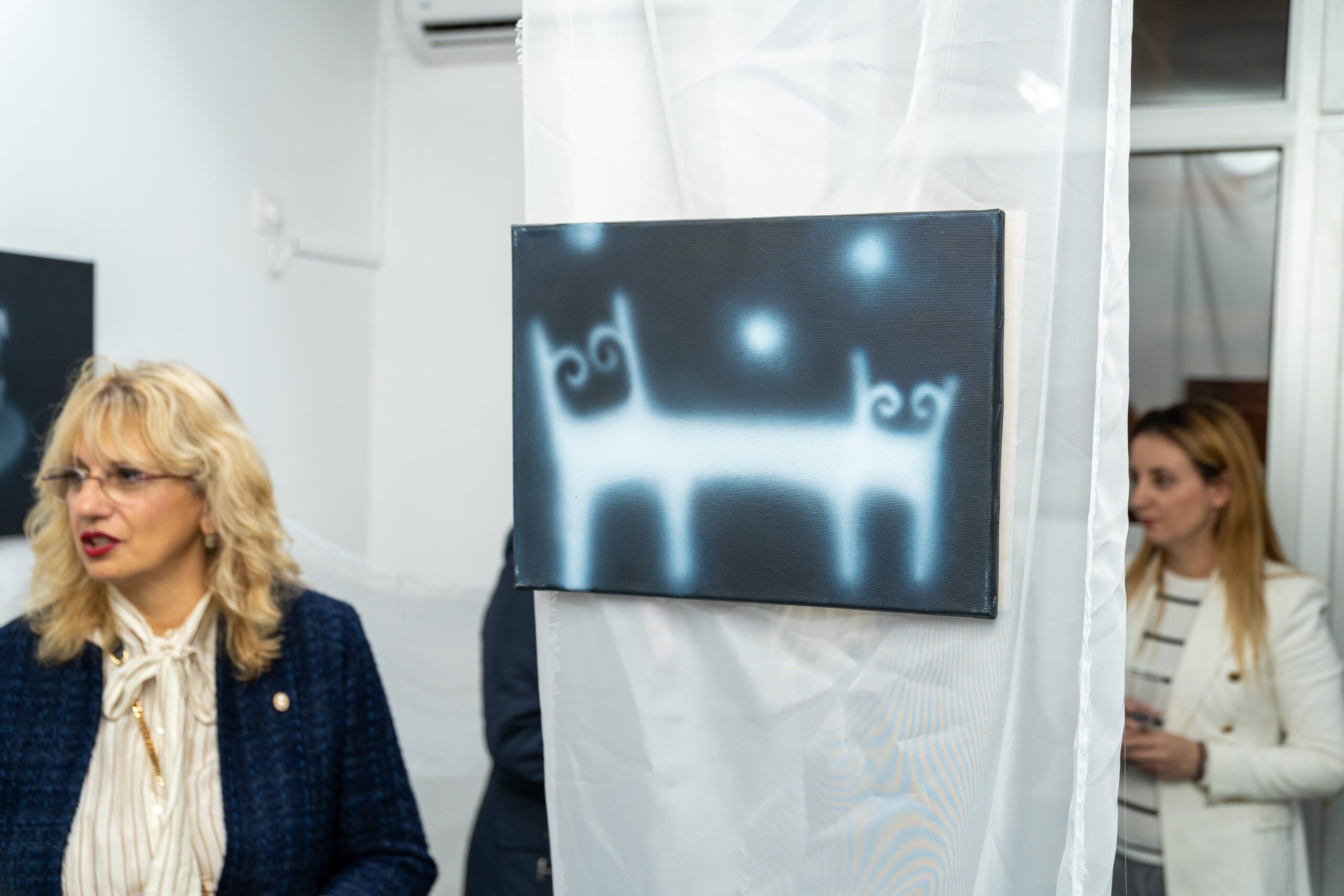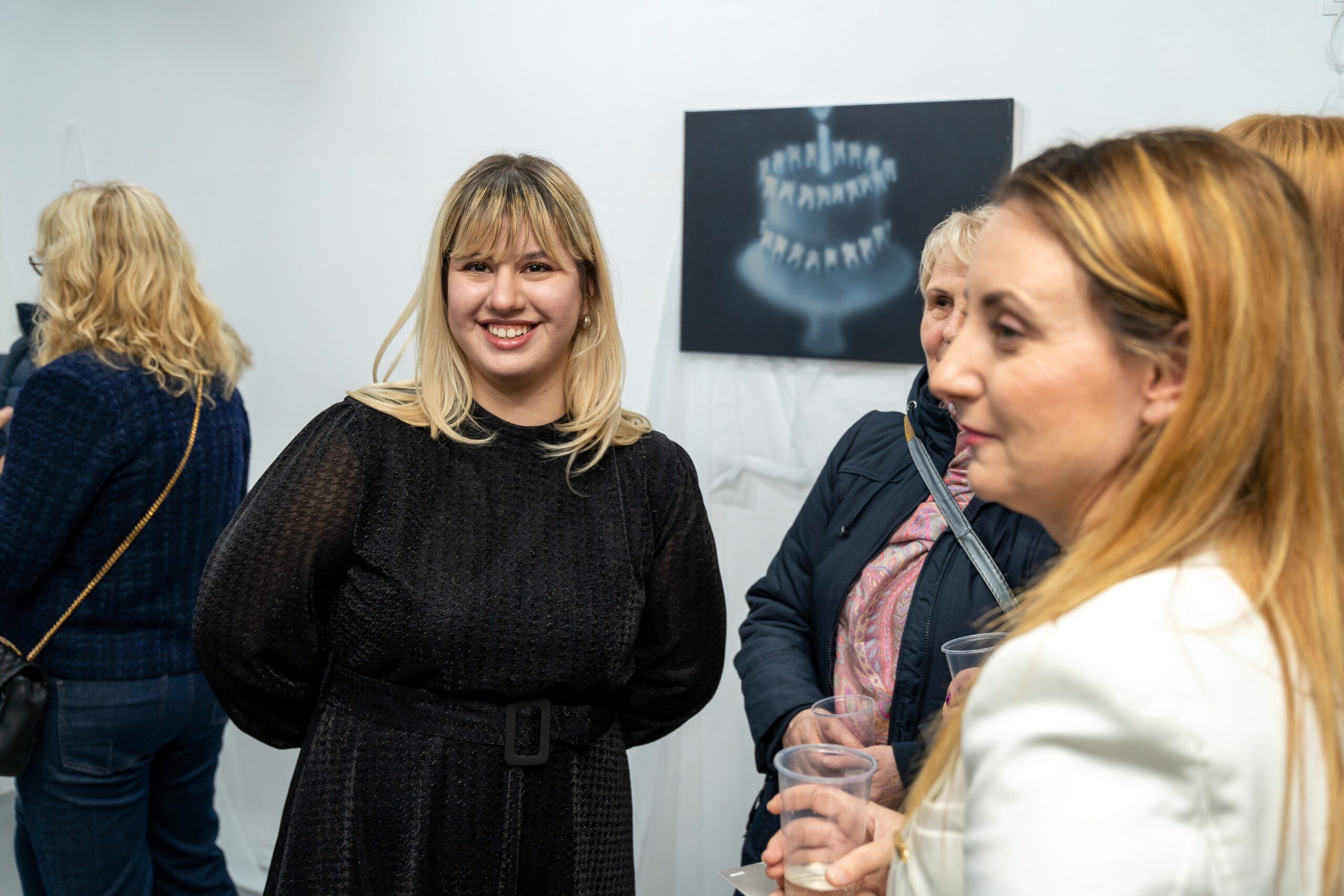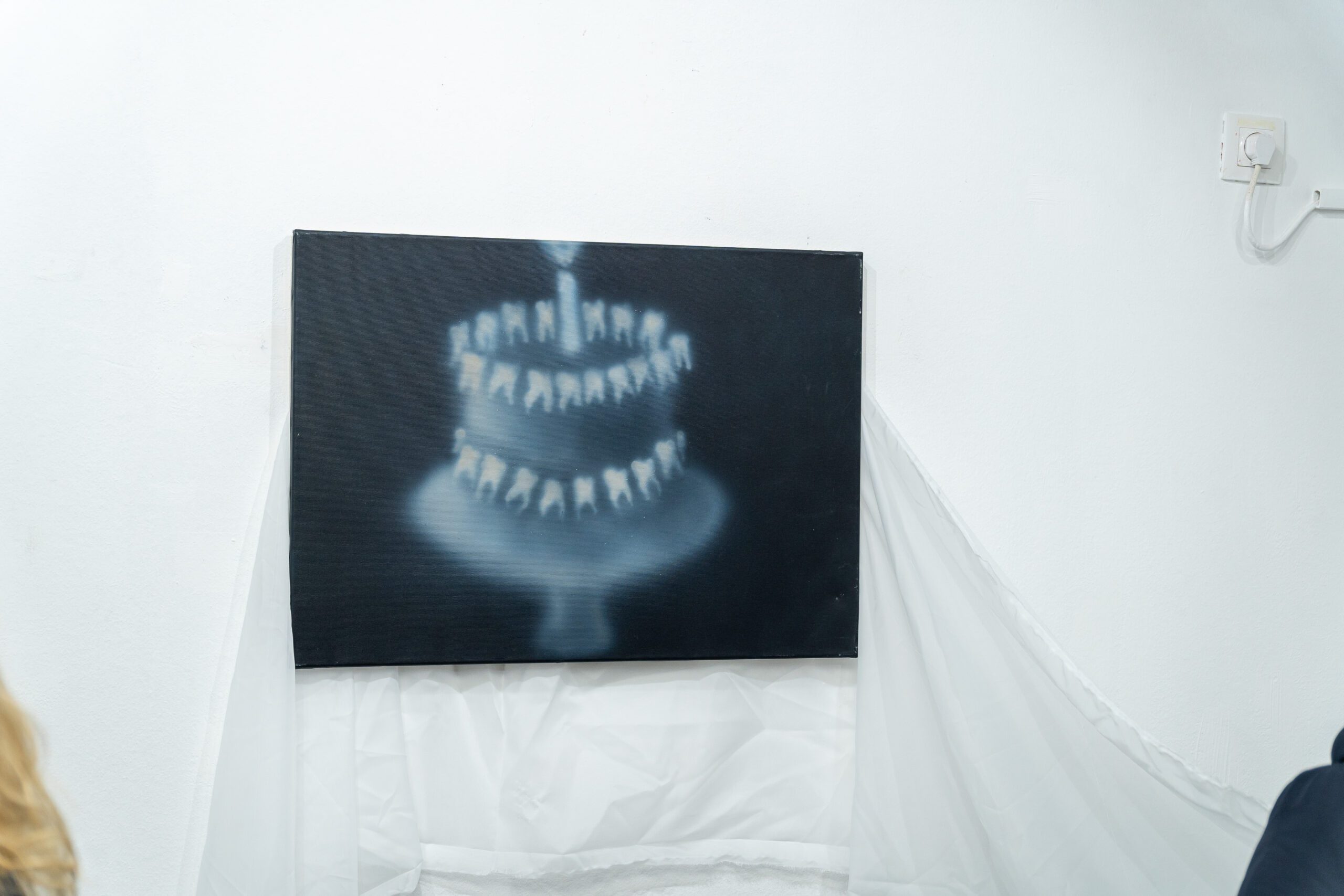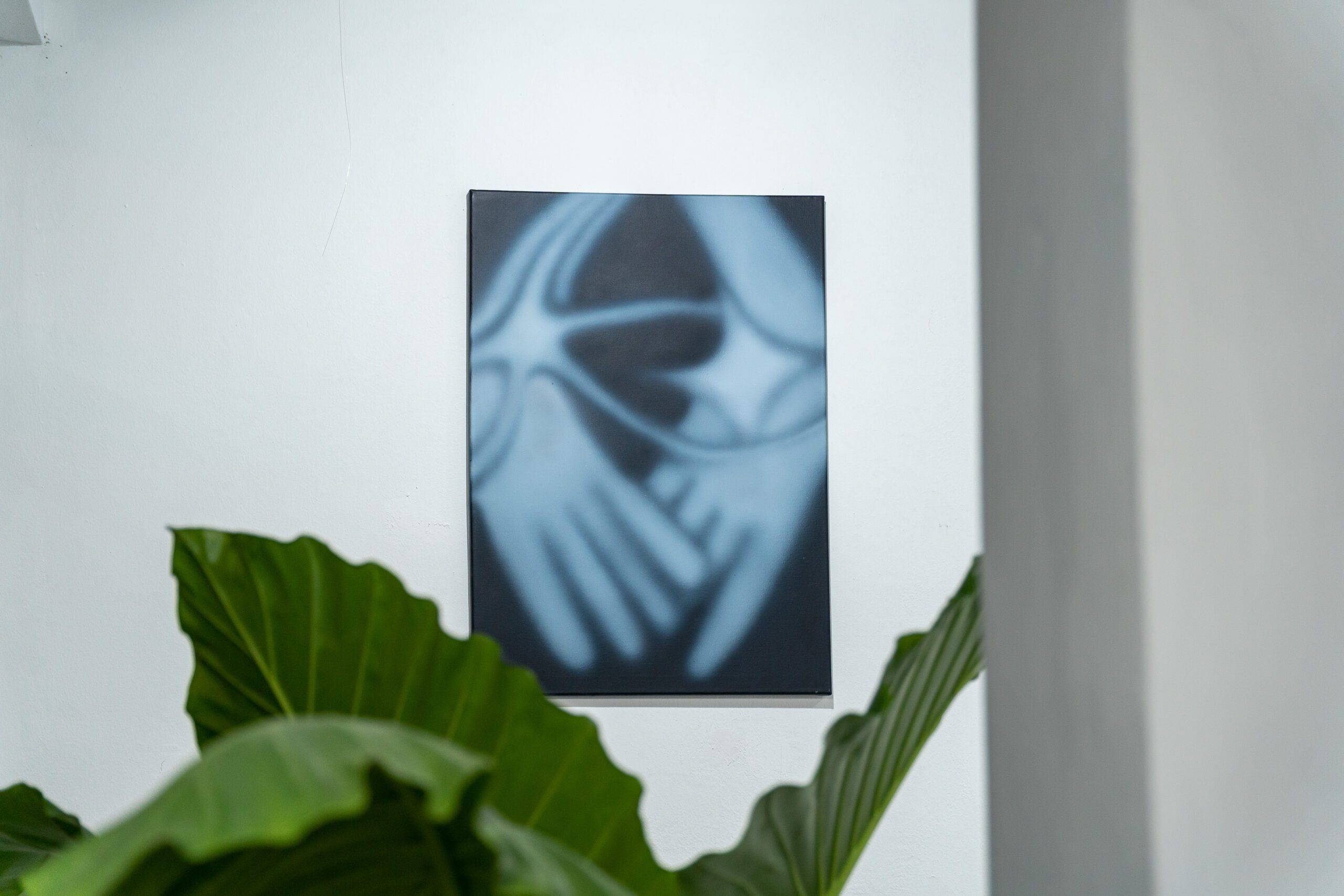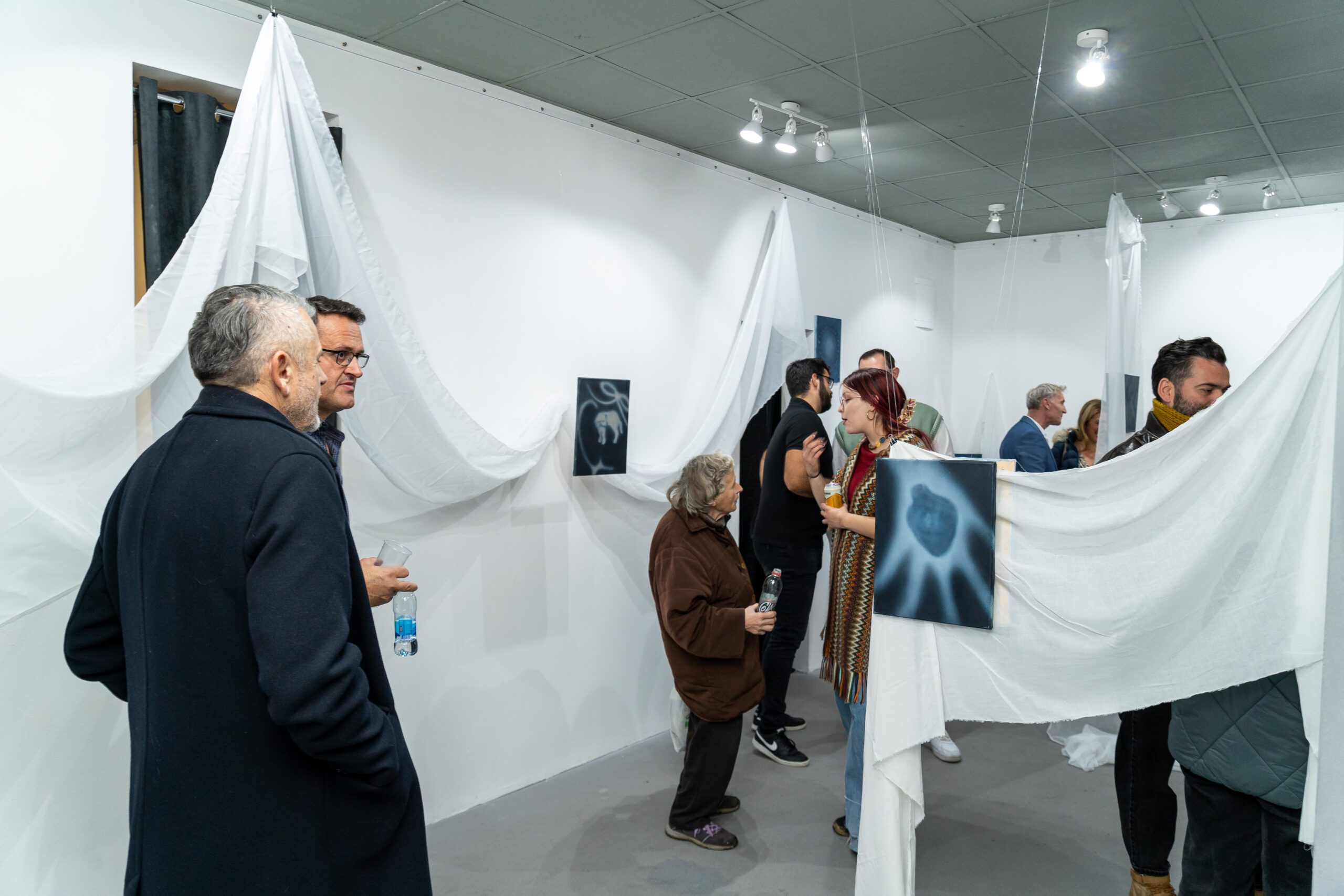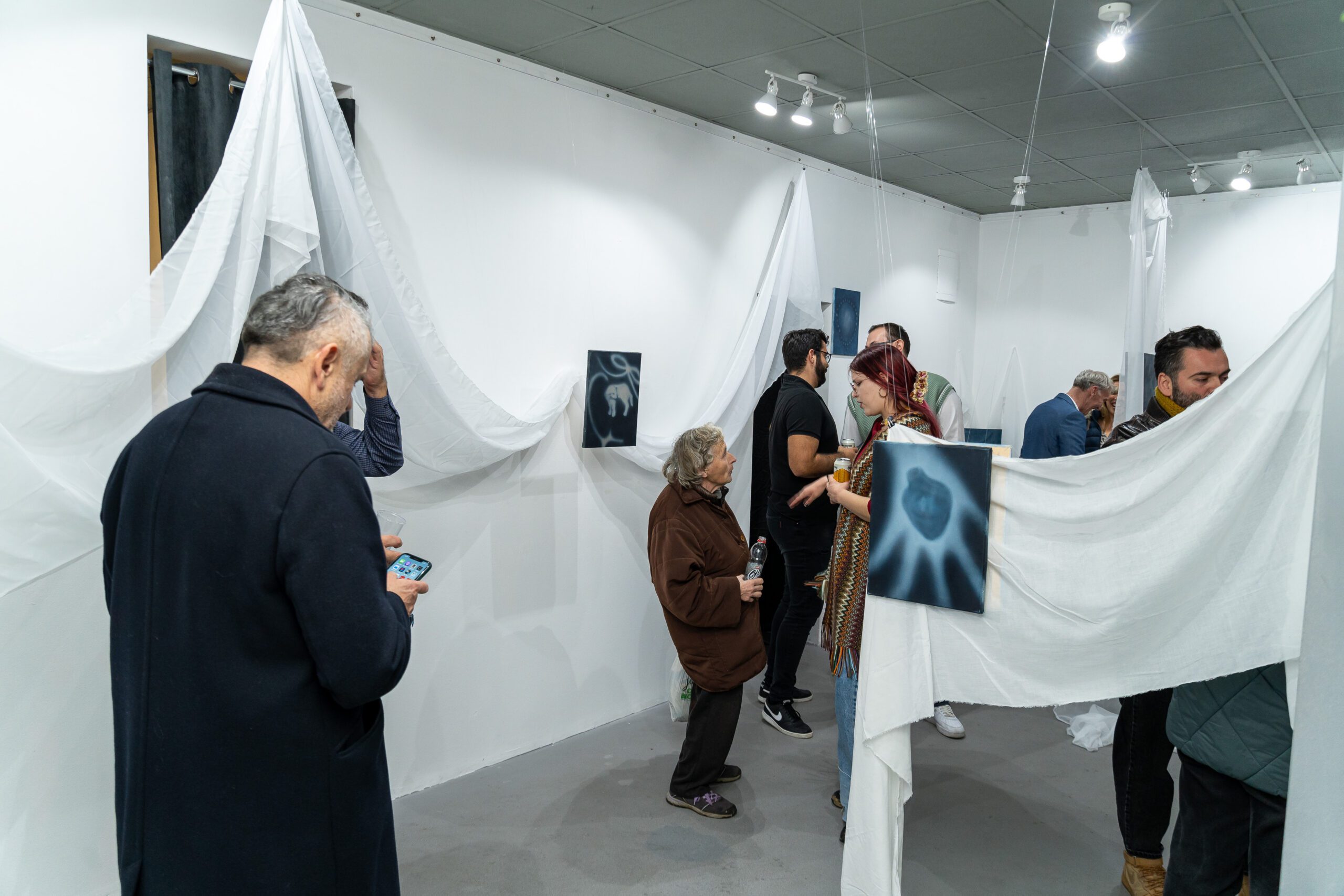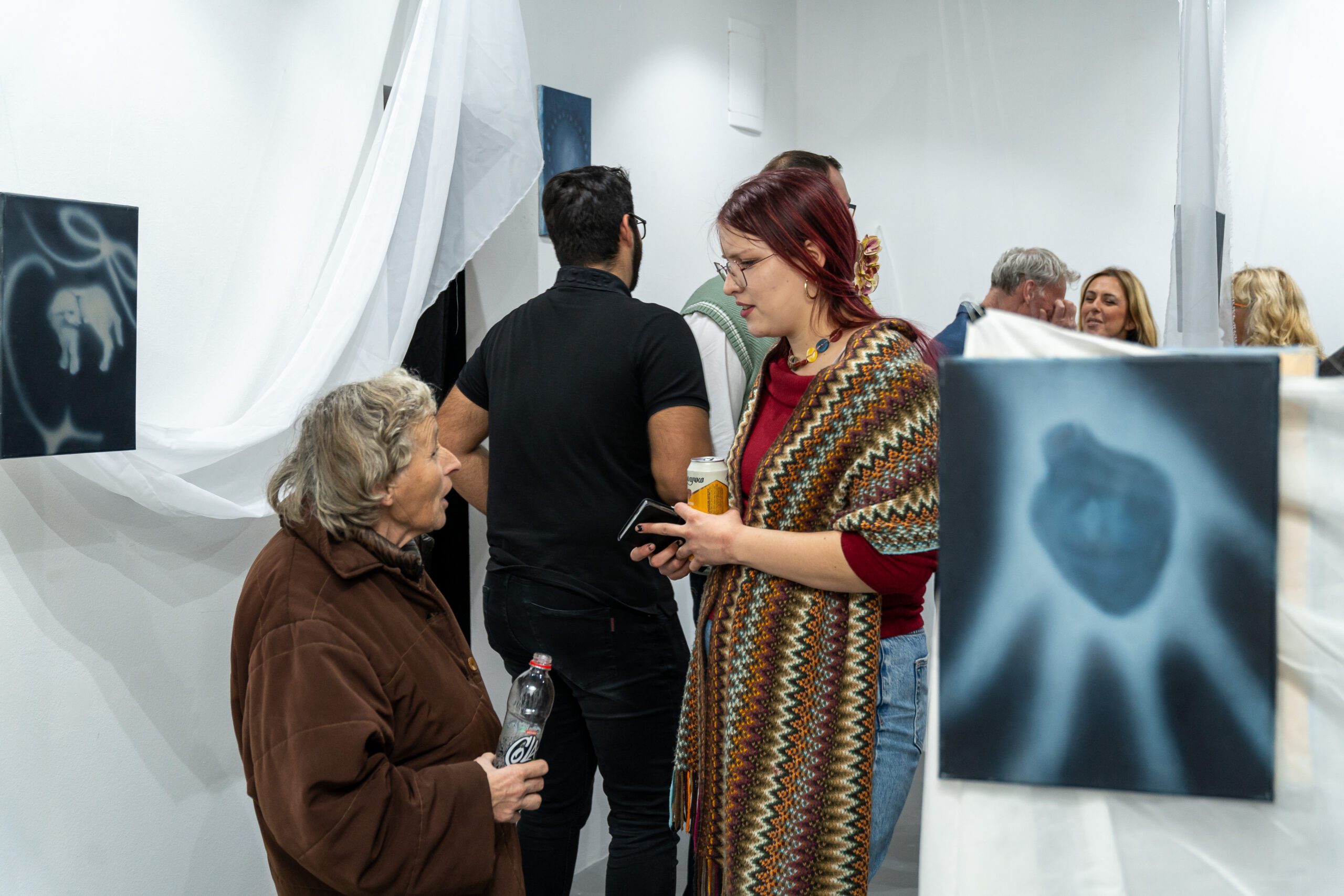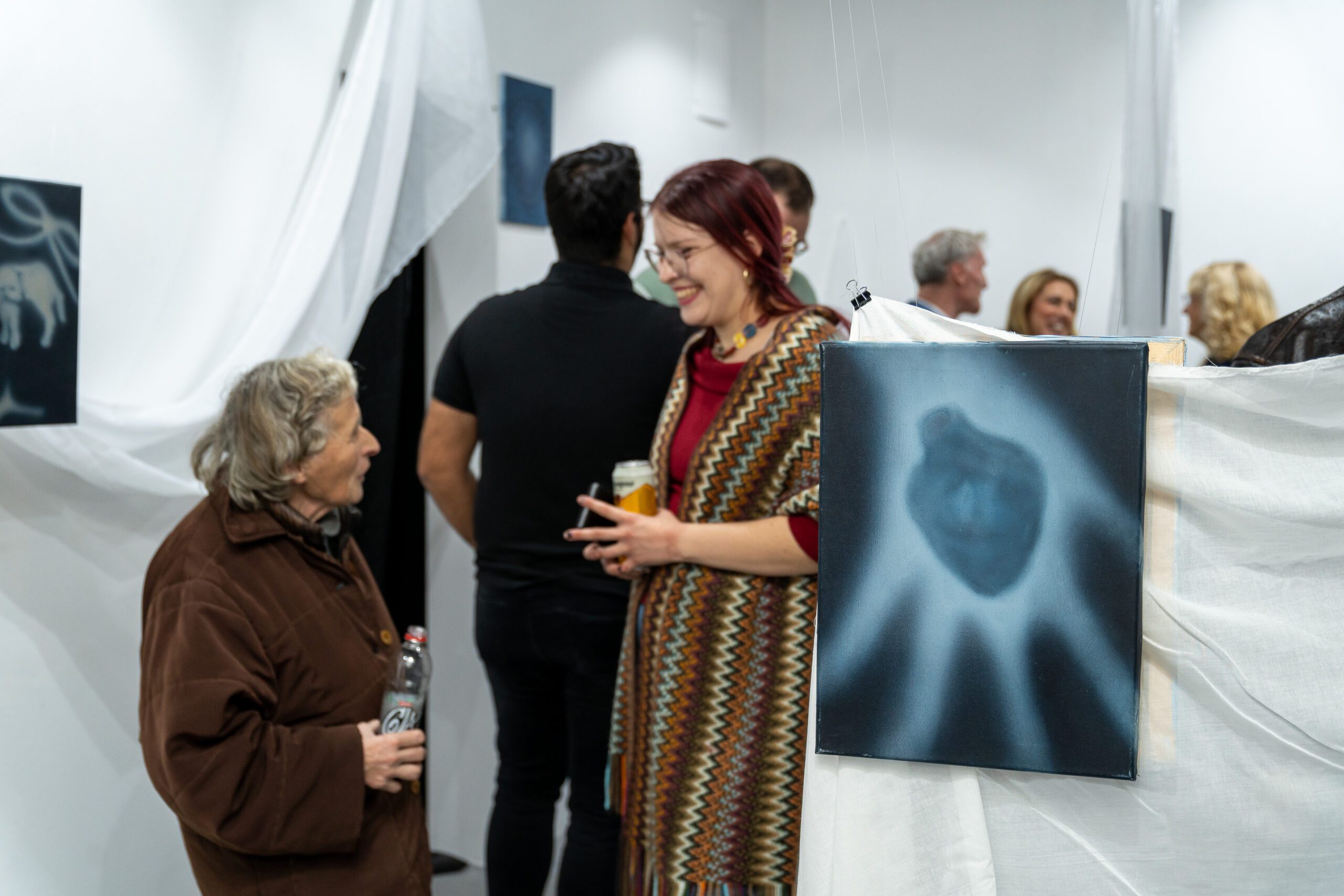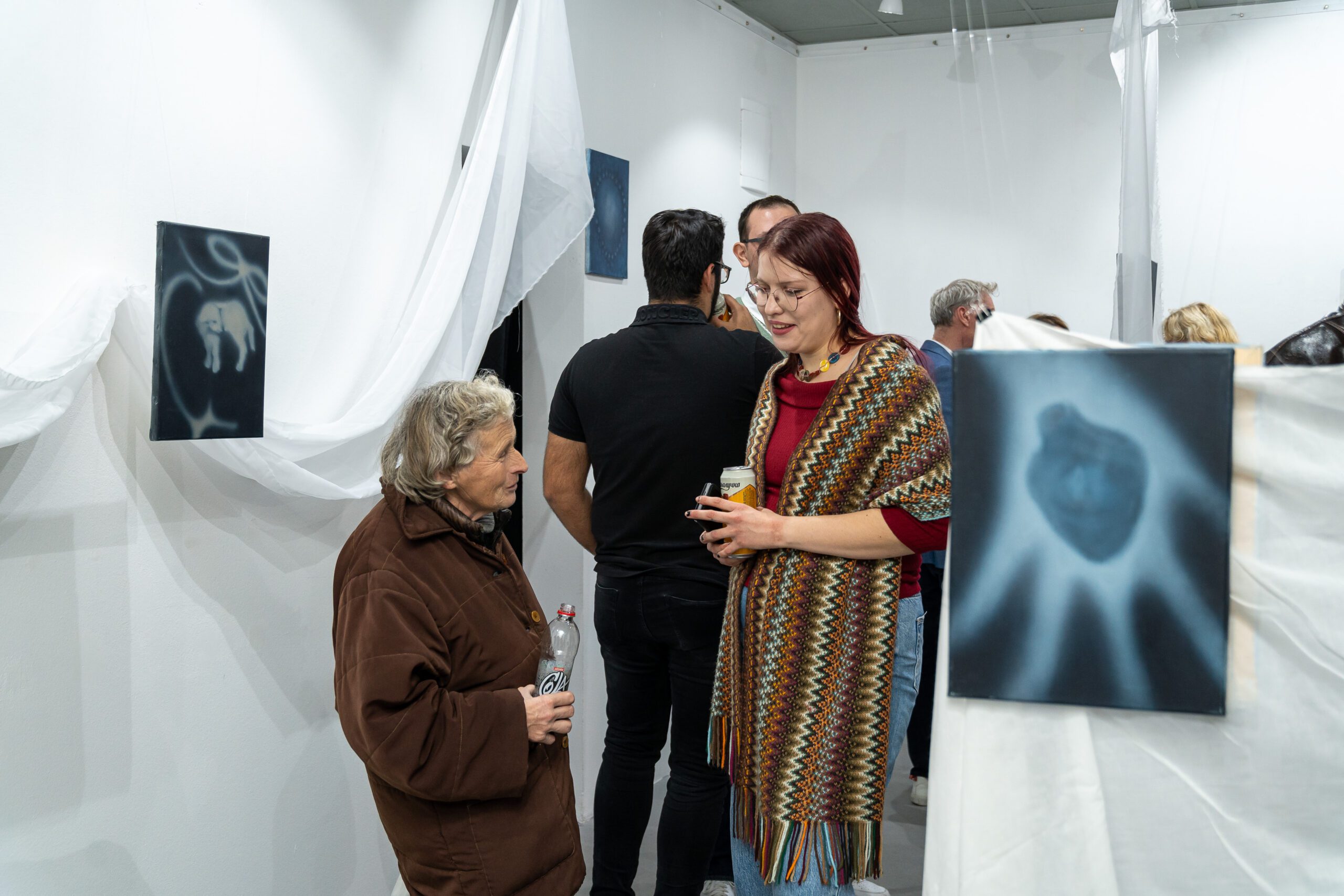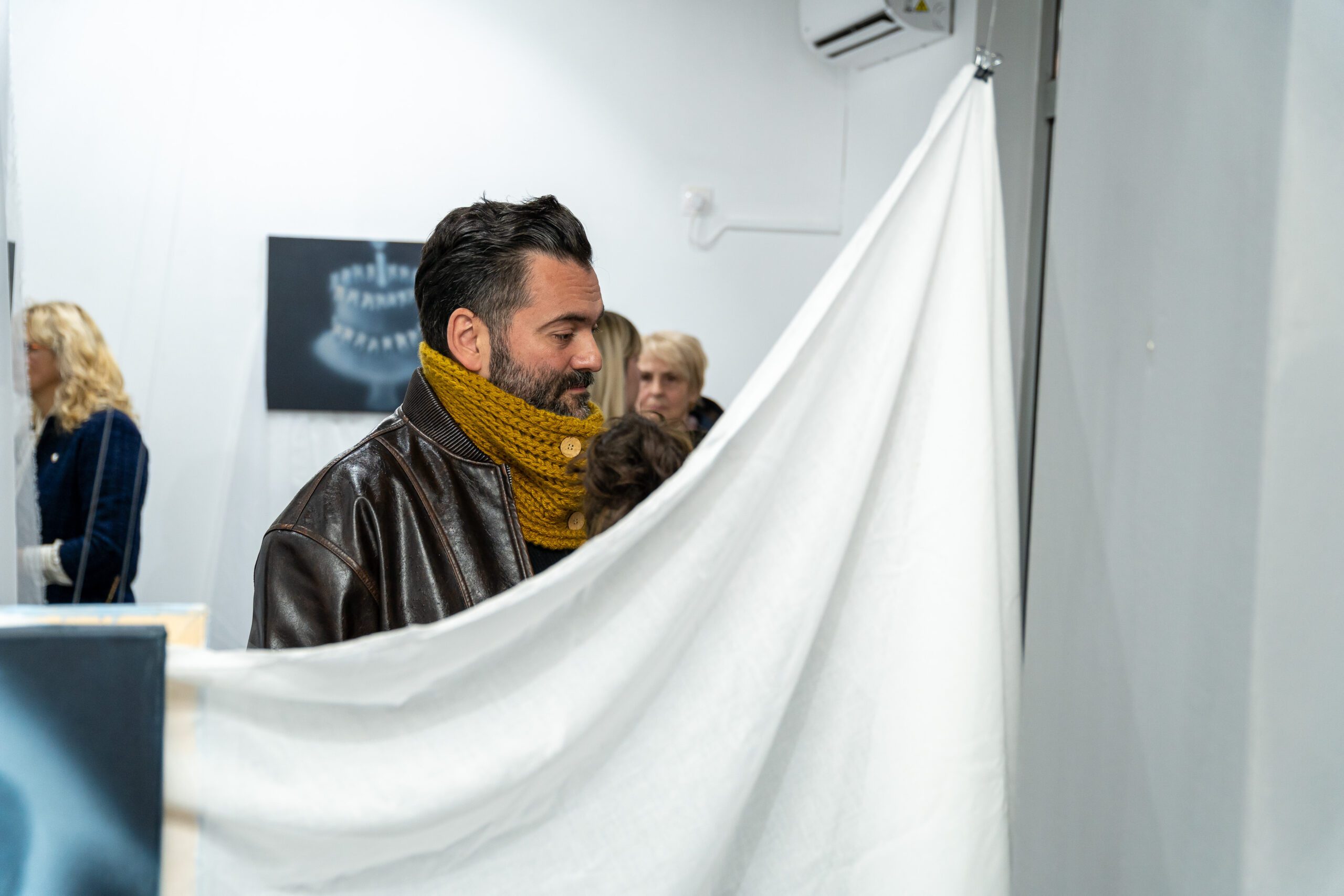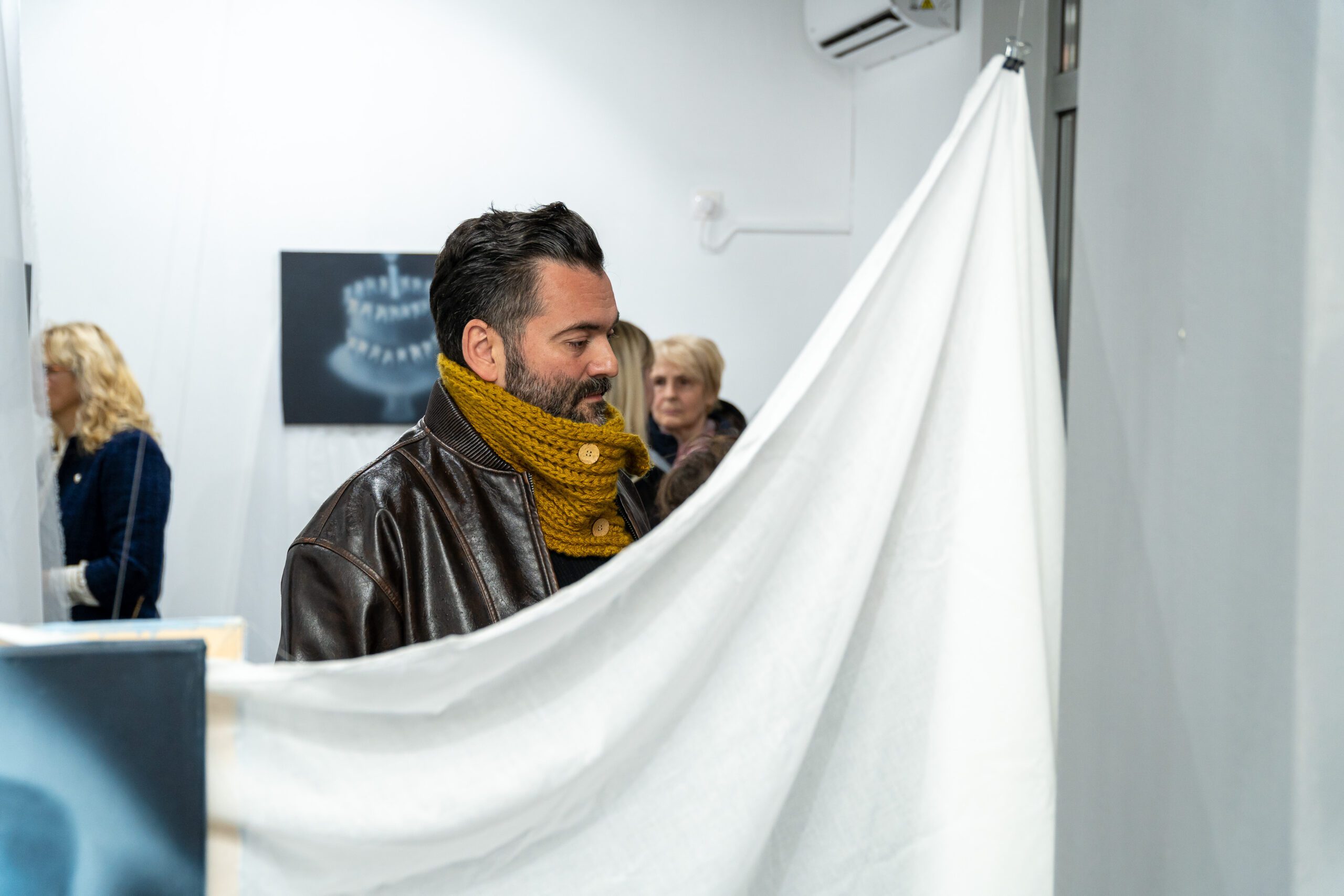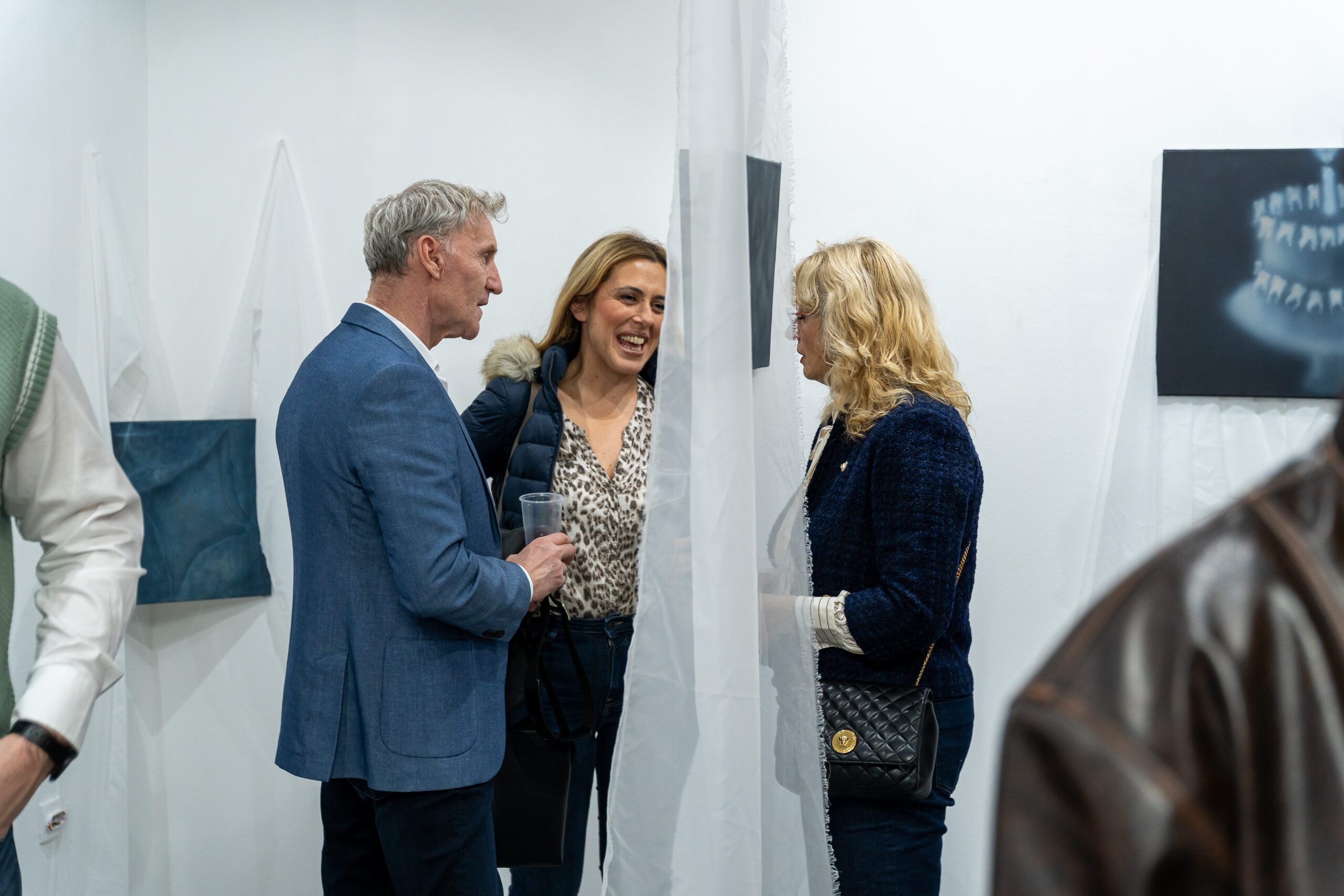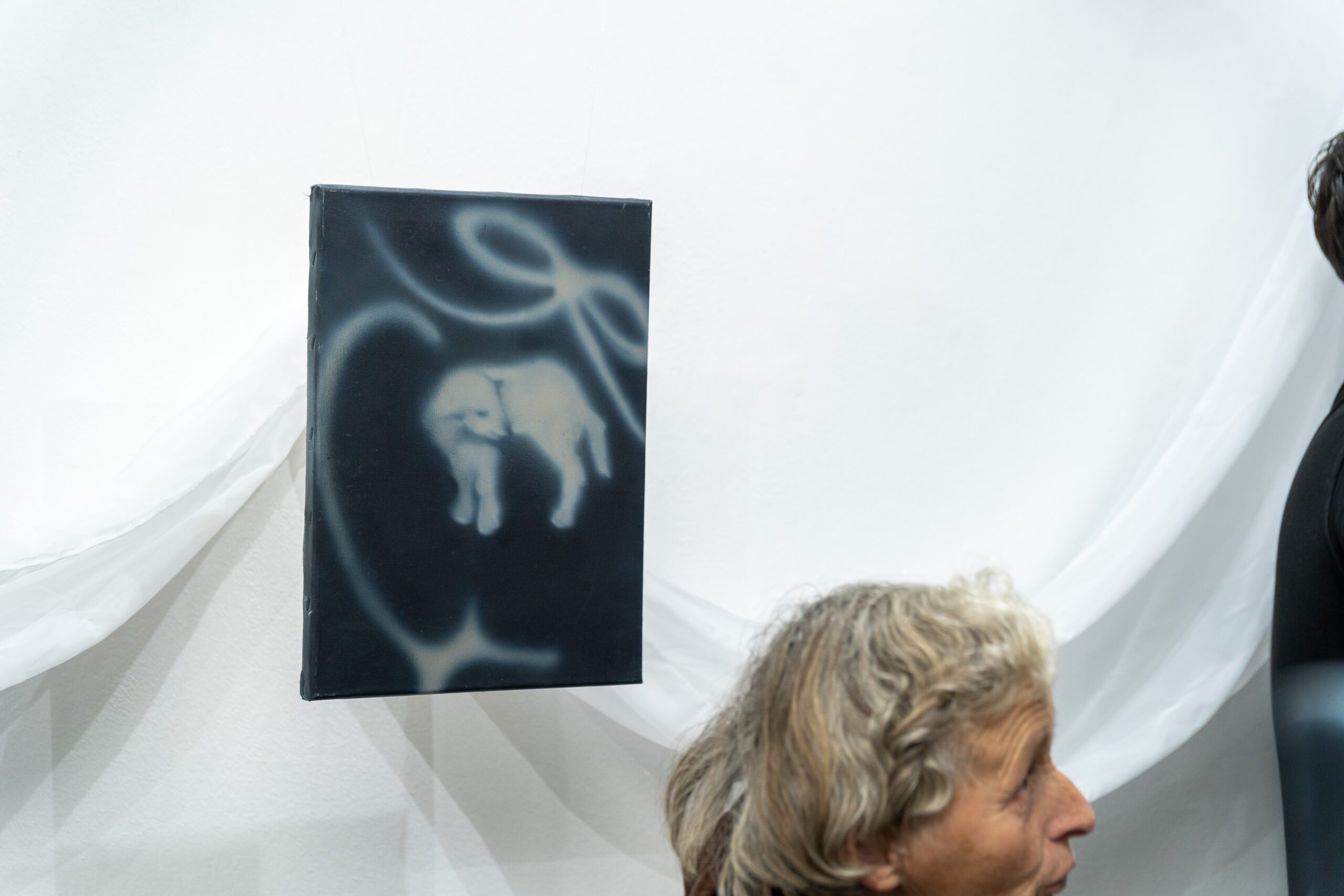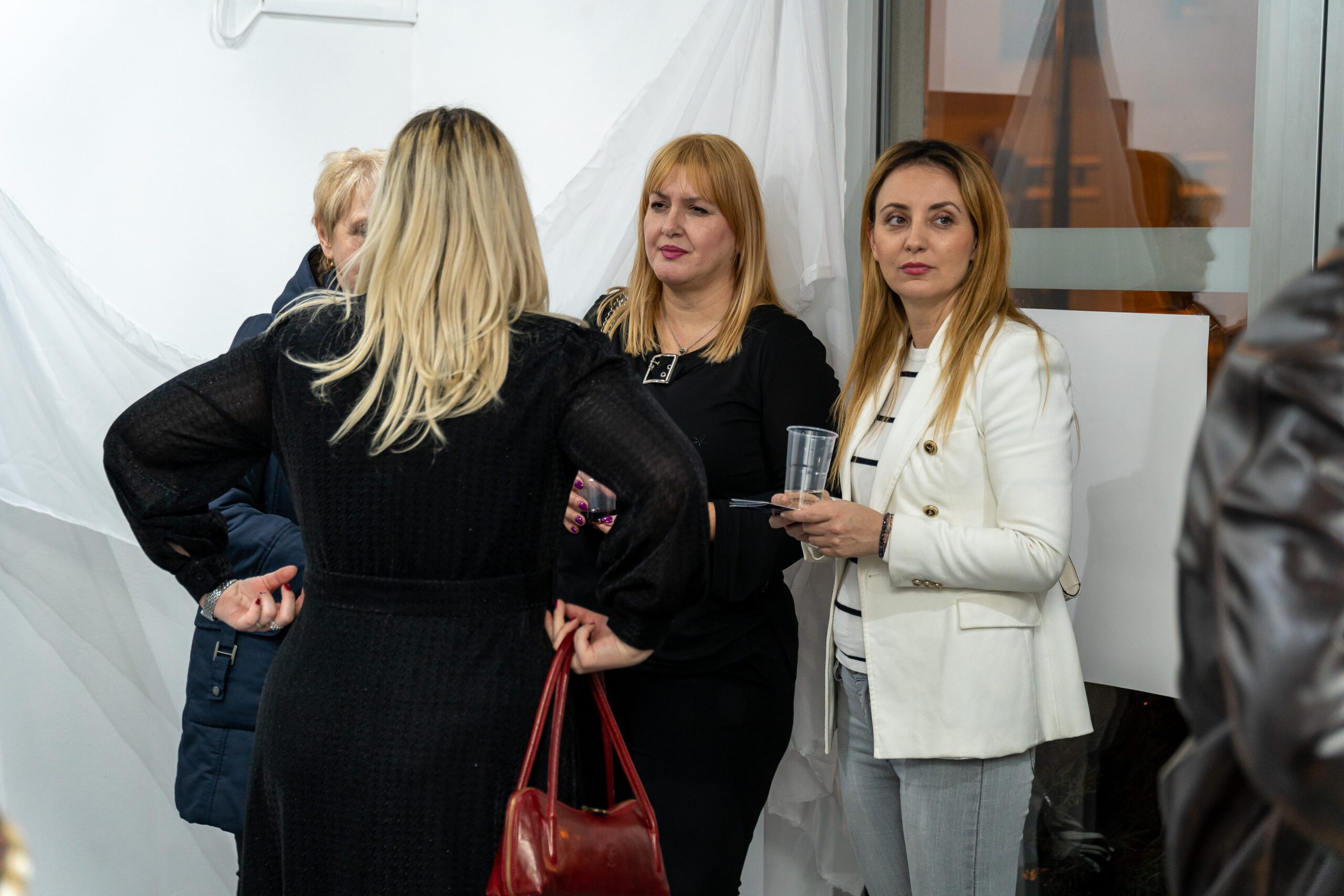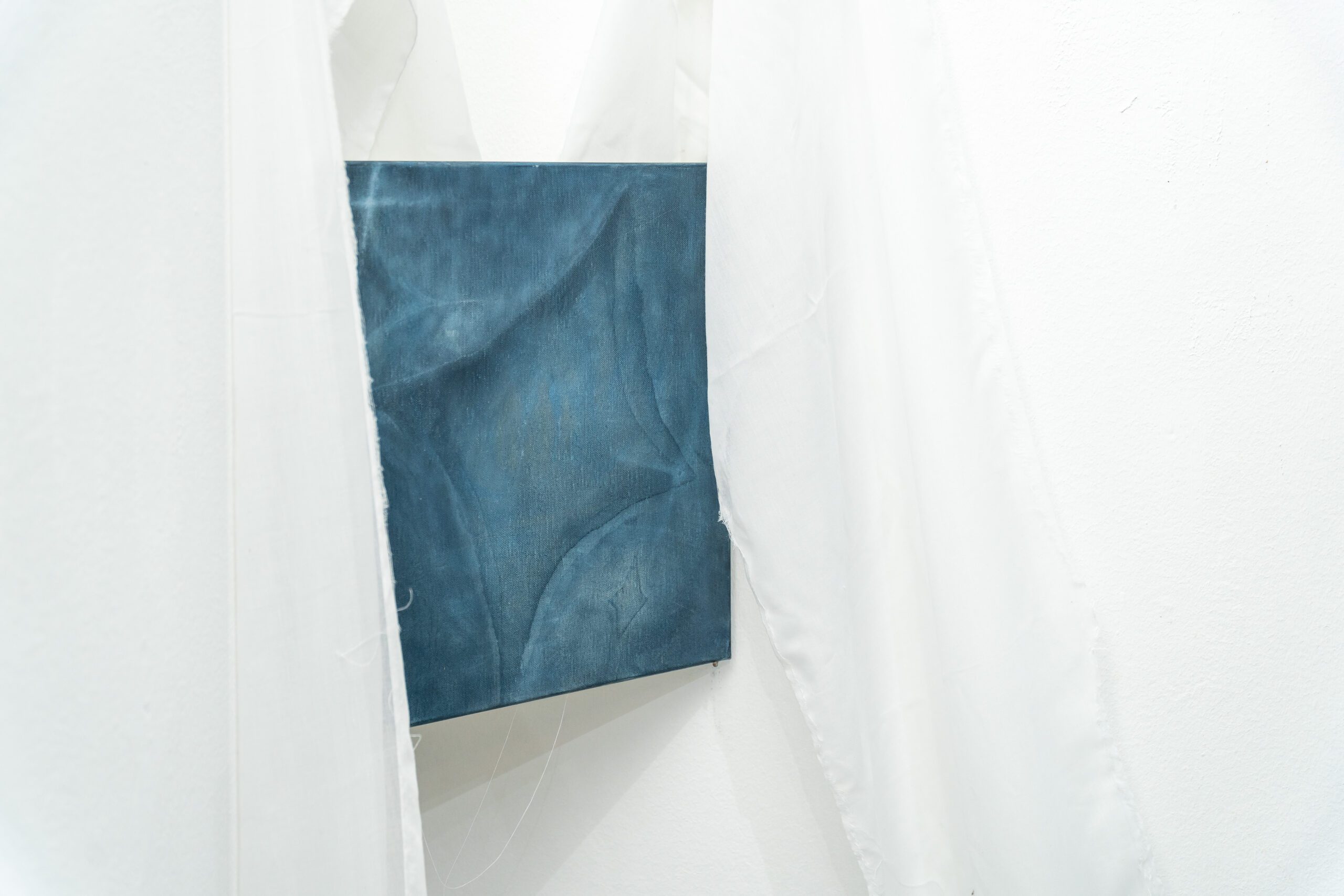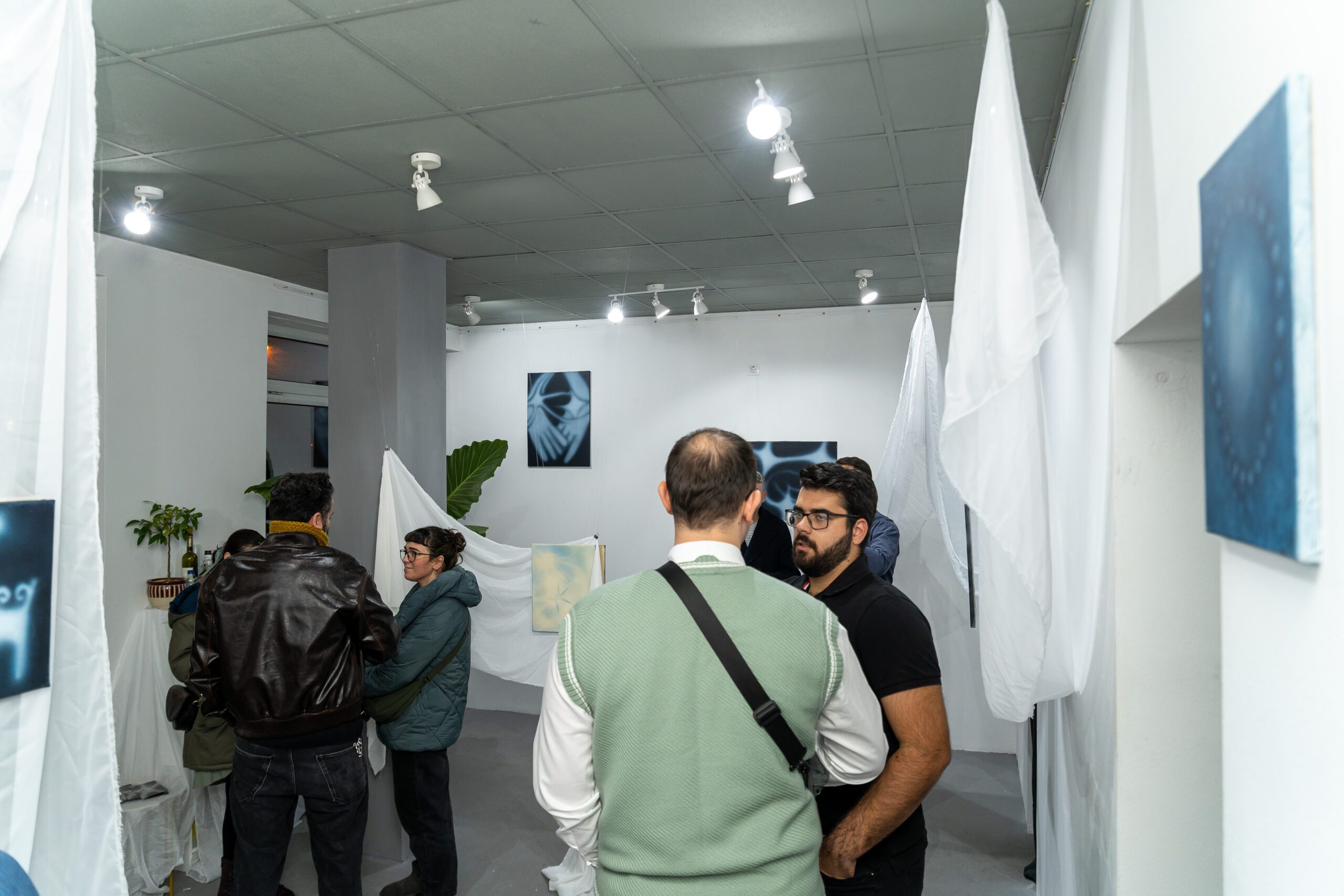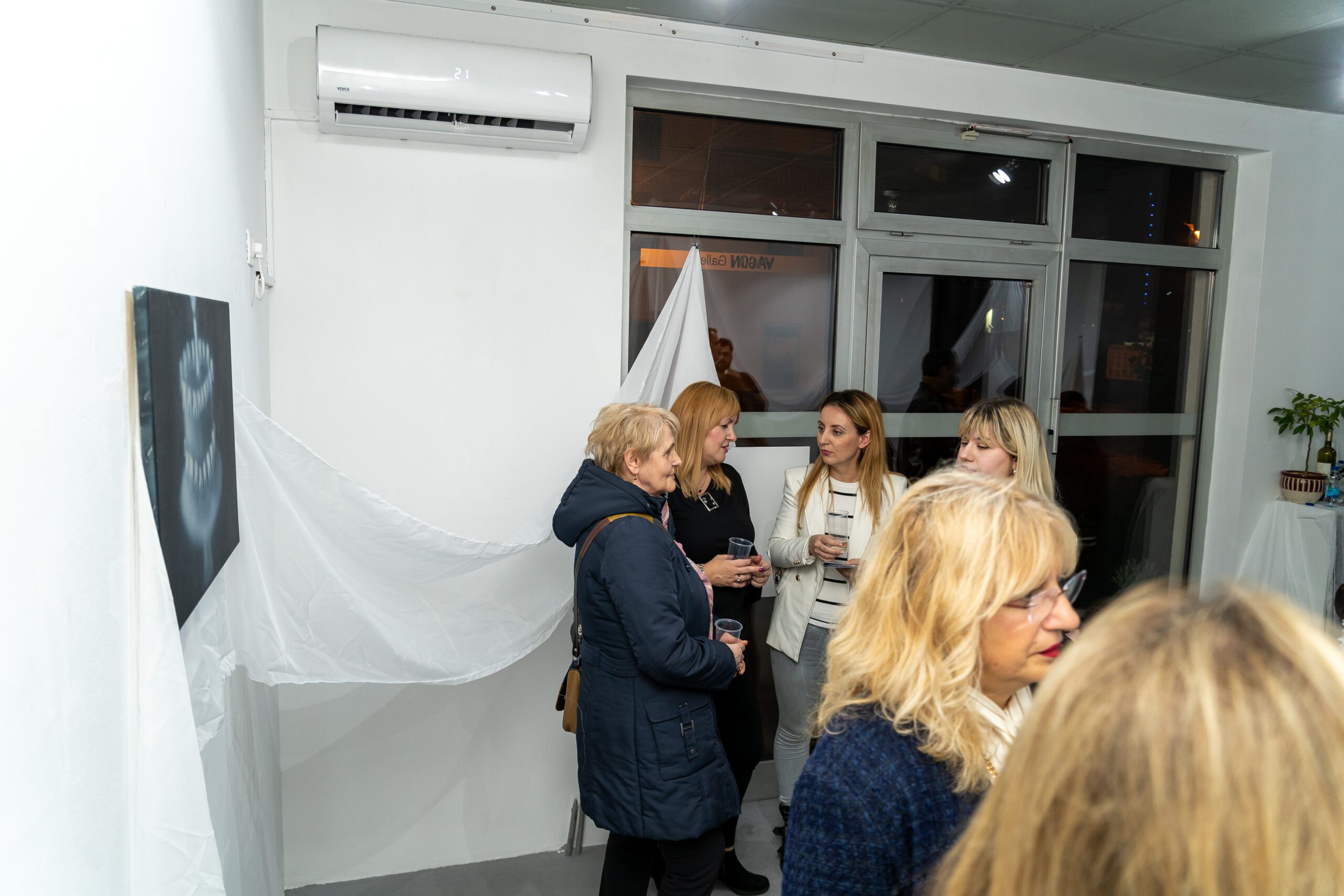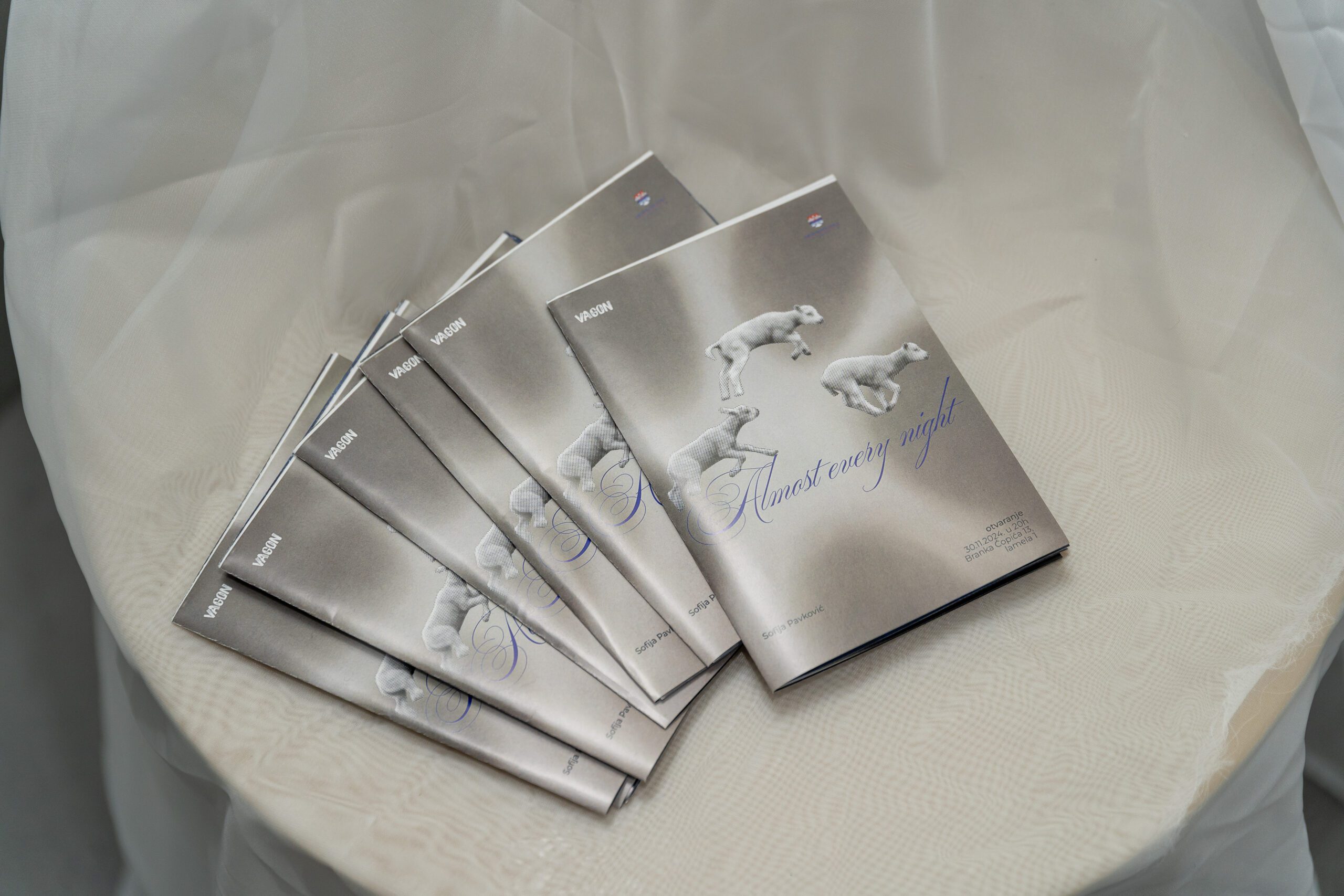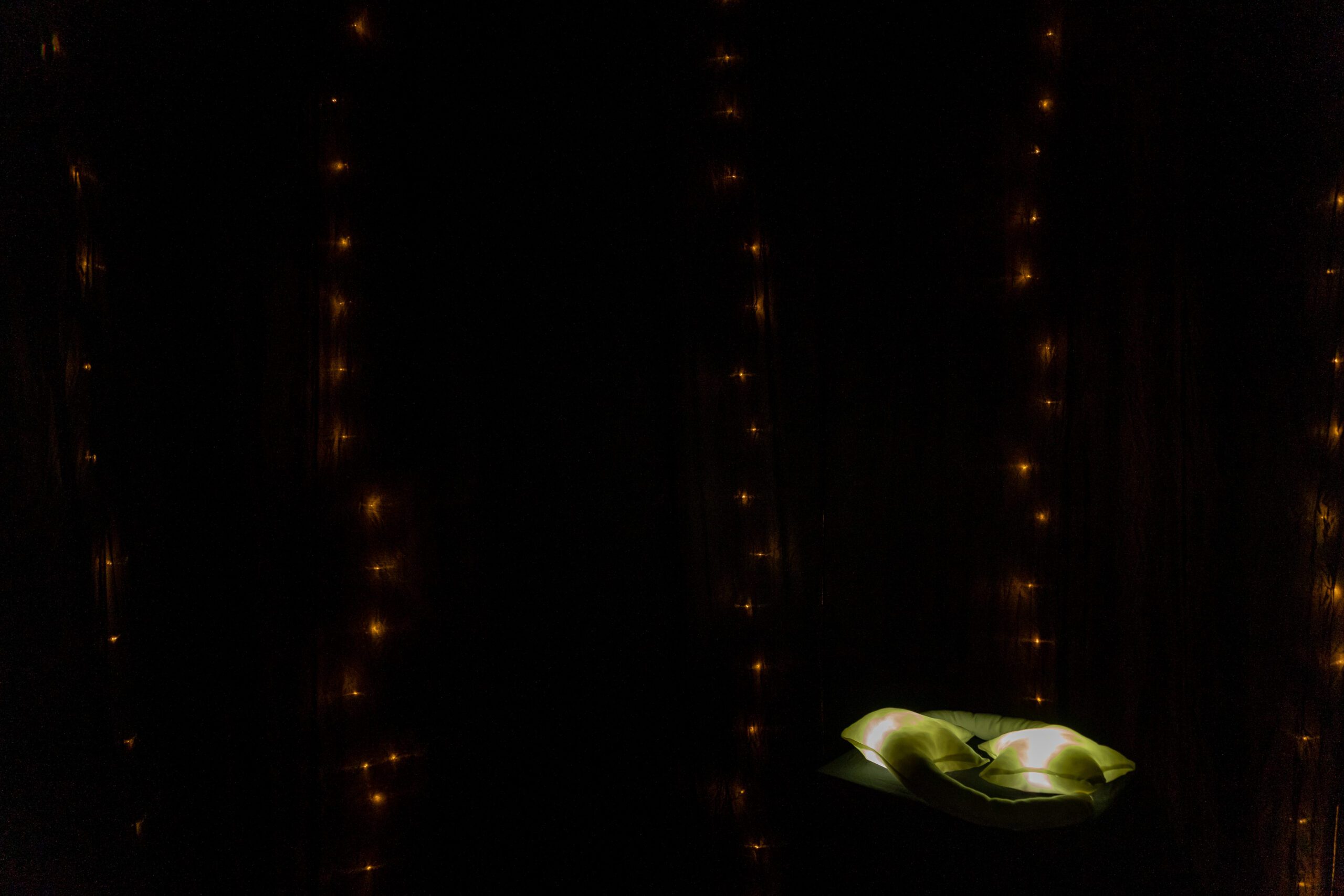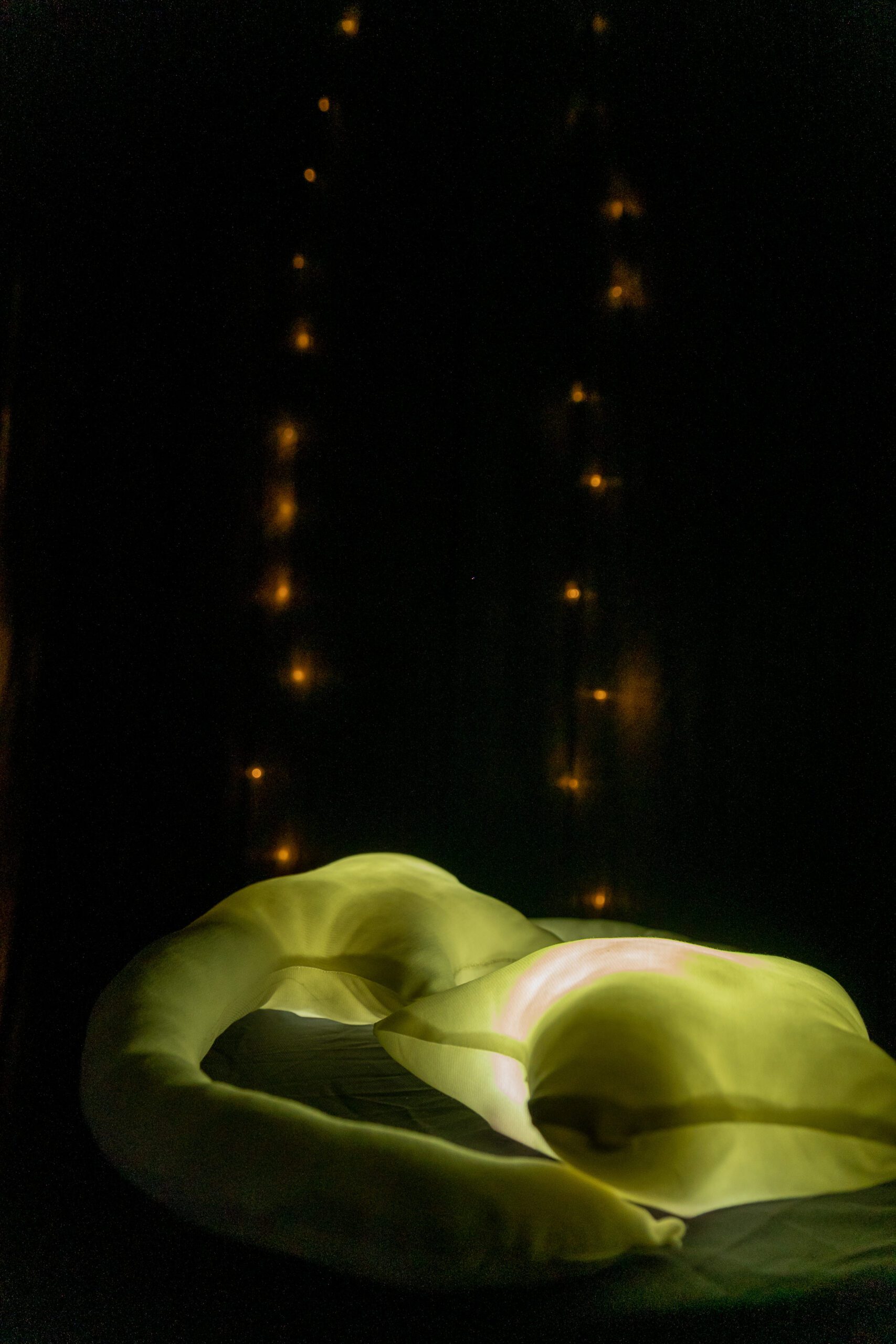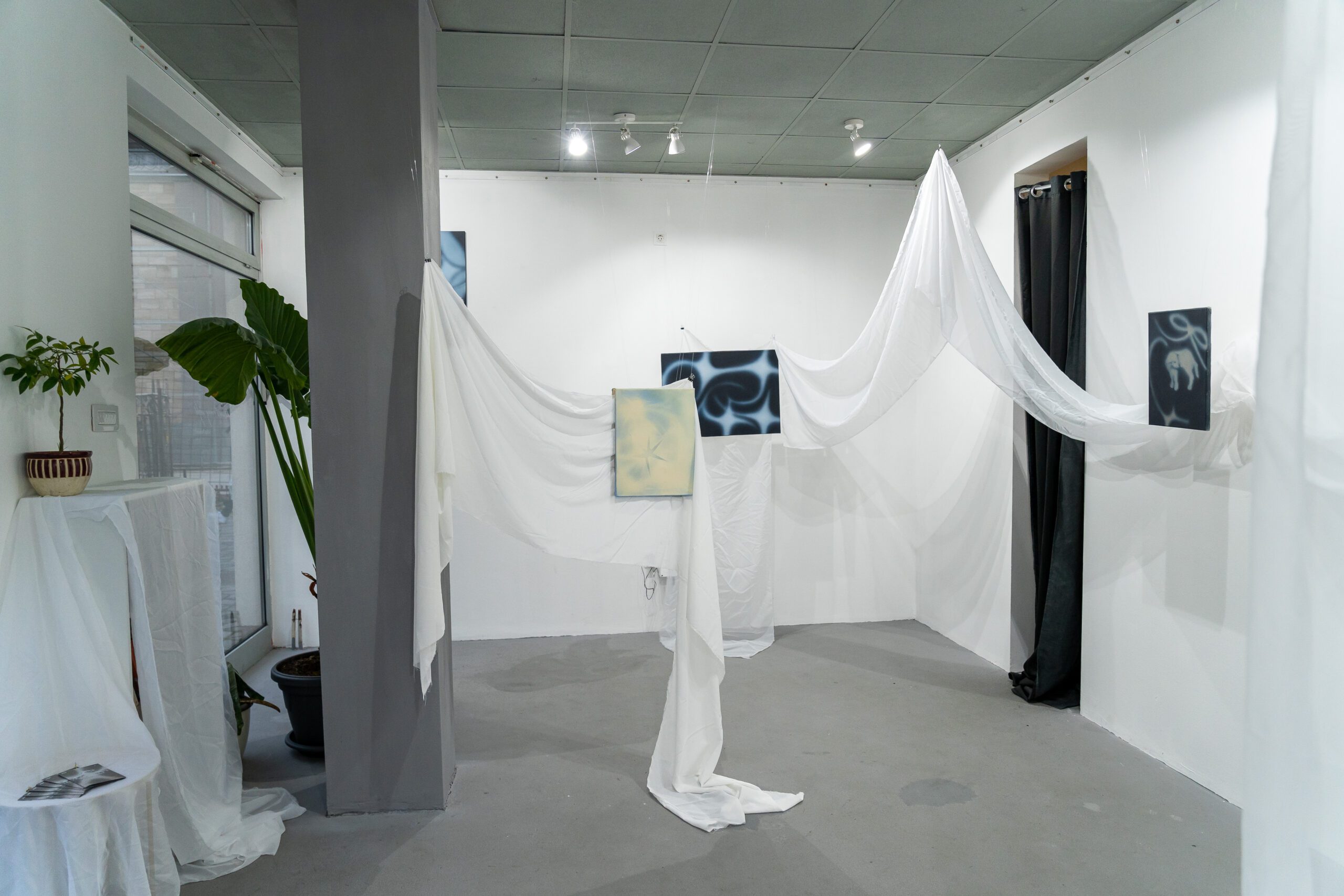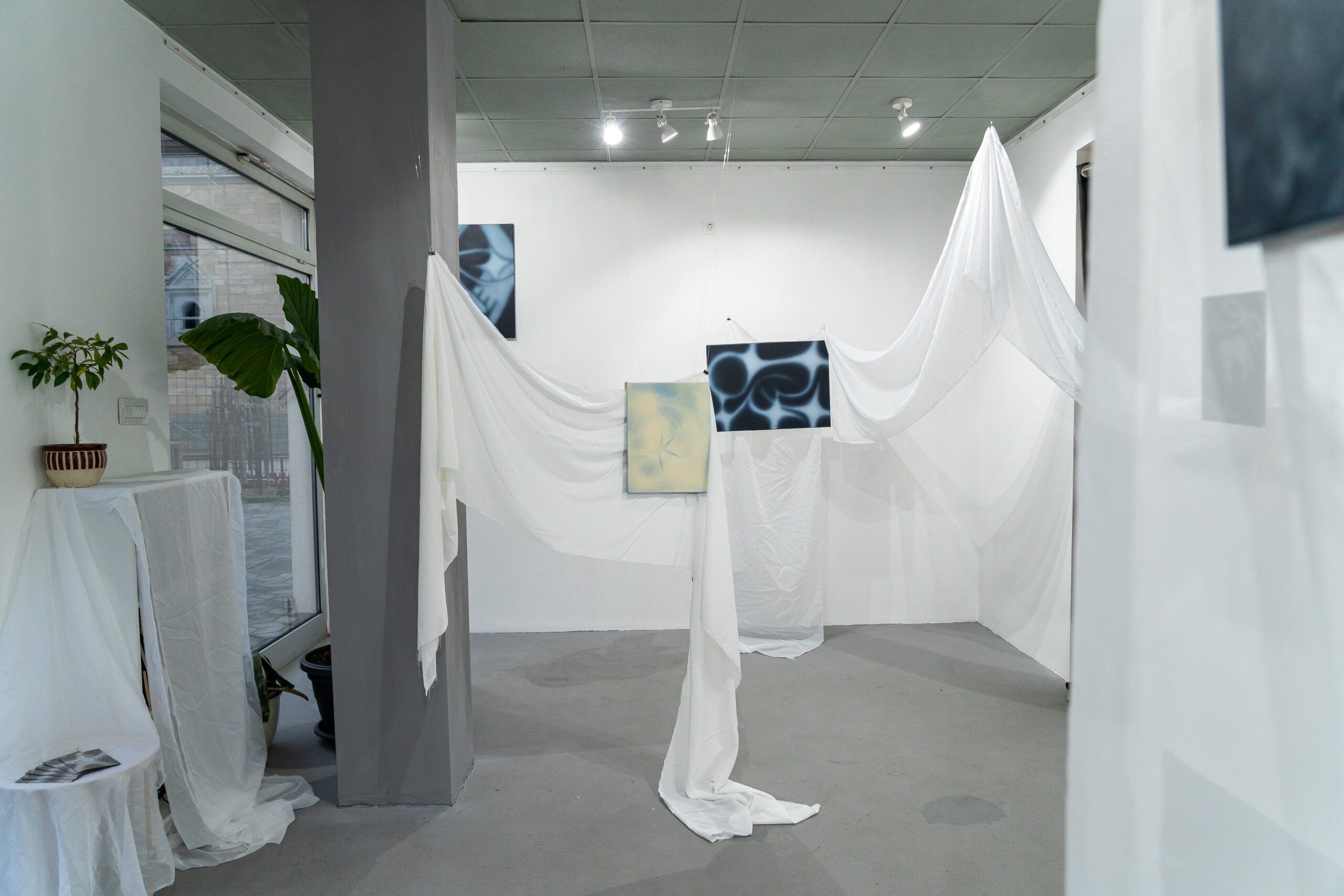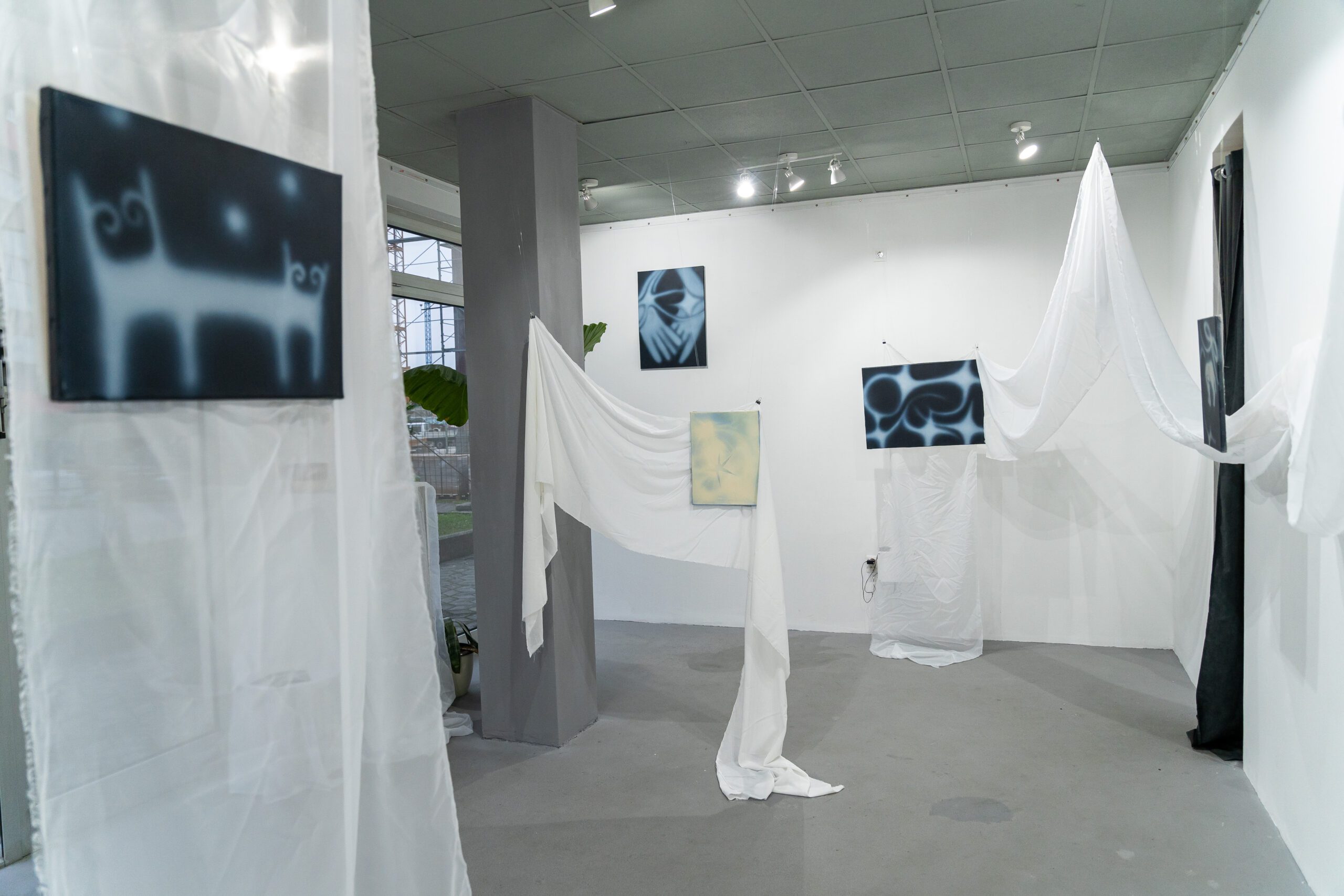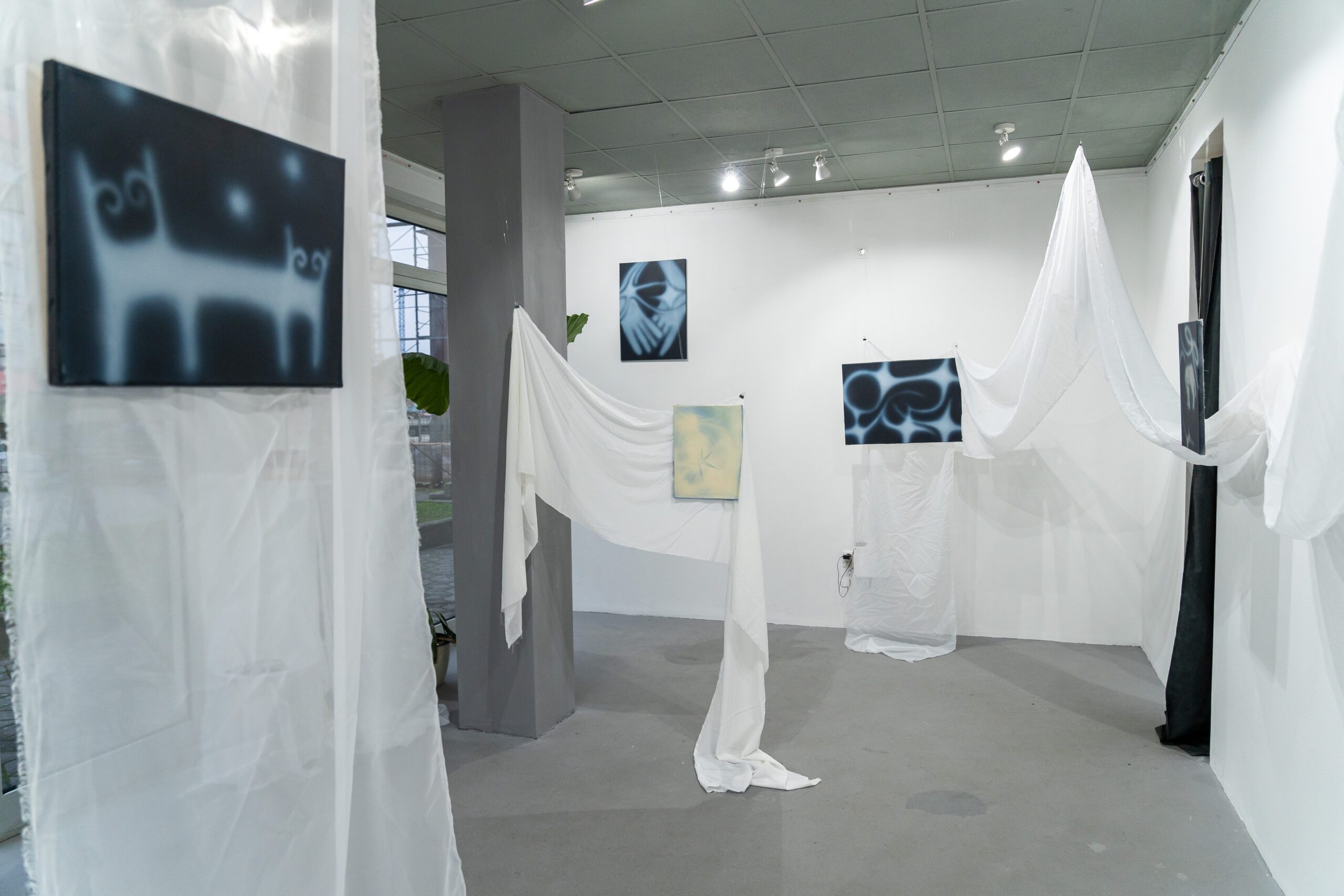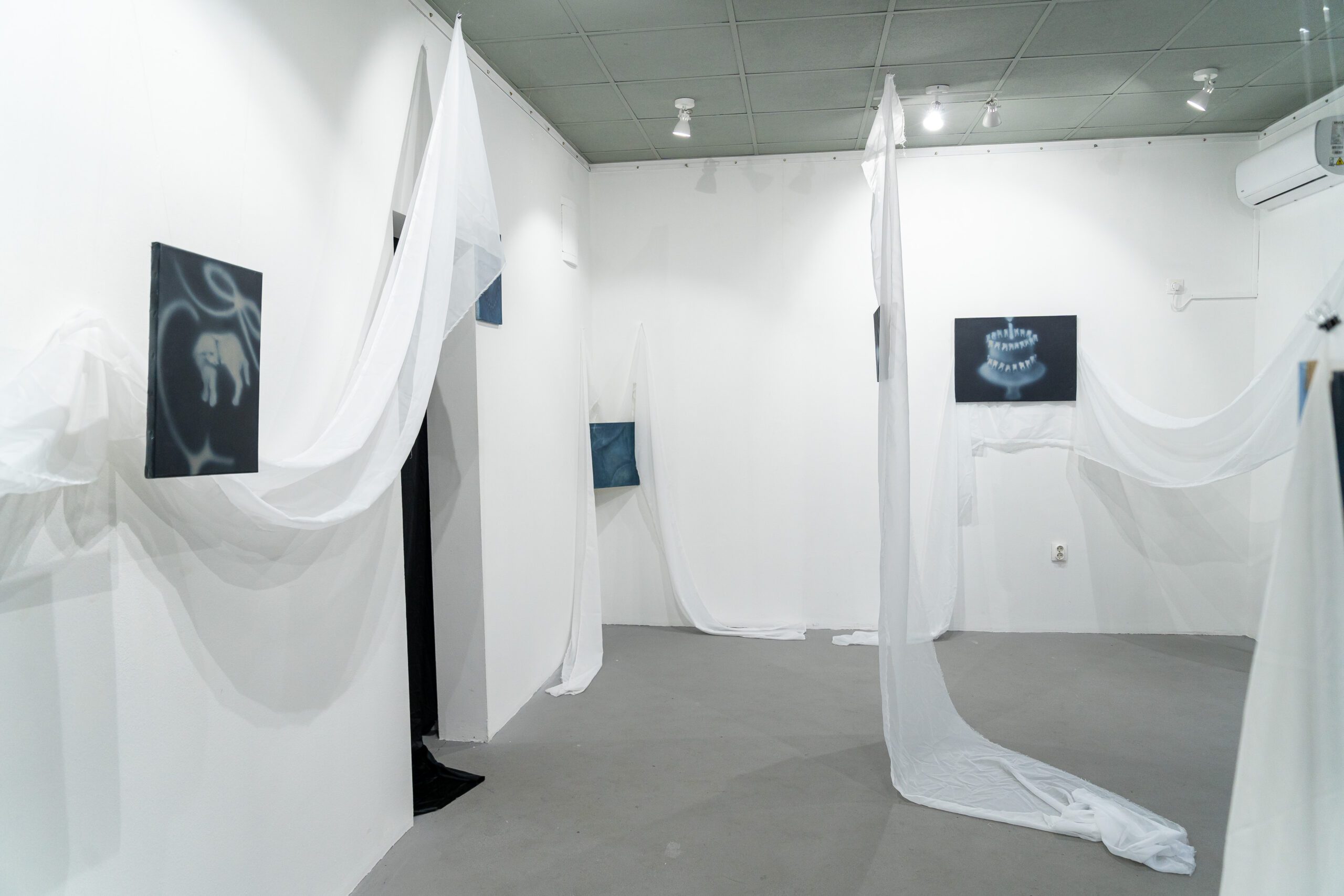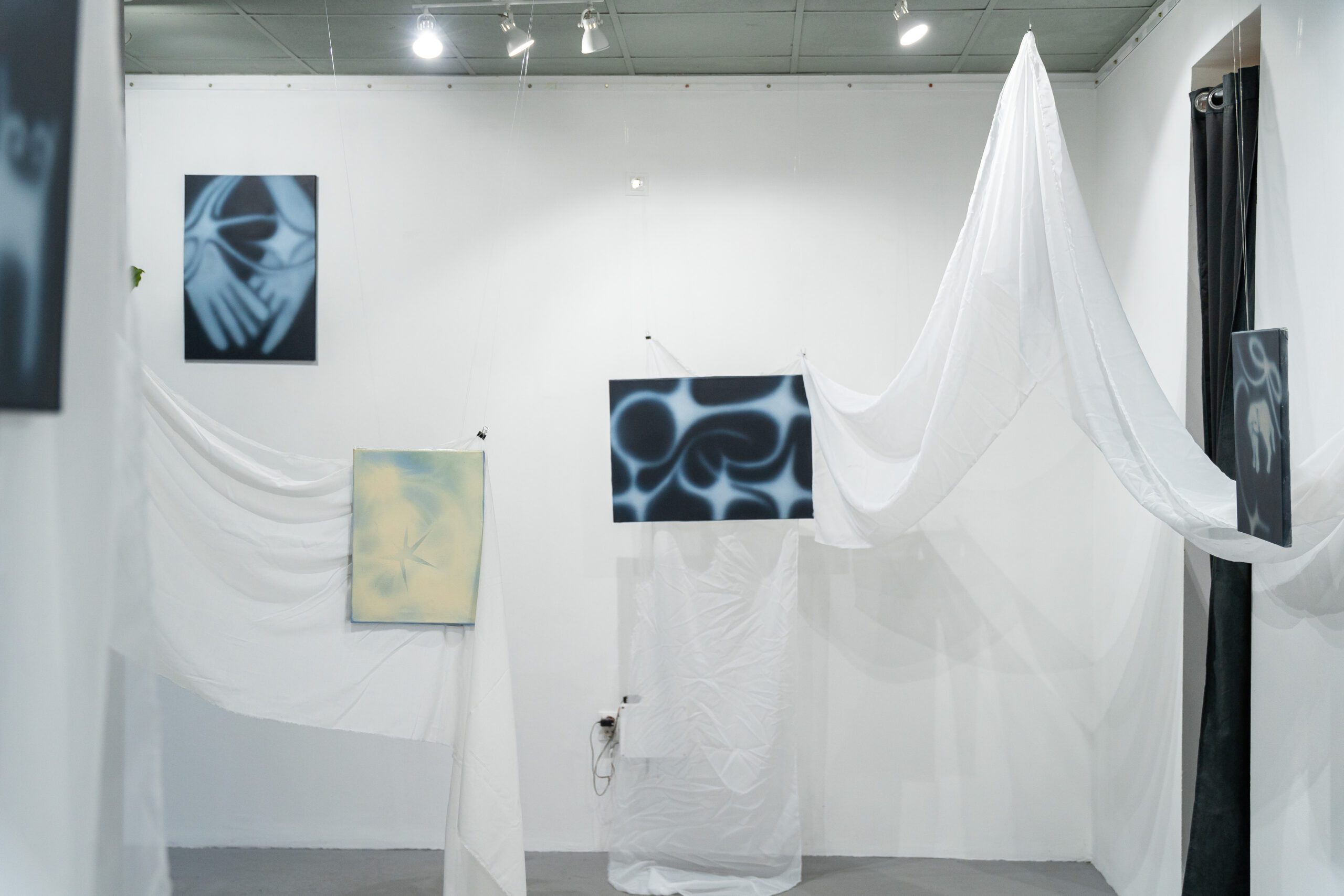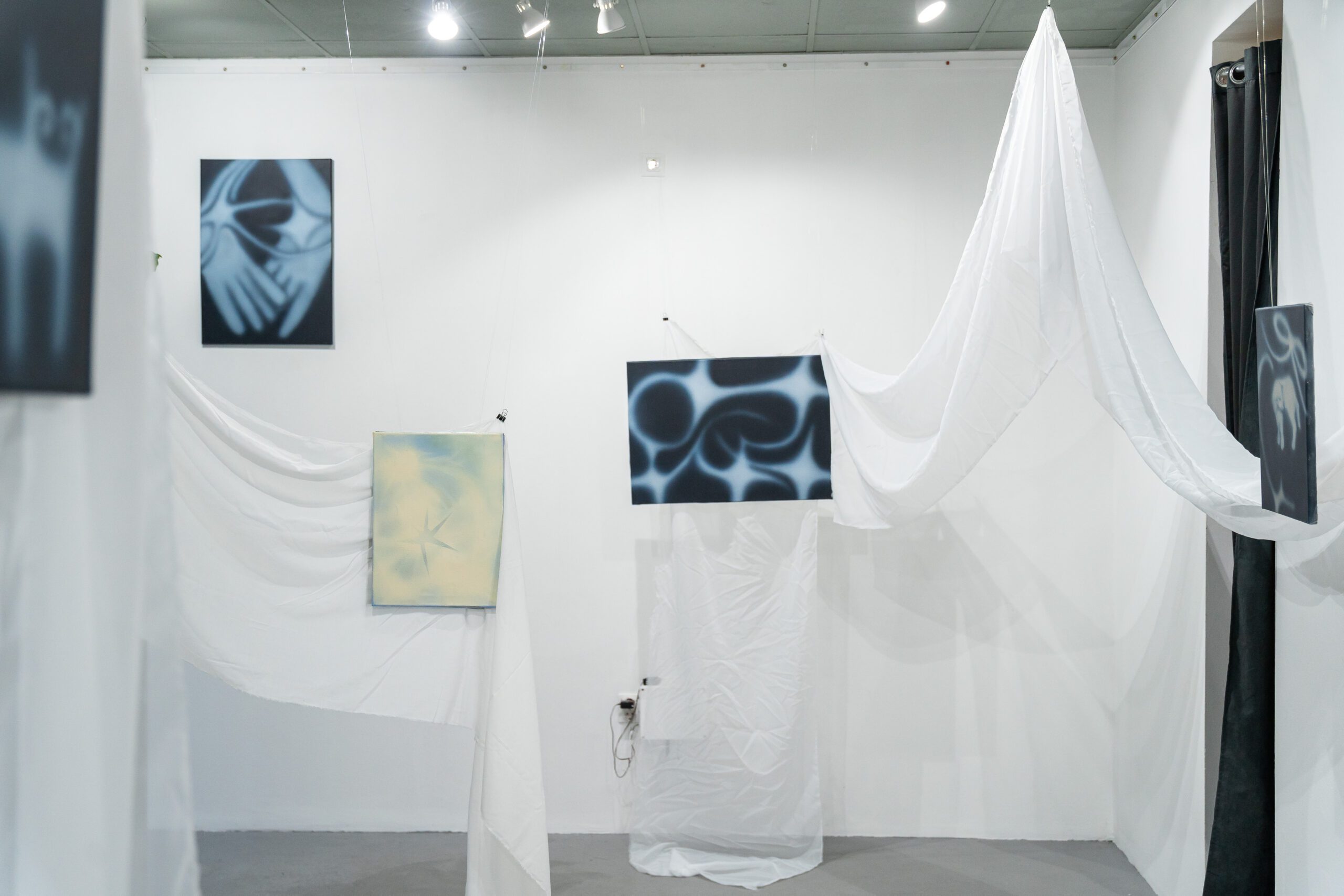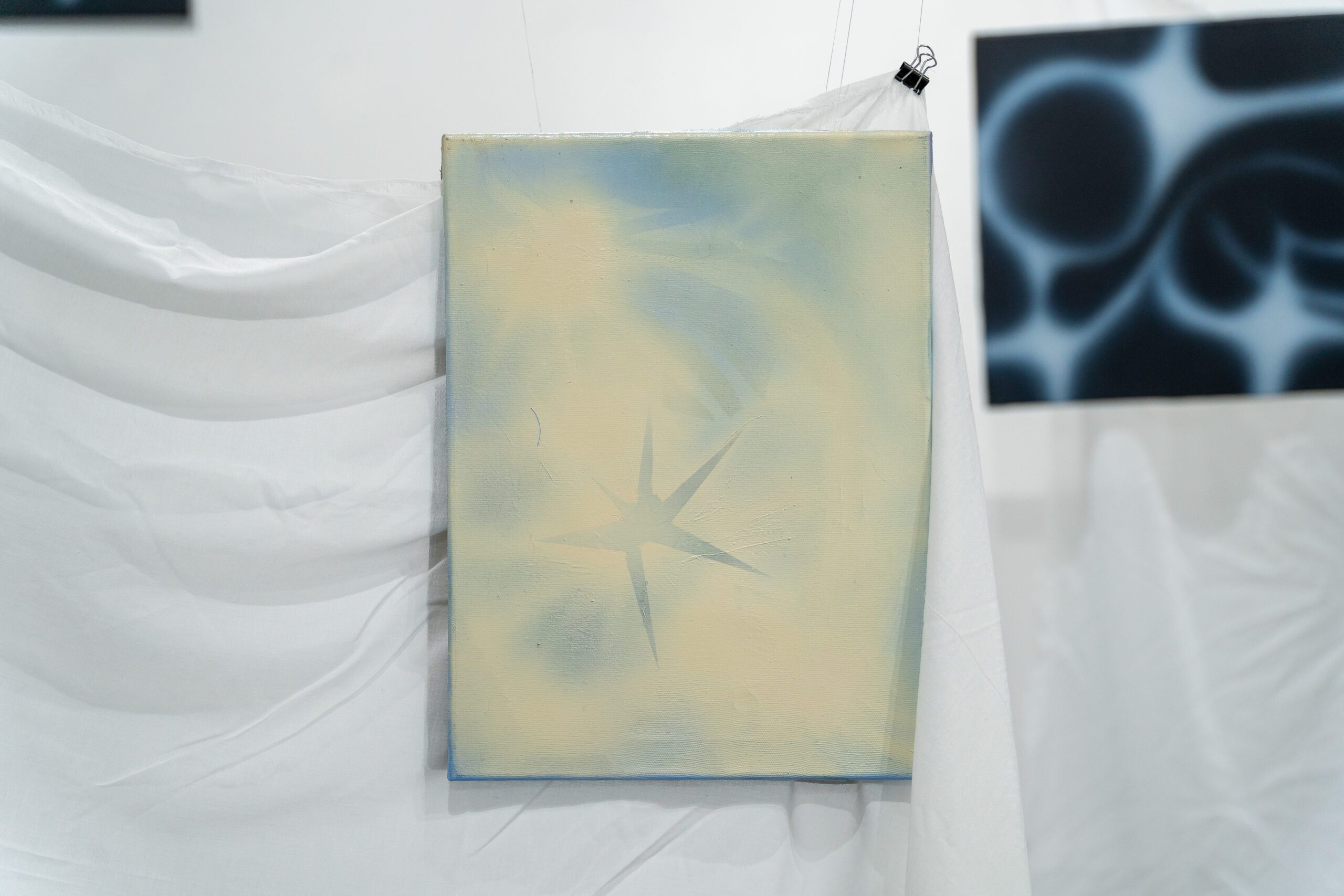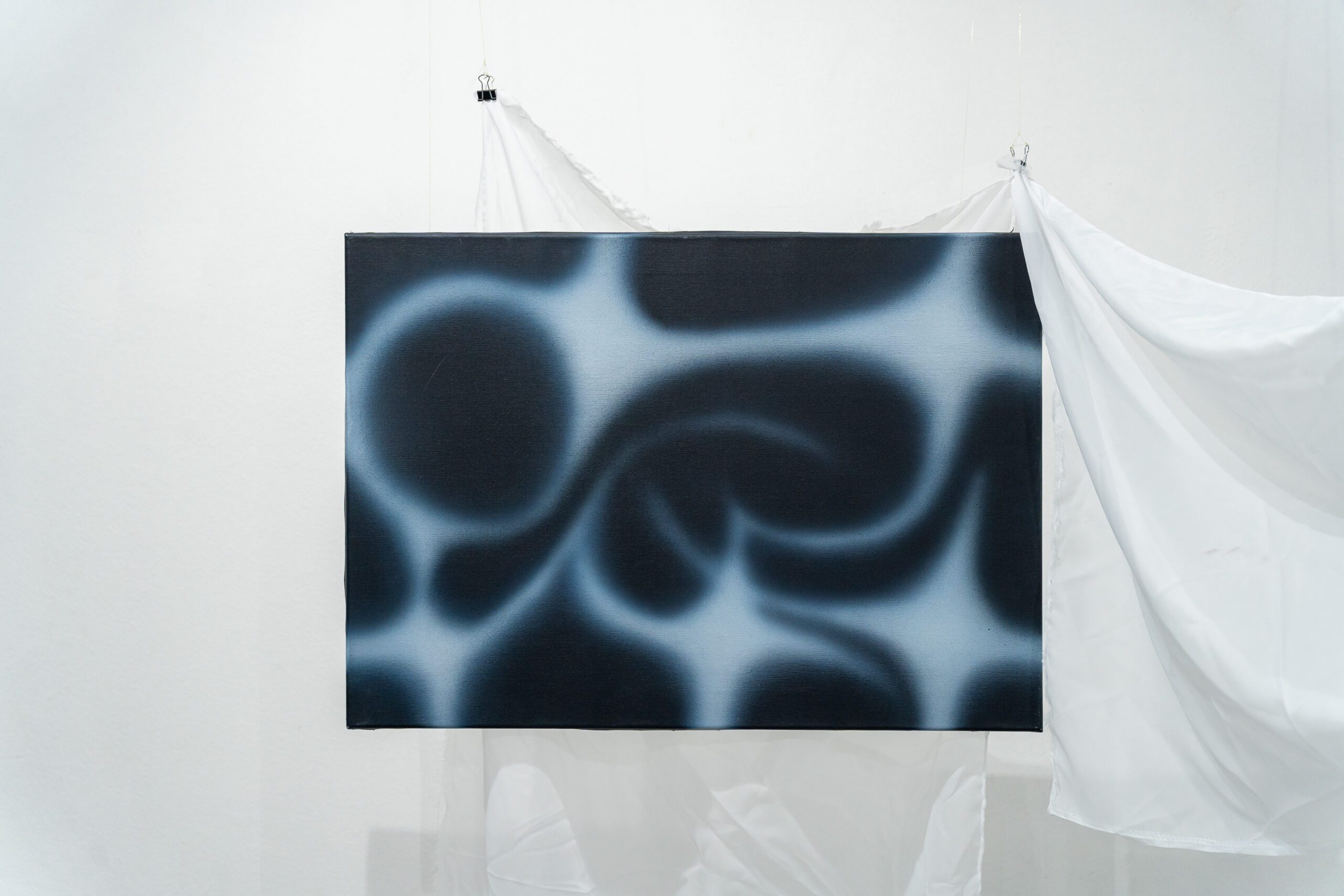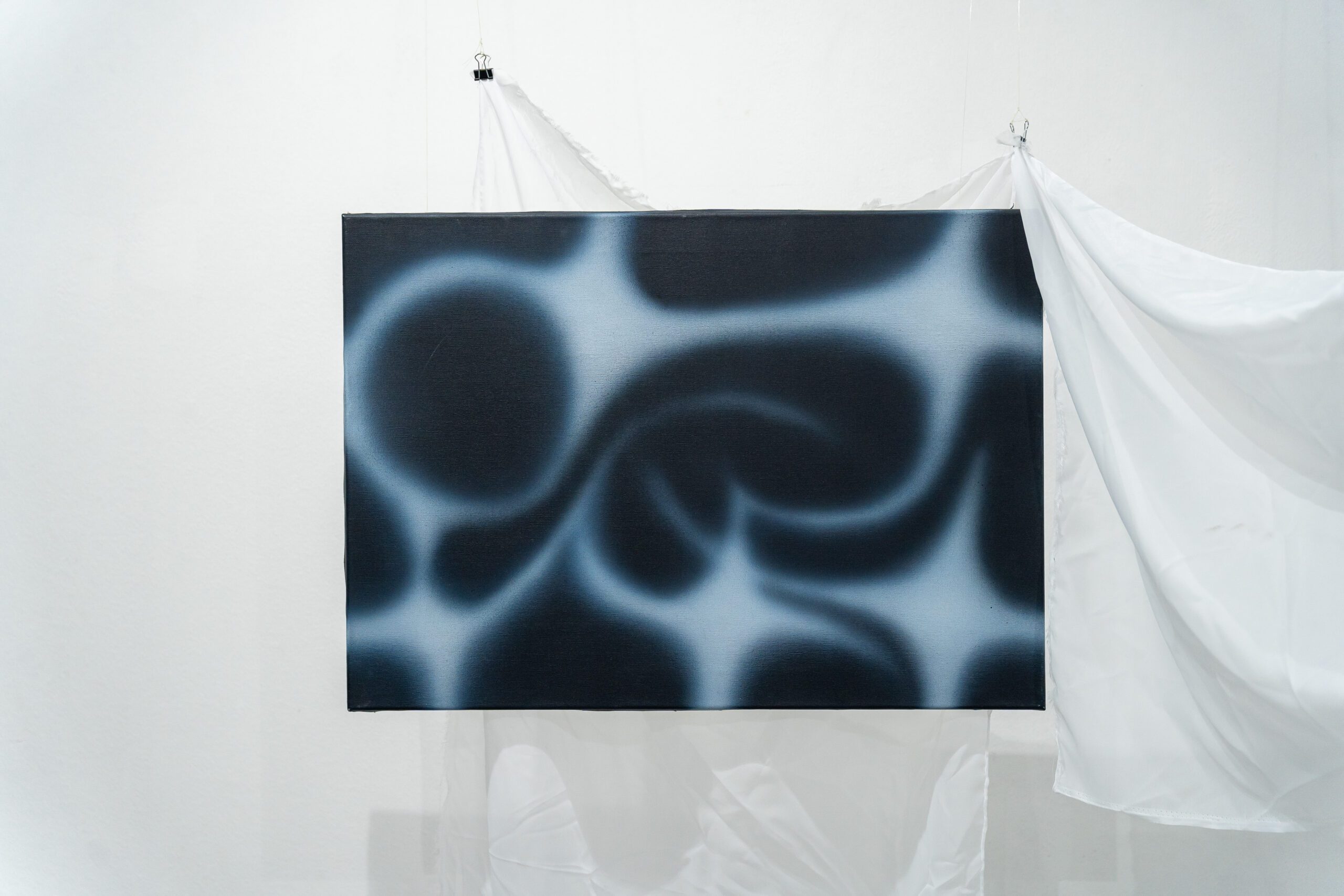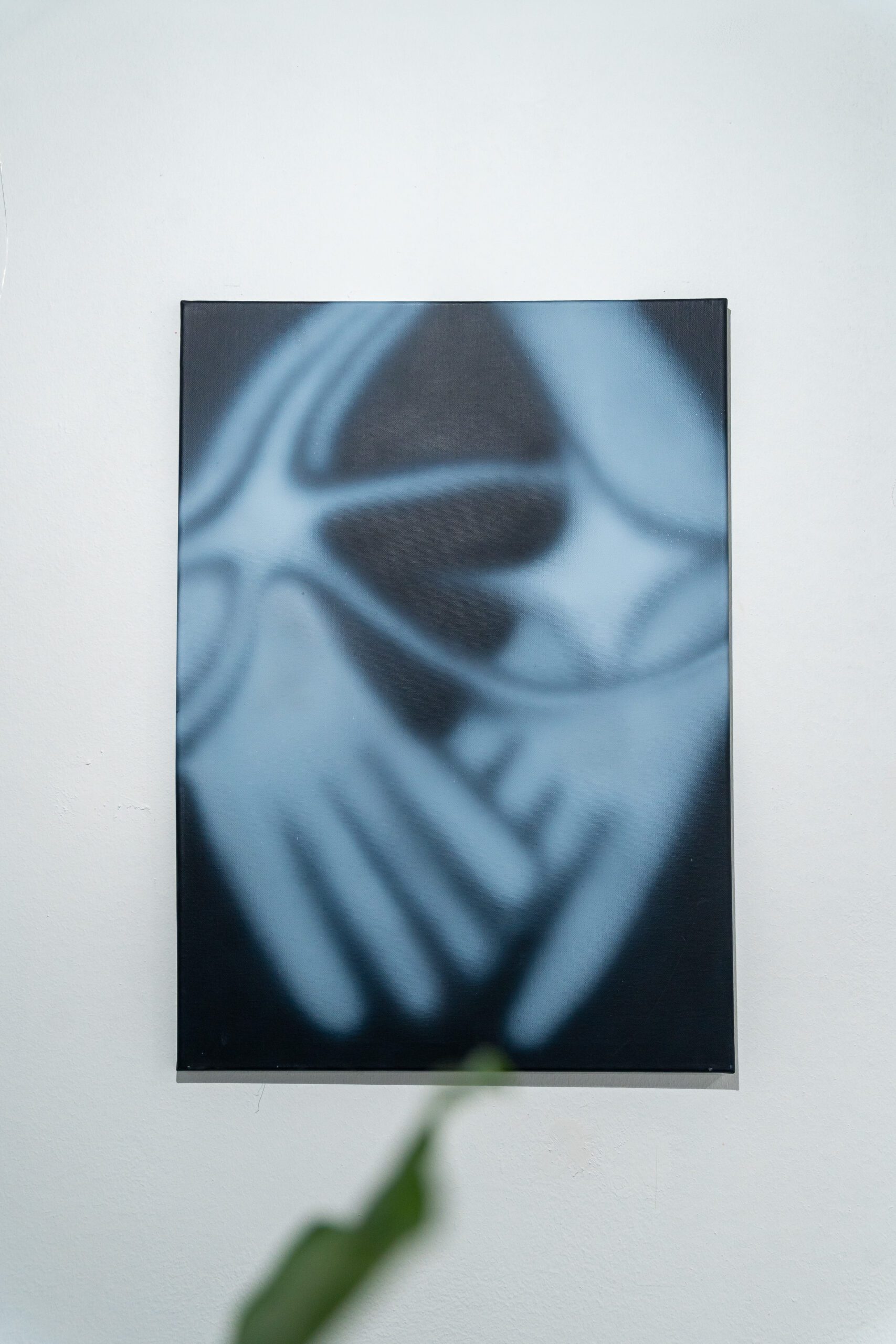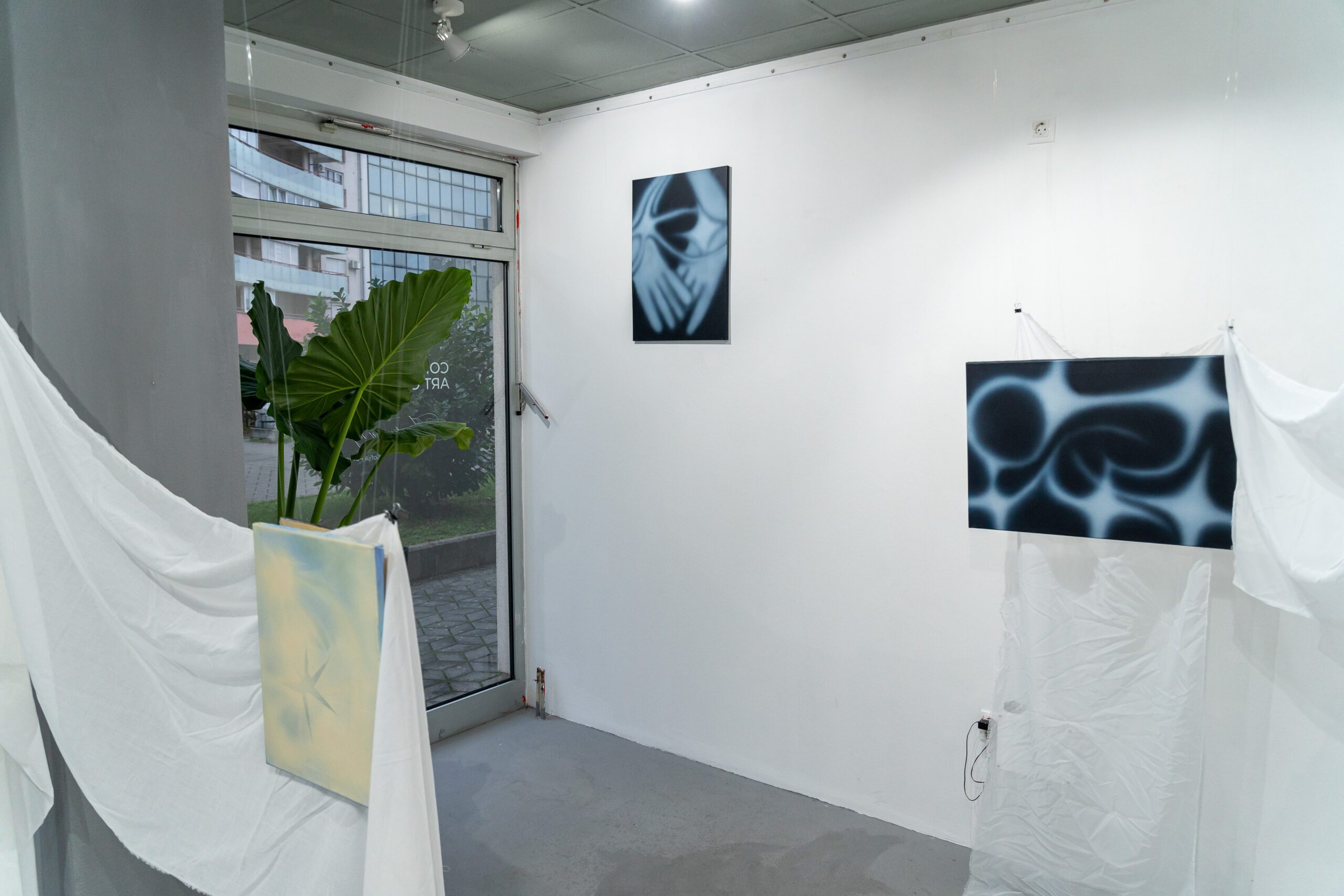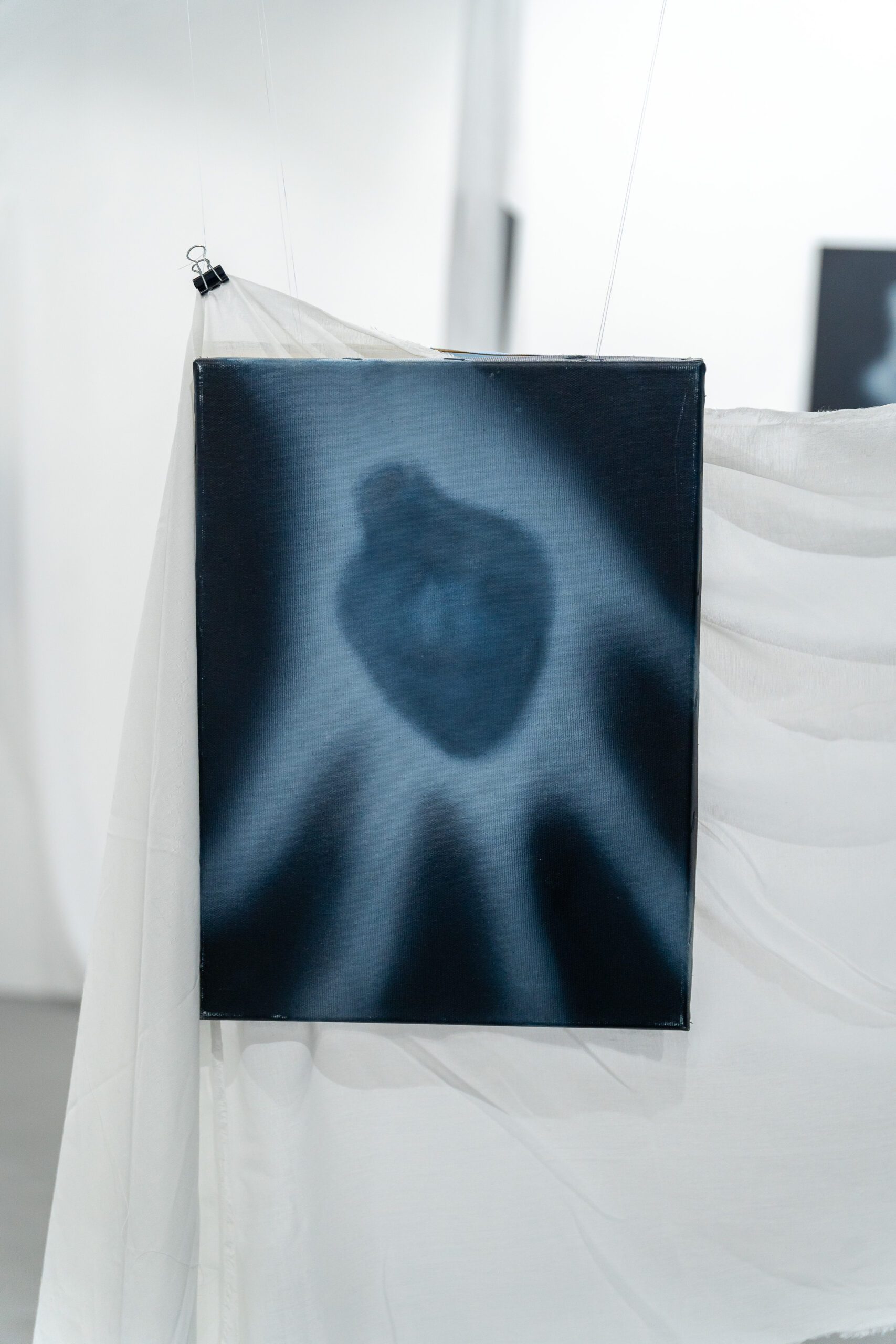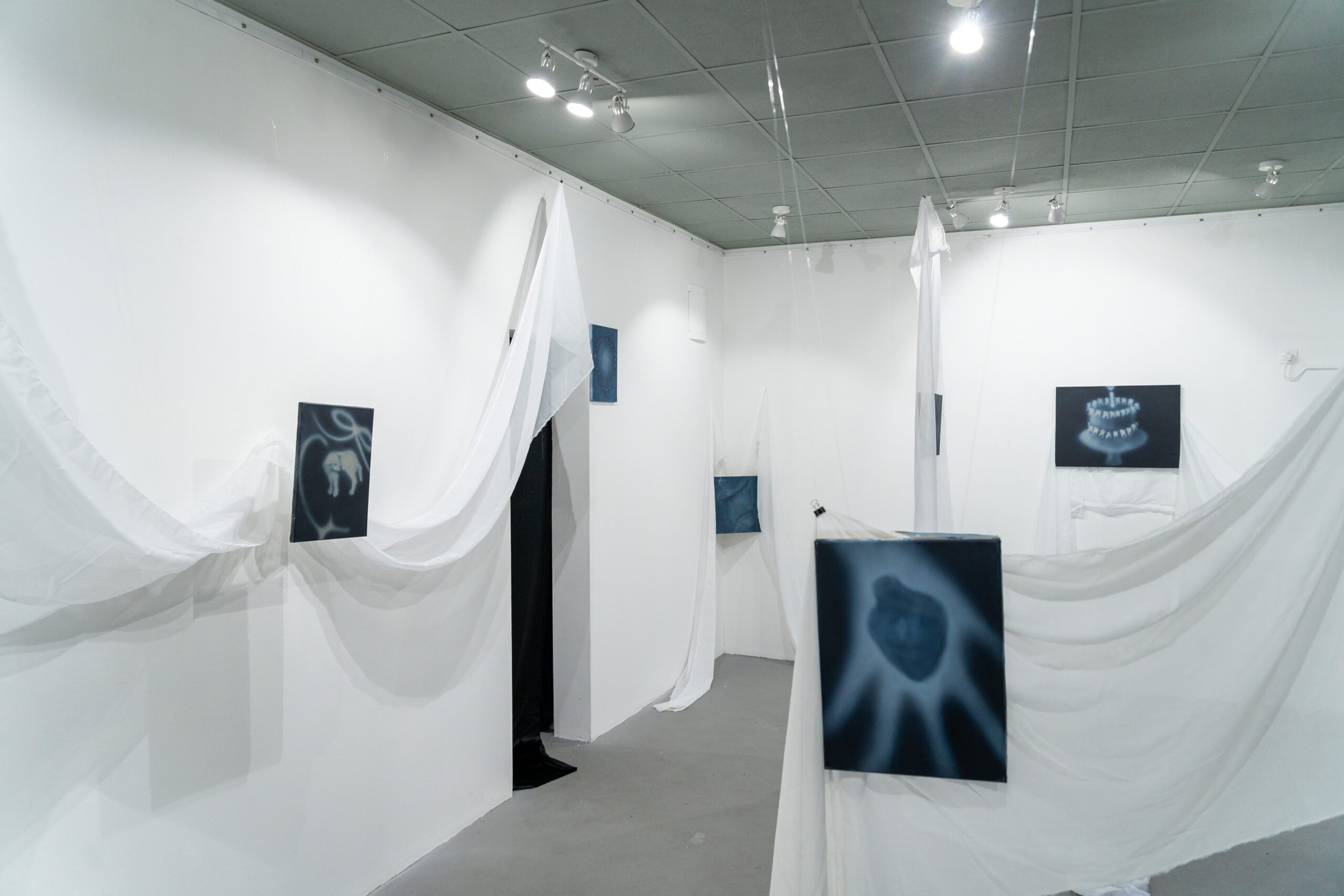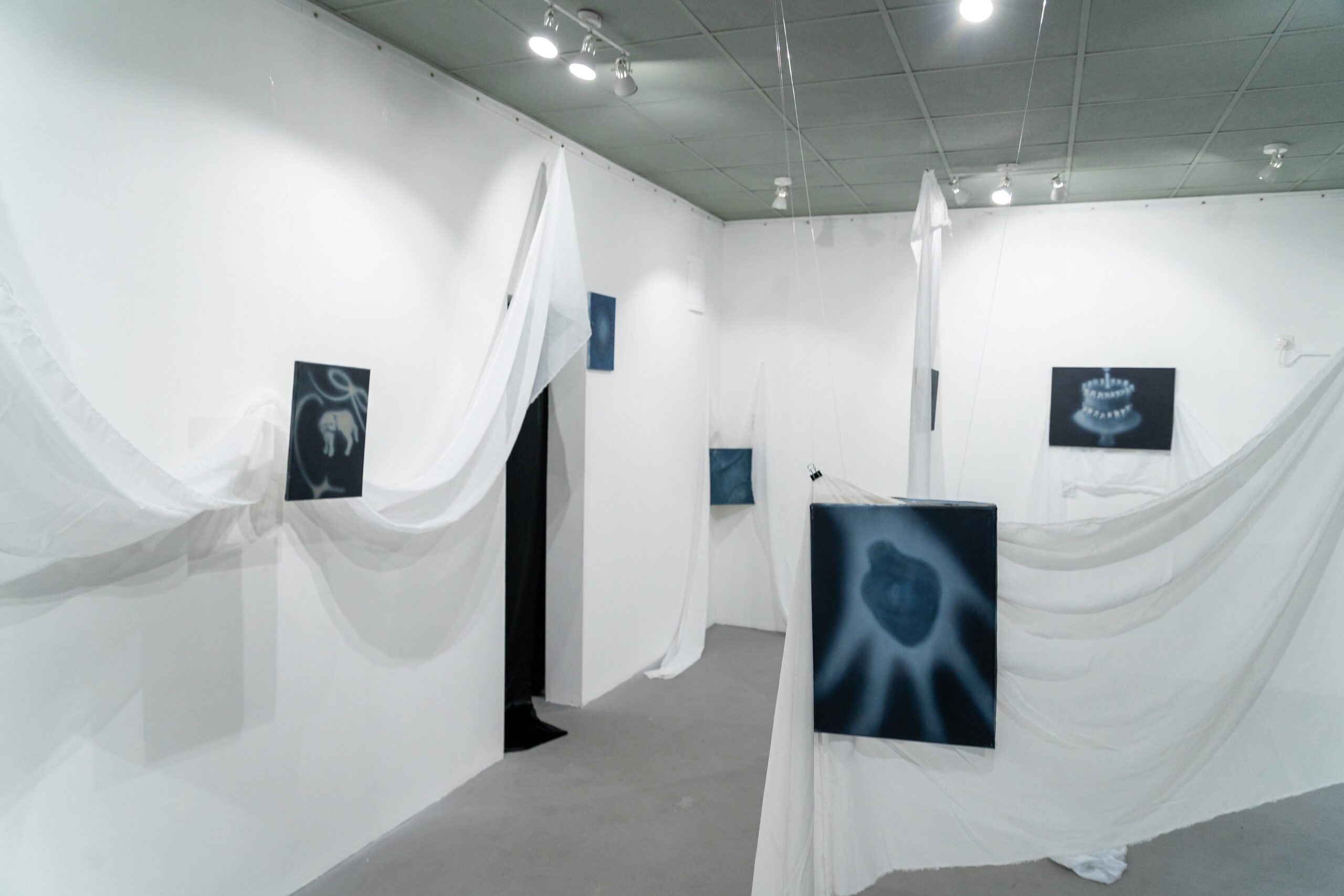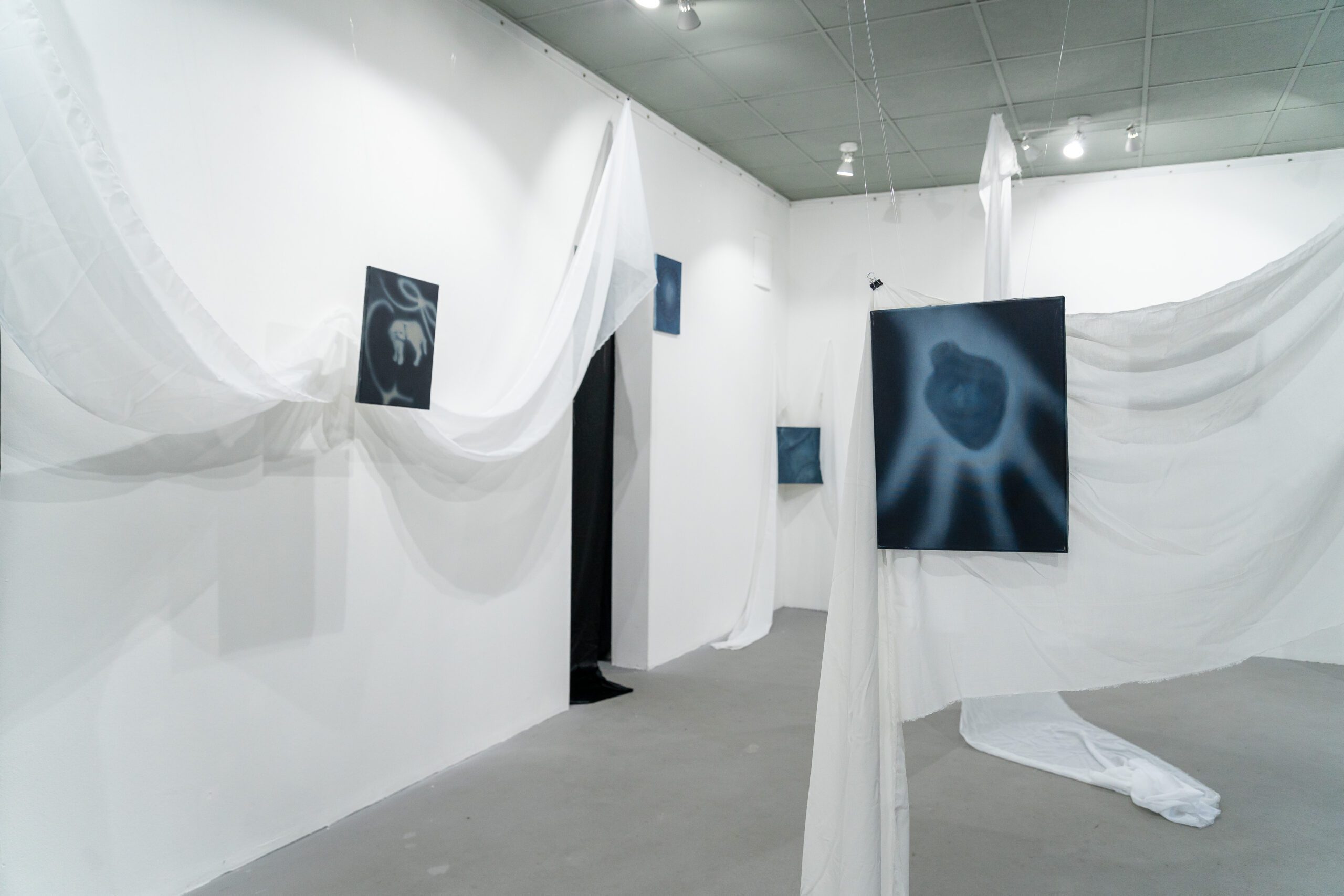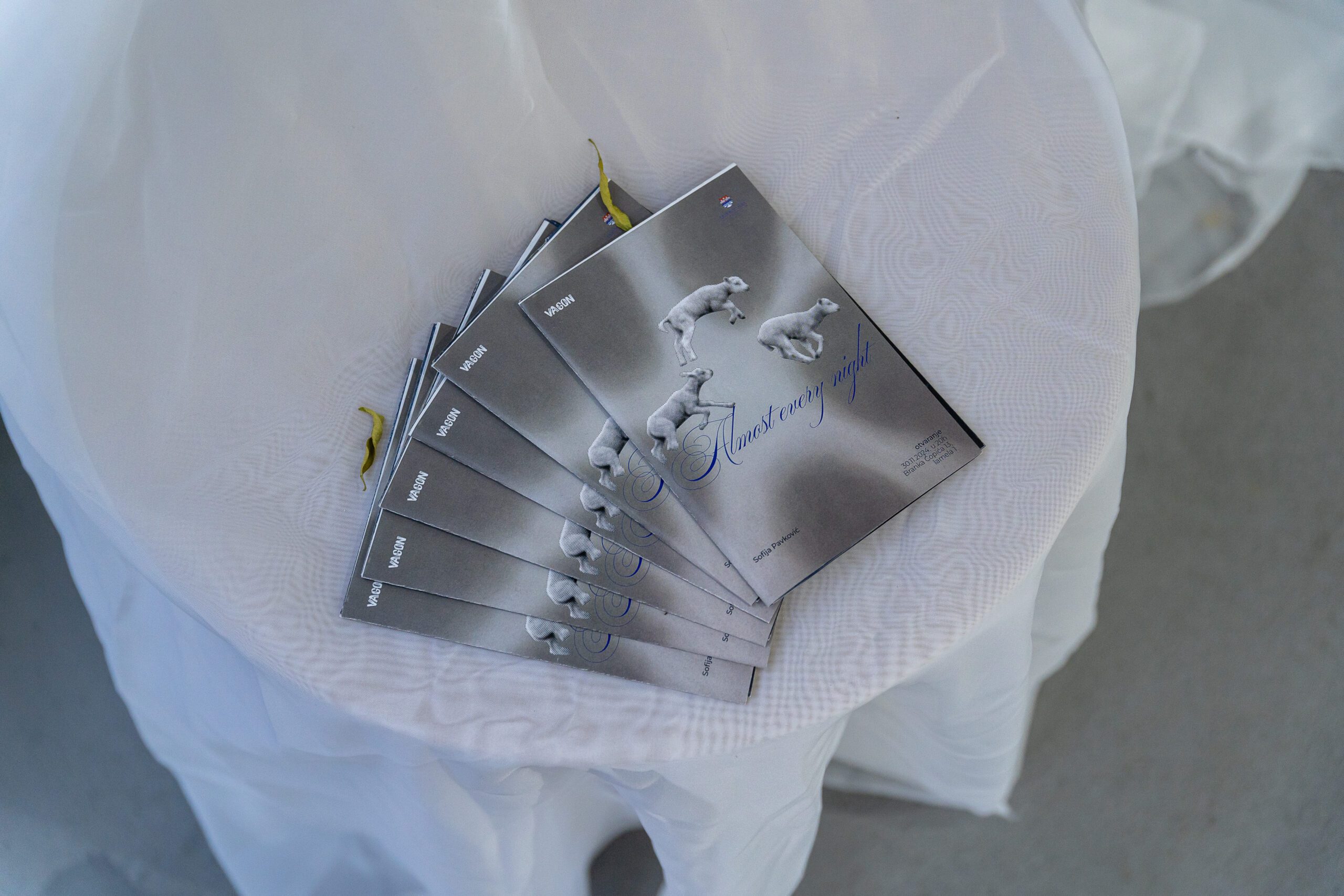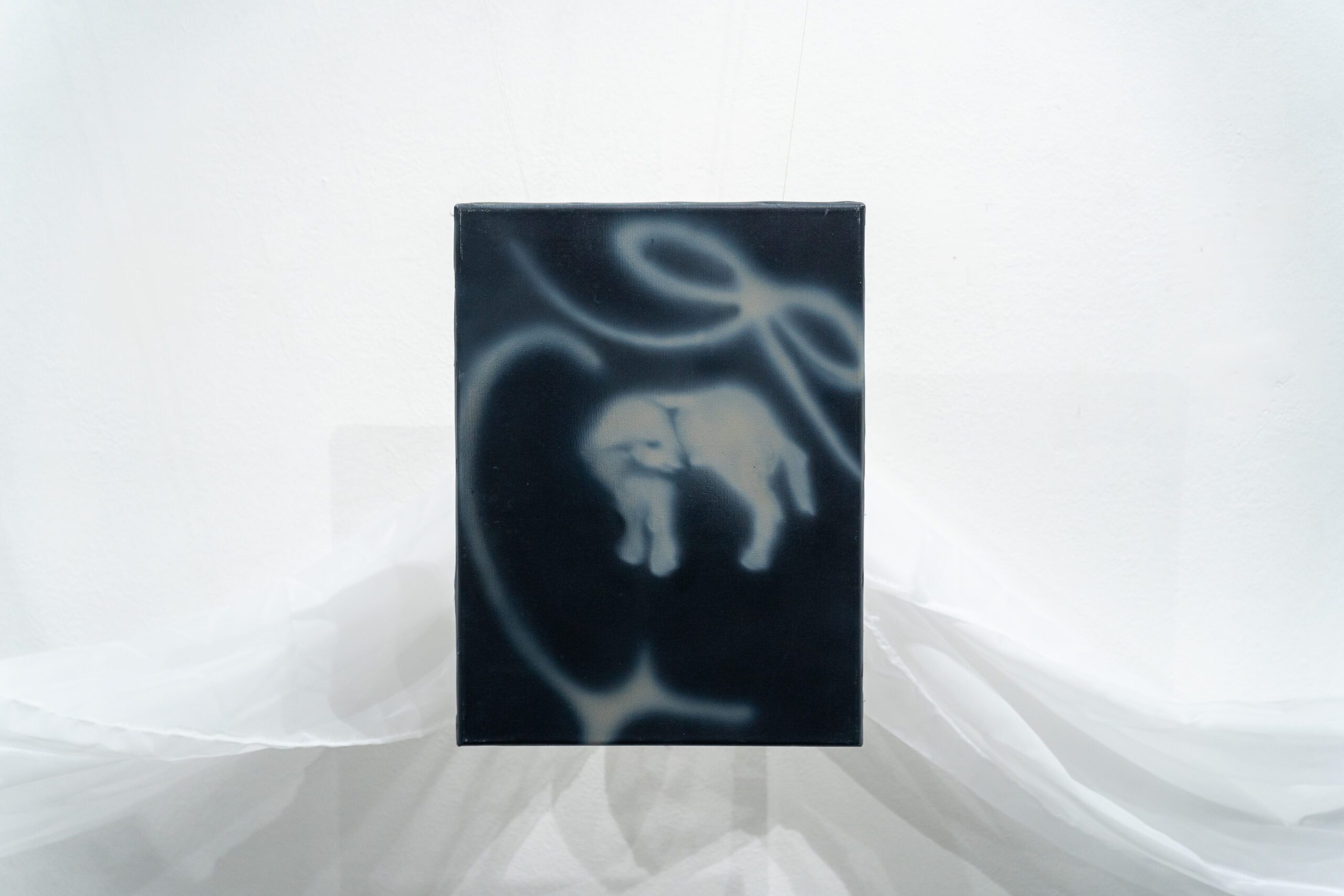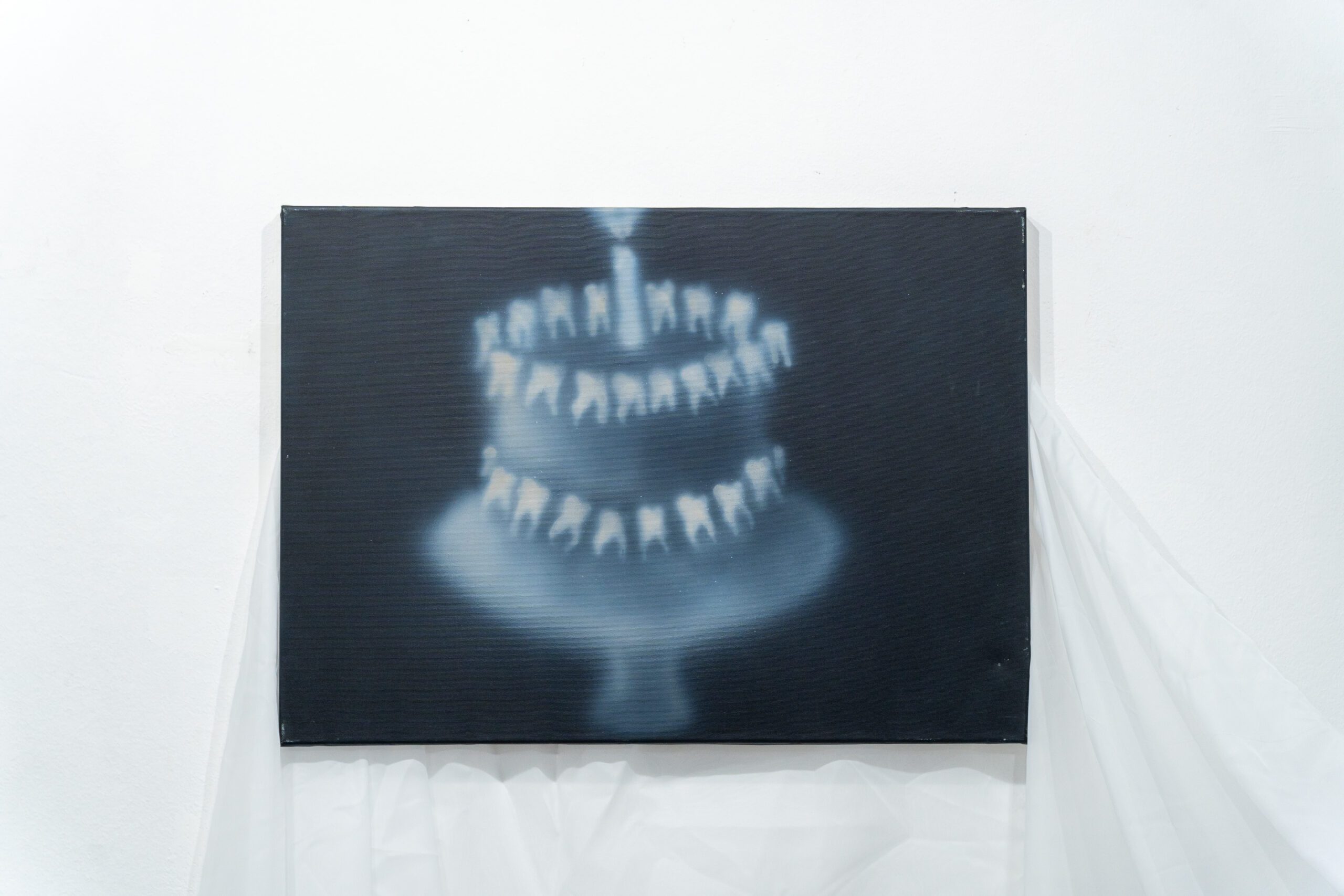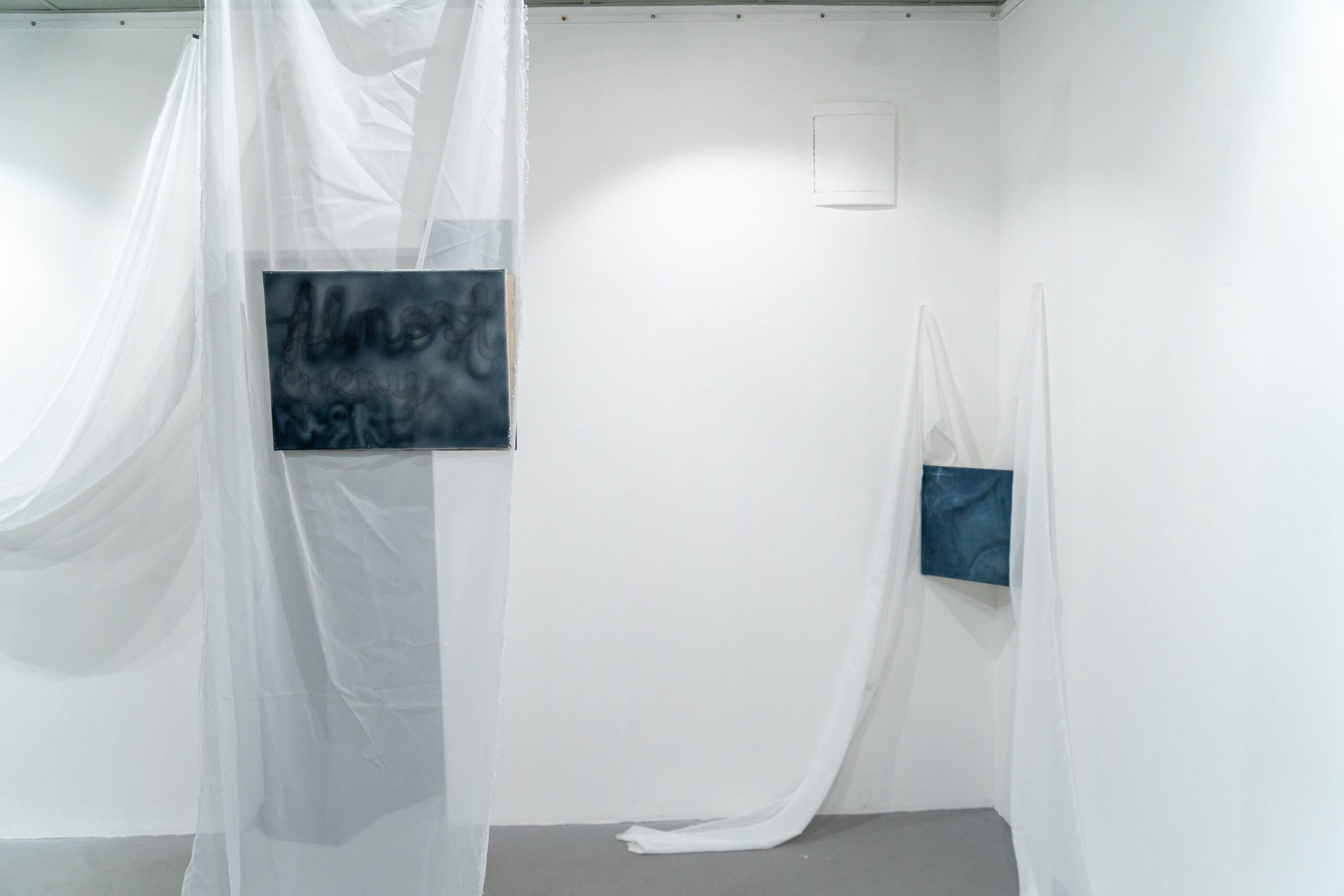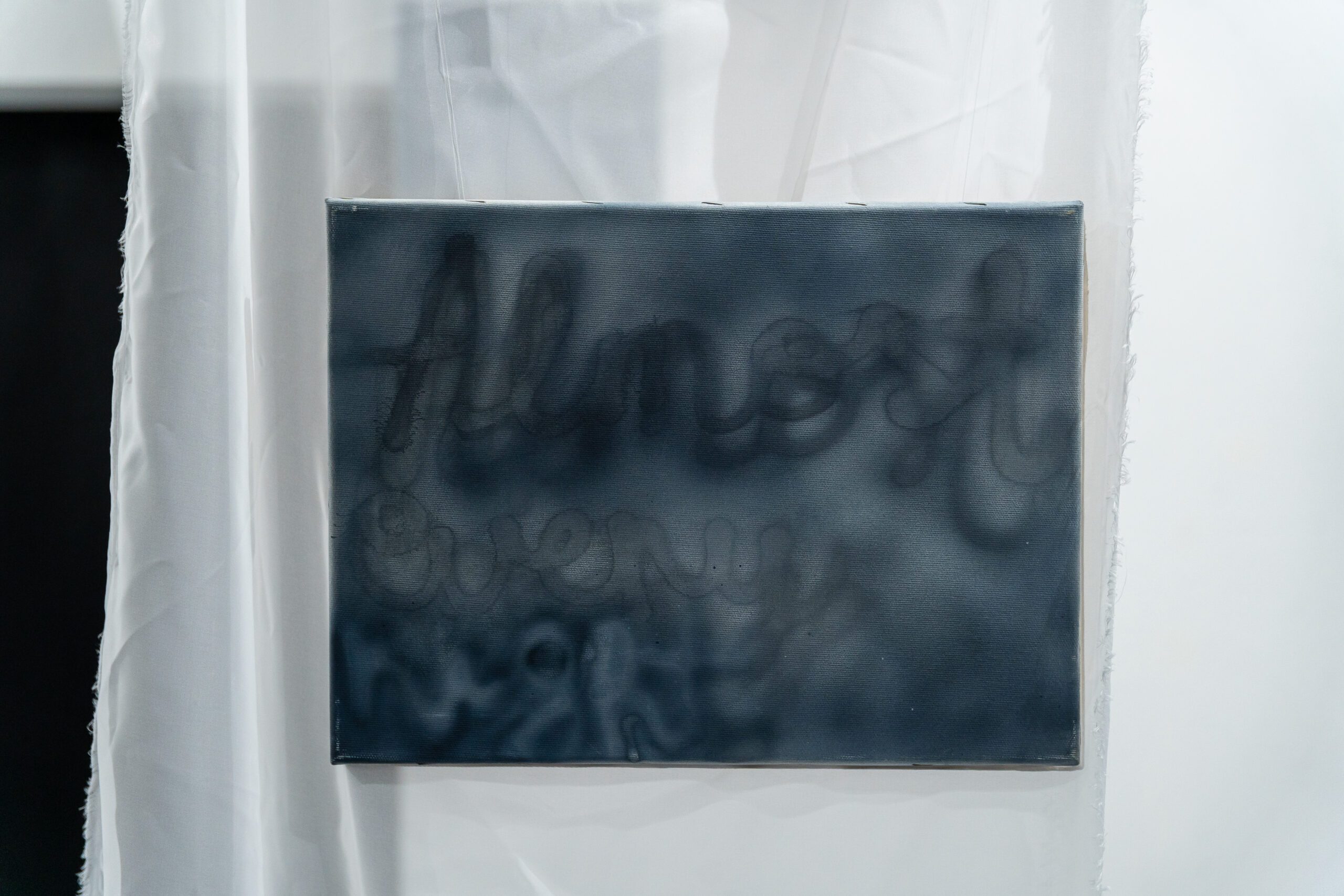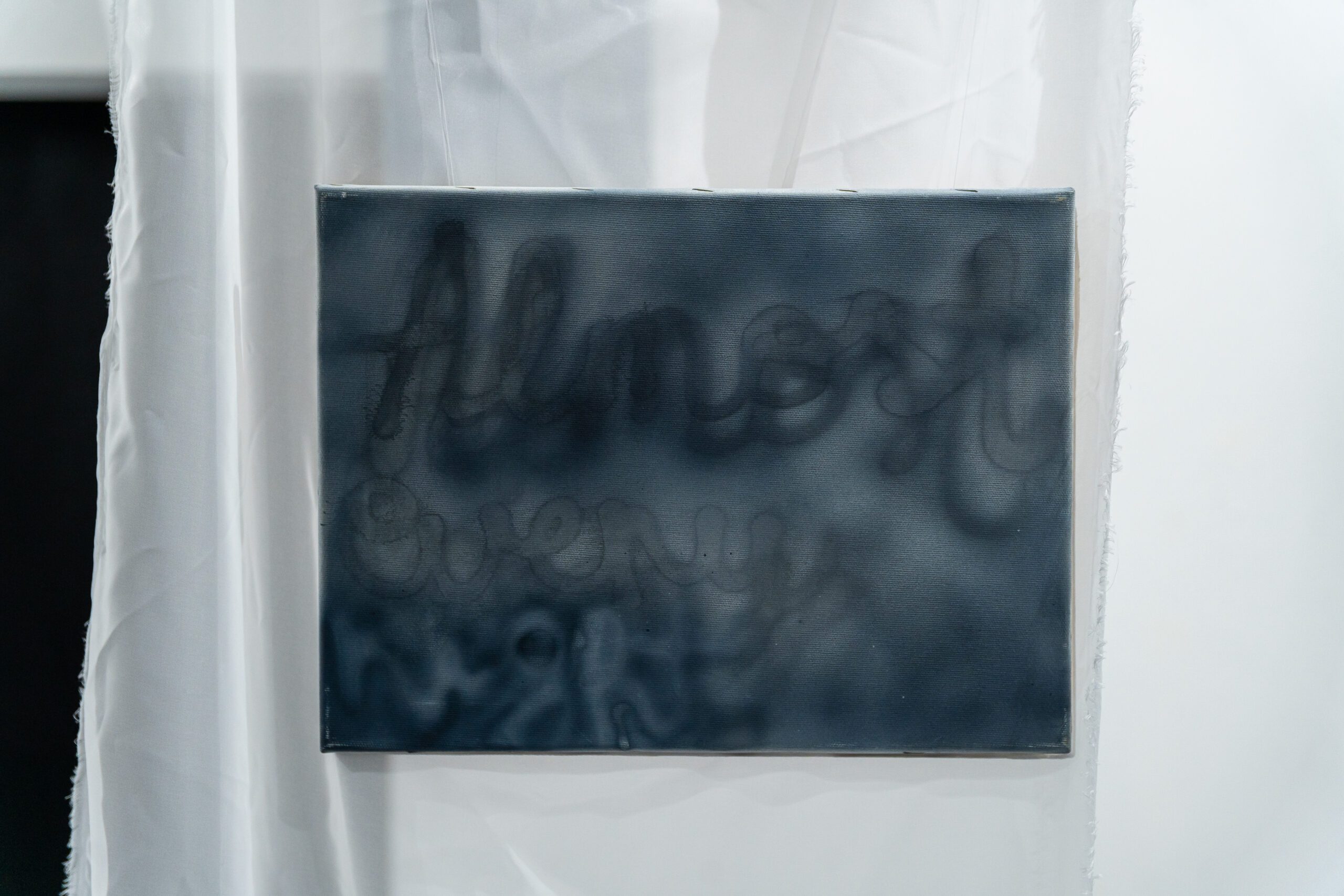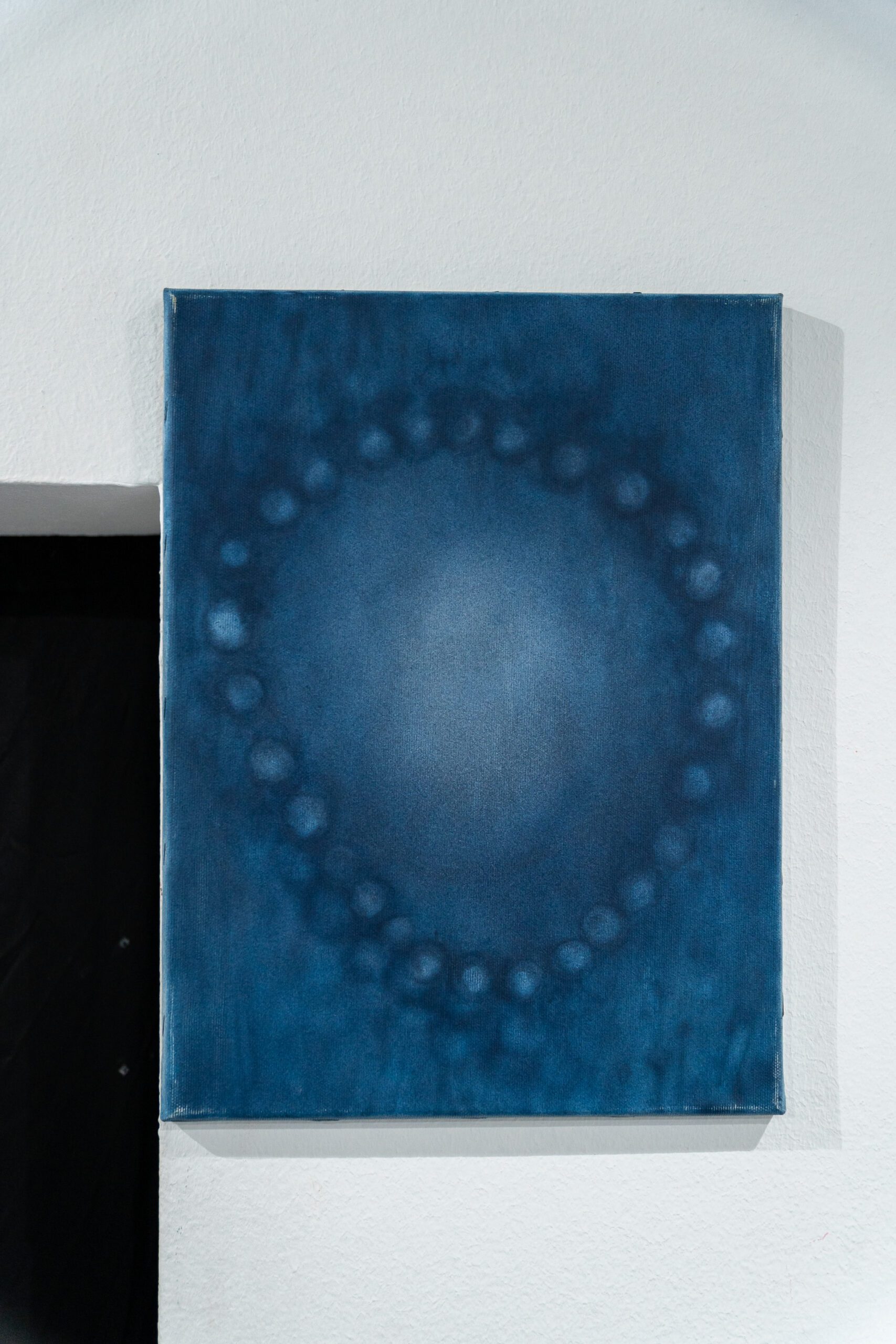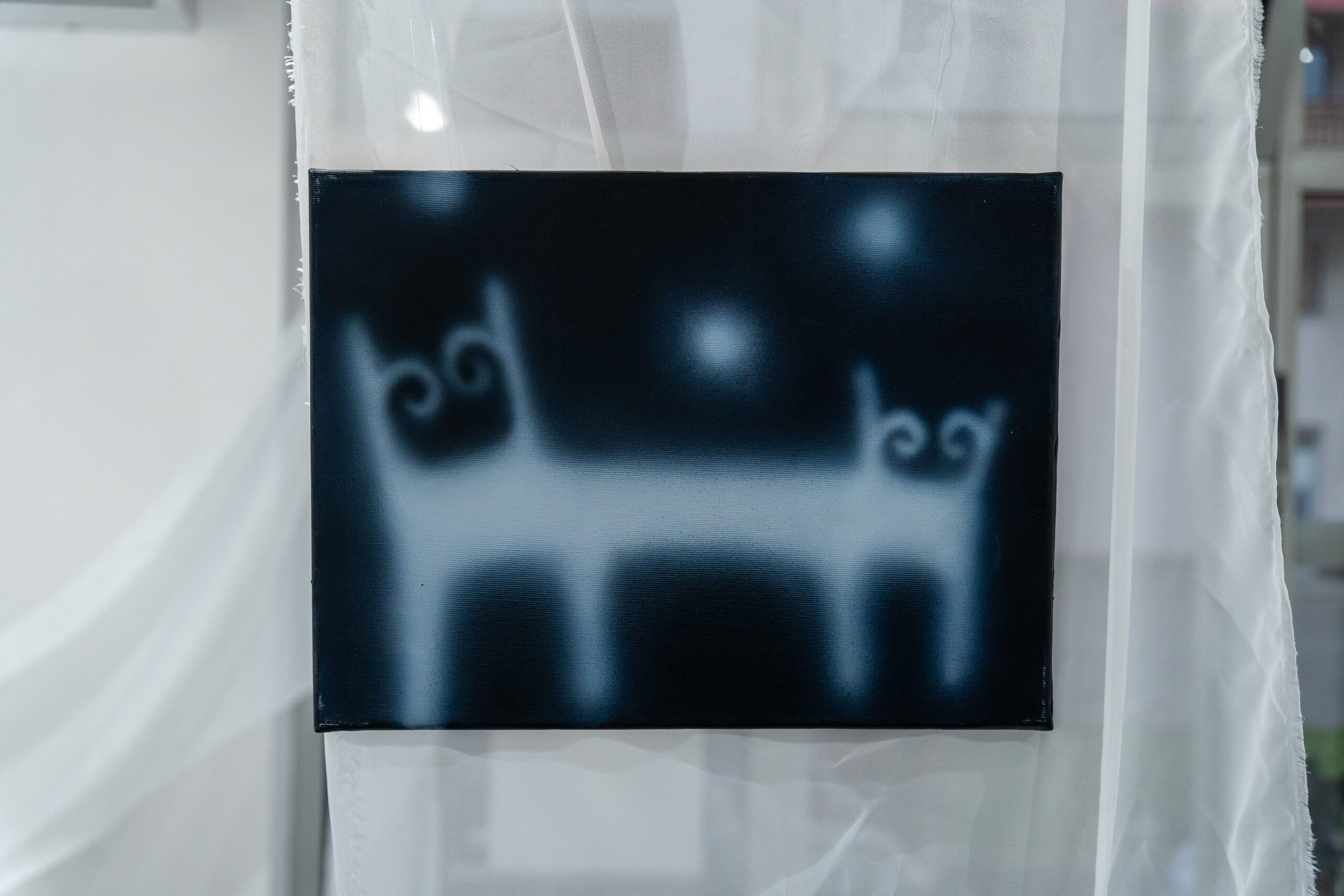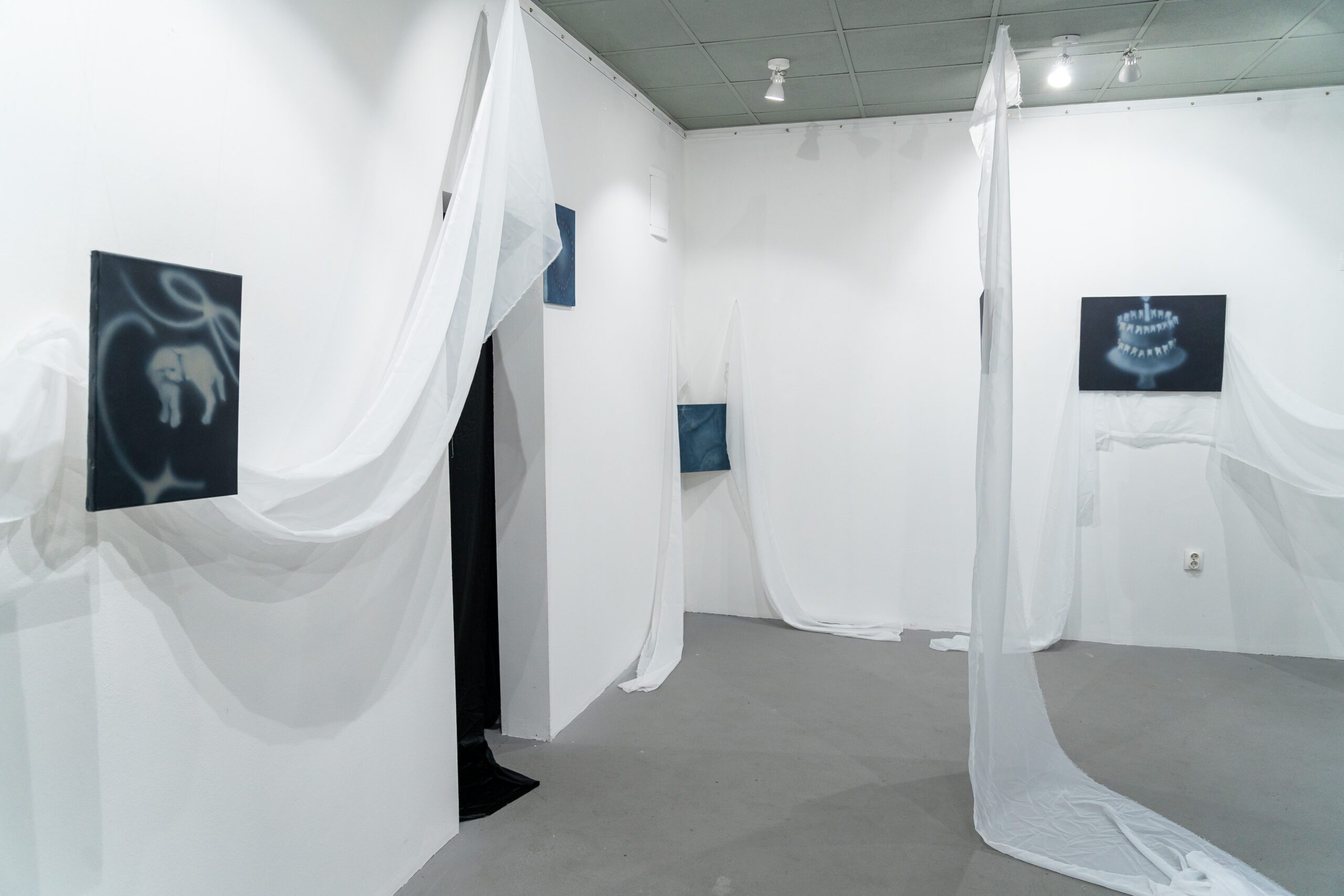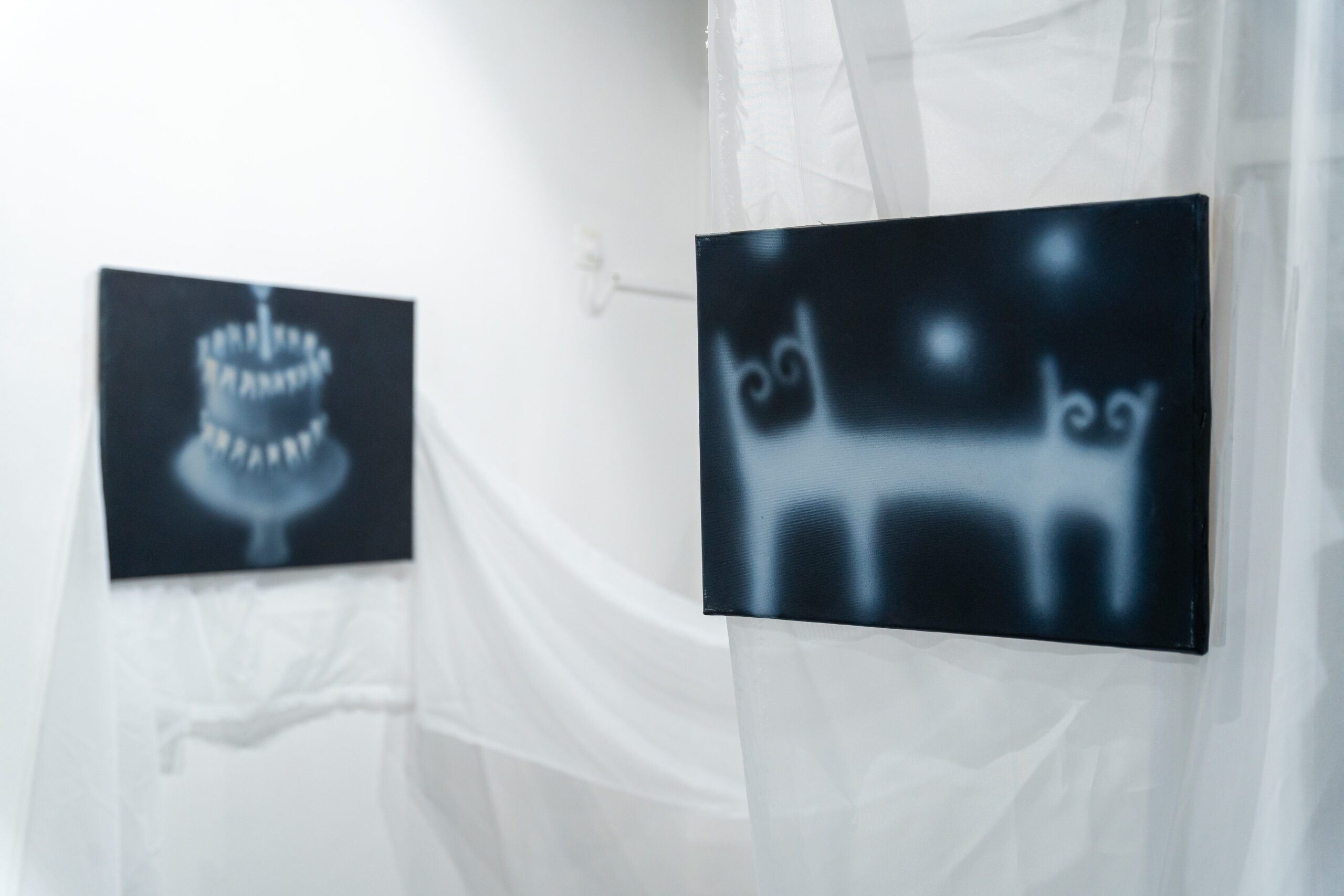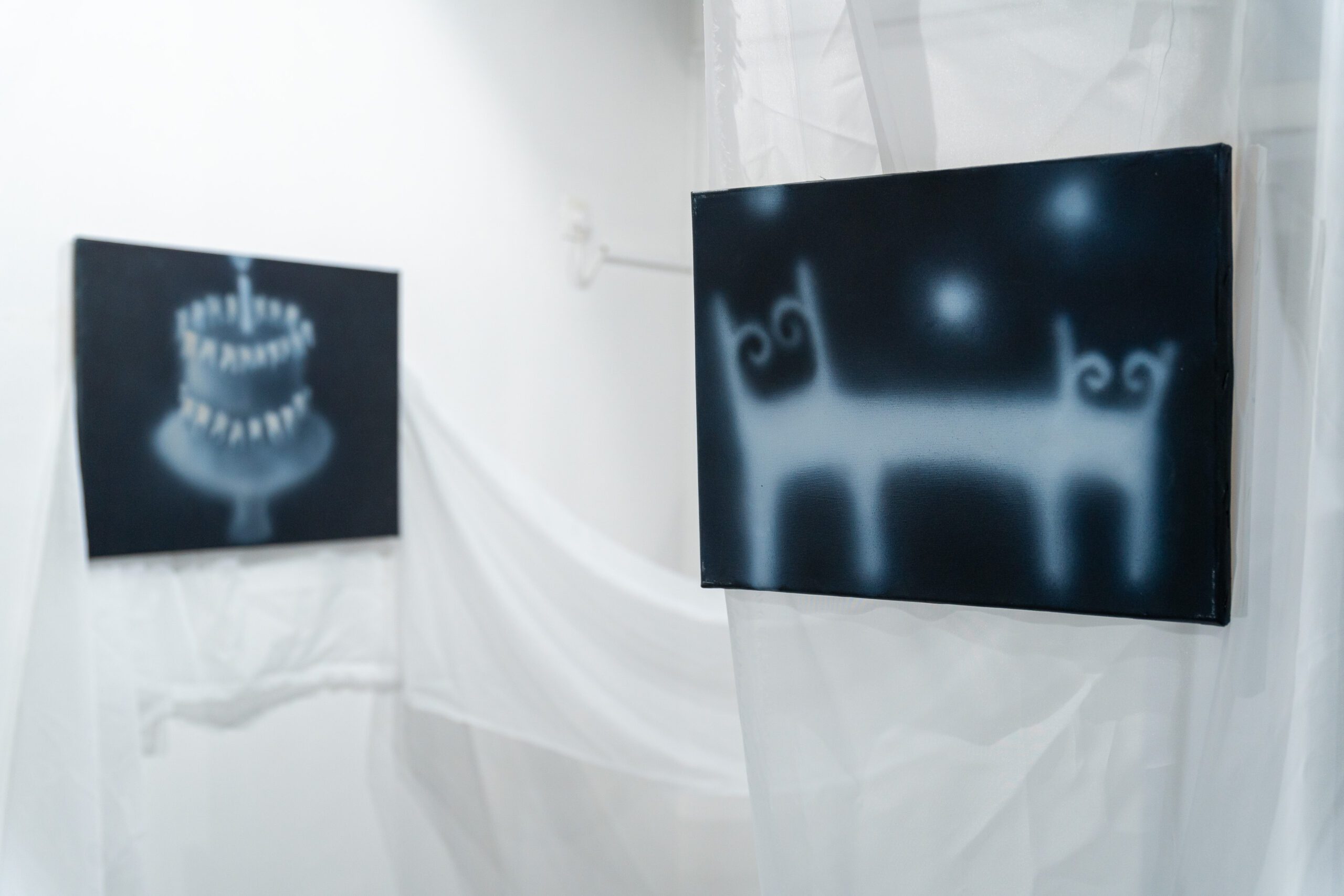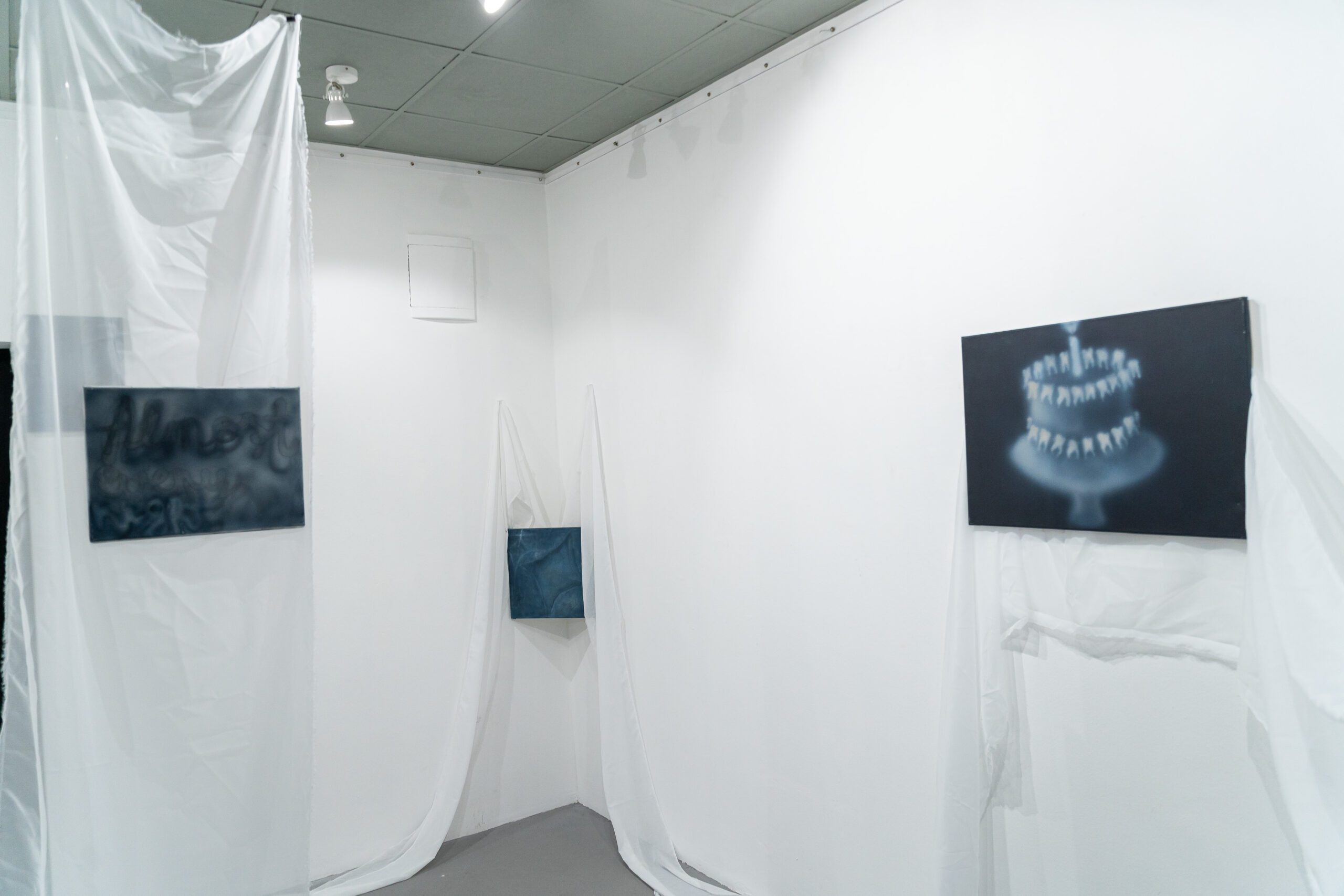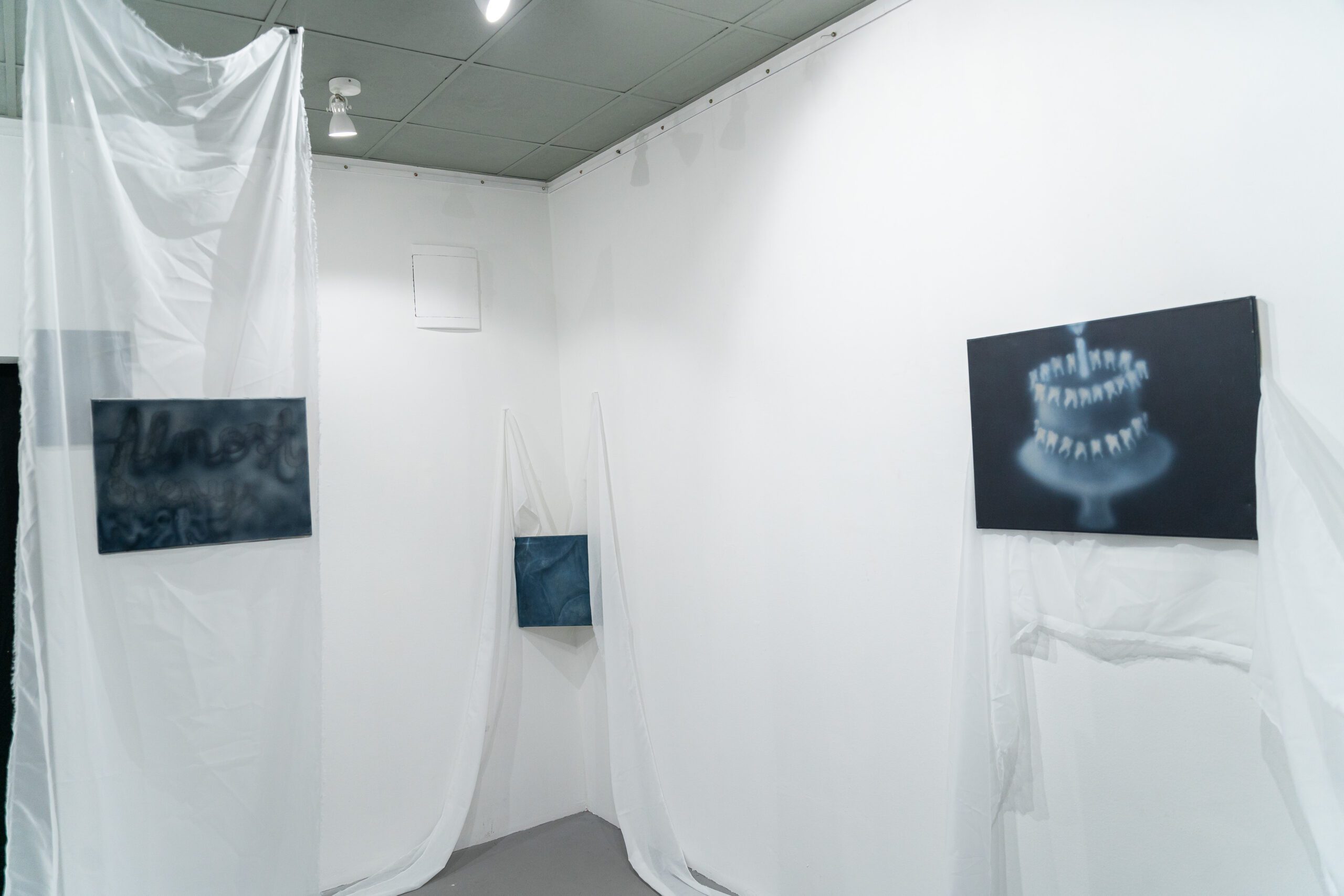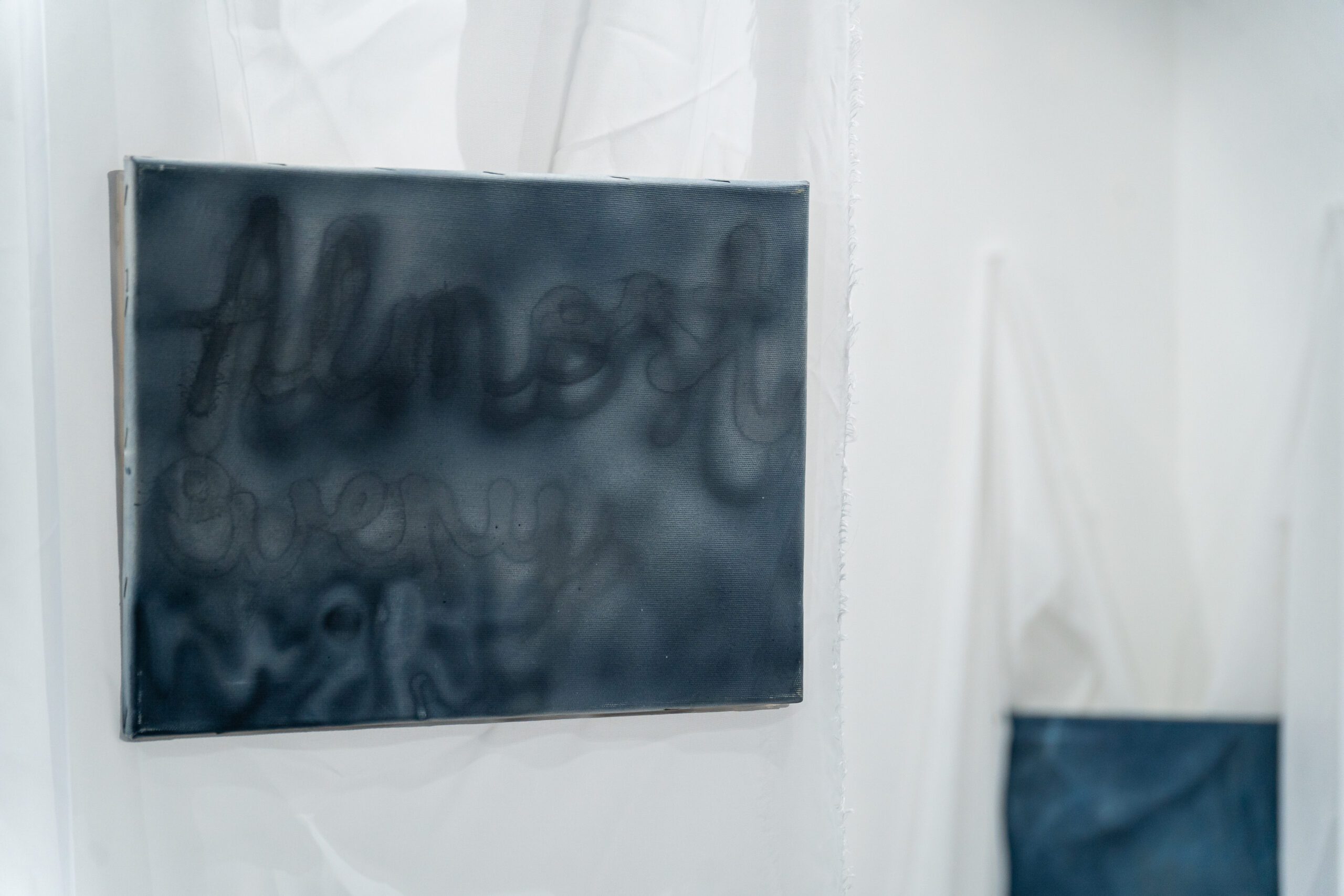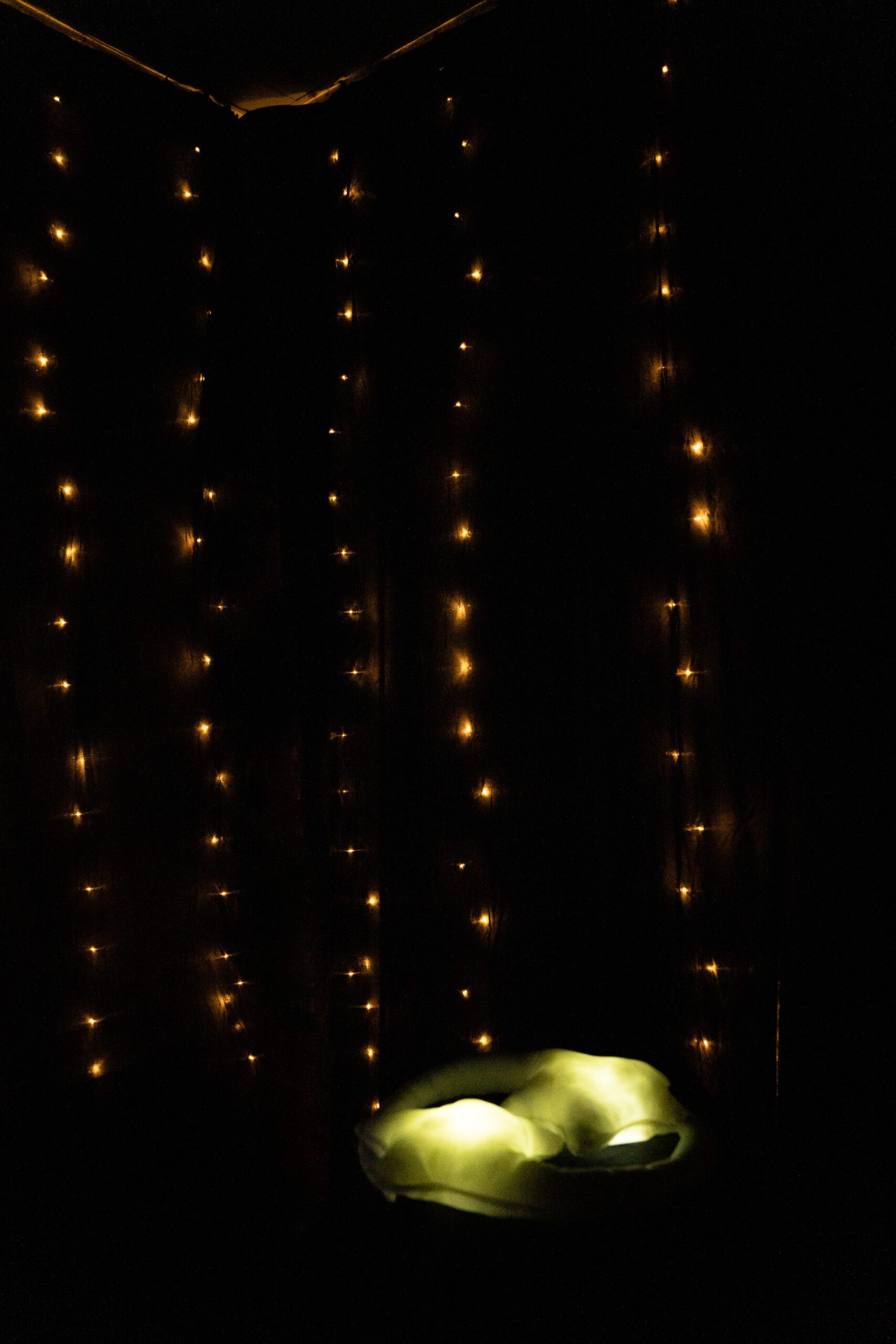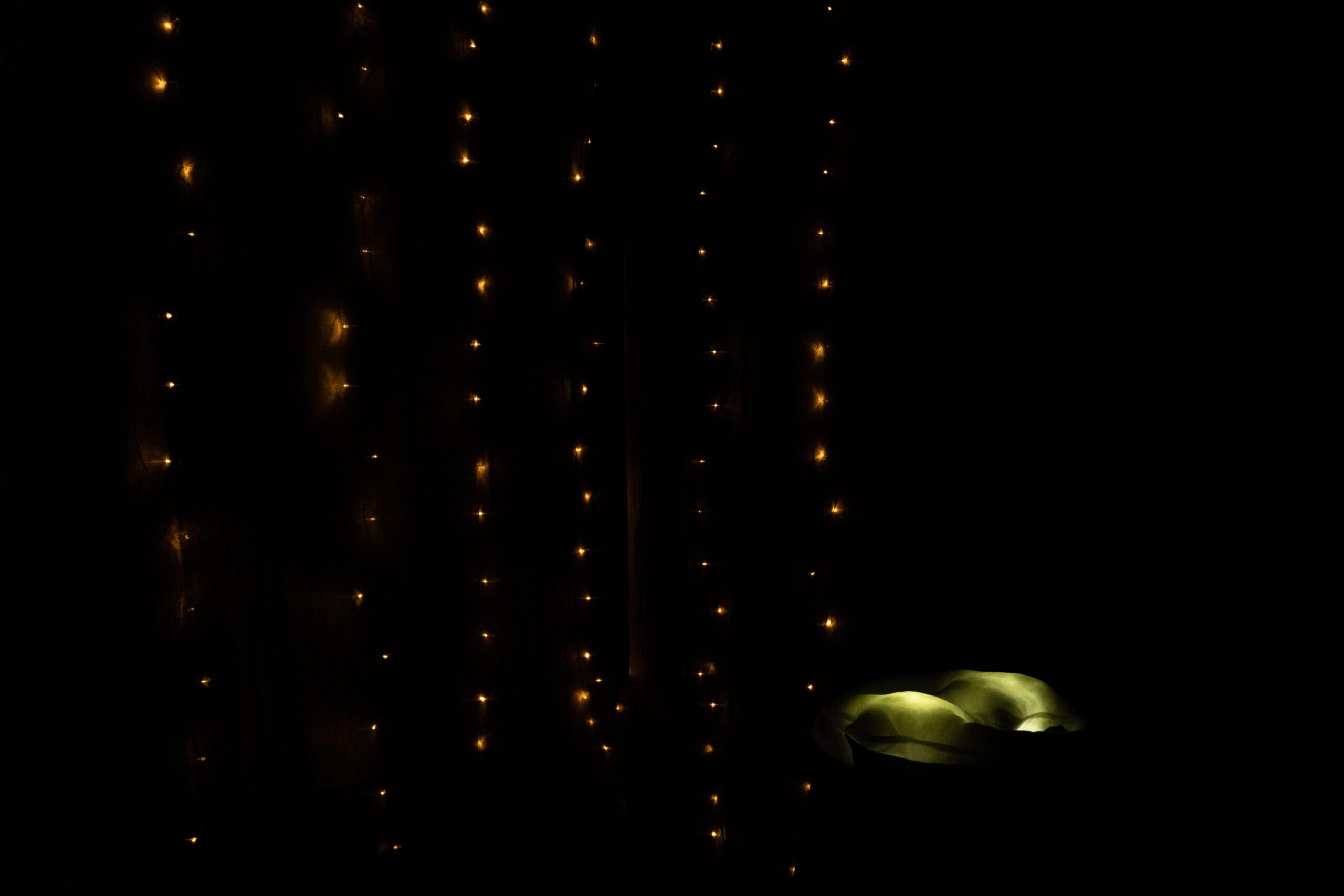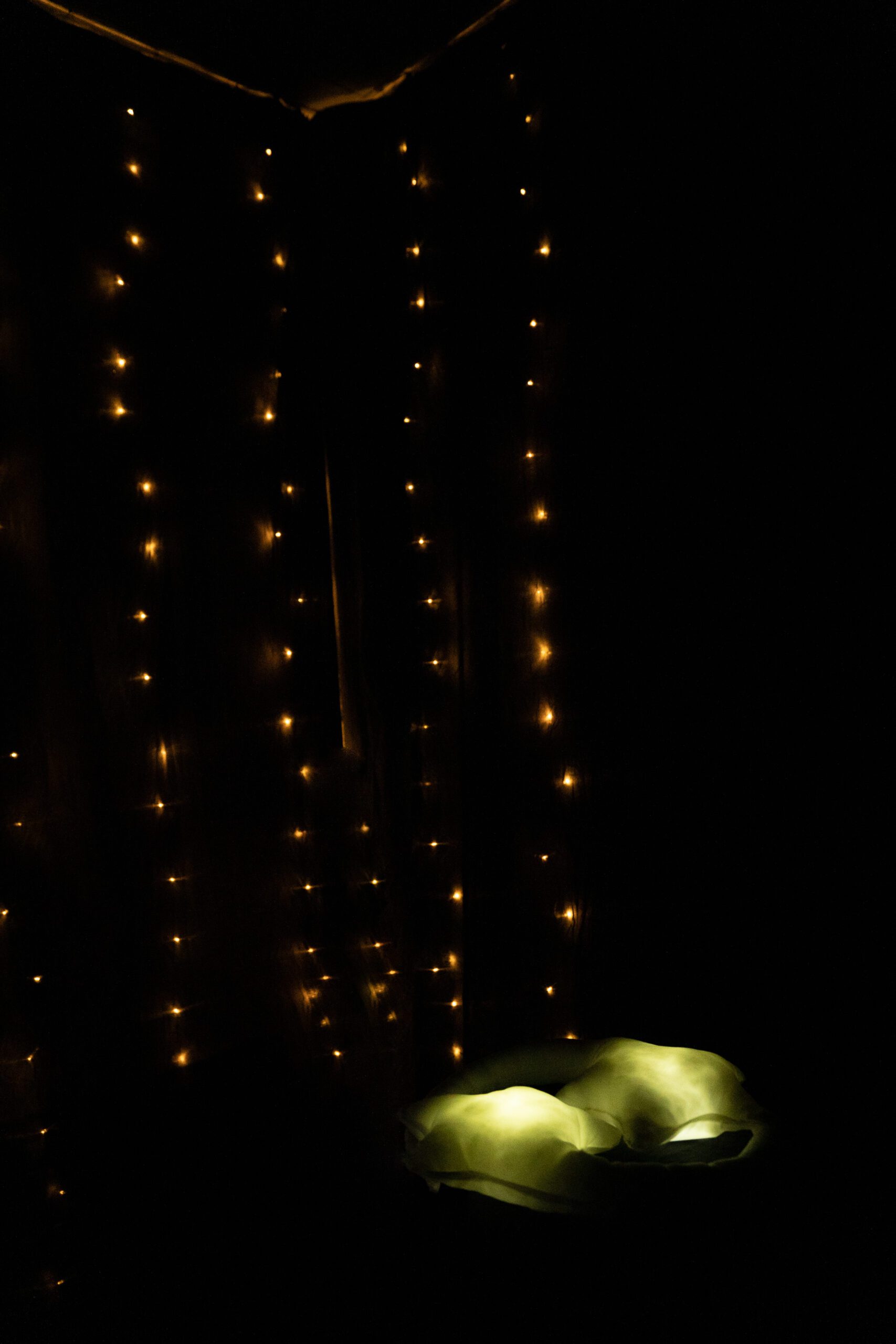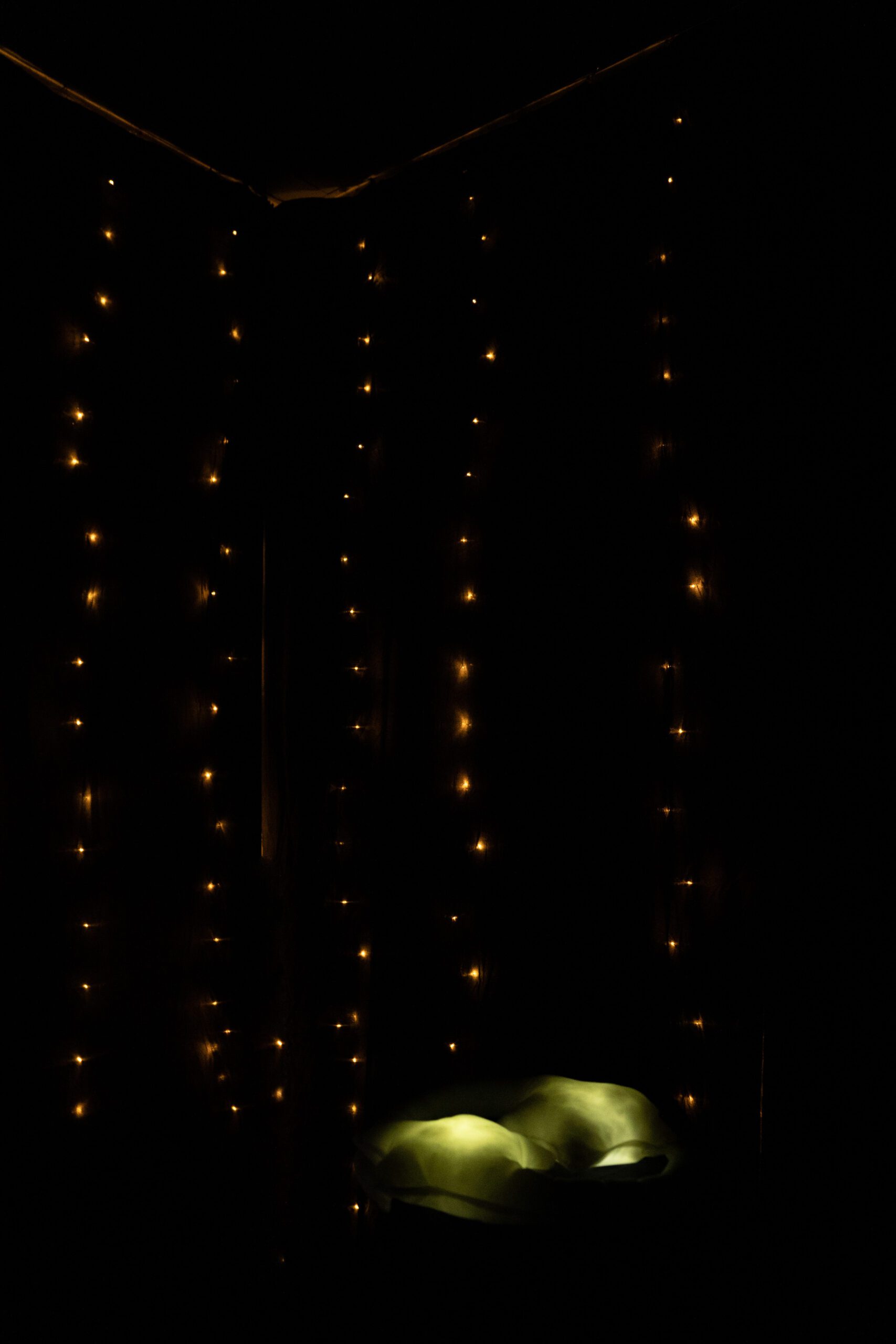

“Almost every night, I sit in bed and stare at my phone. Then I fall asleep and dream about the internet.” These are the words that begin an article in the online magazine WEIRD called Do you dream in the internet? Don’t freak out. The fact is that we live in a hyper-technological time and that our reality is occupied by cyberspace, and sometimes the two are so intertwined that it is difficult, one might even say impossible, to separate them. Our collective experience is colored by online platforms, social networks and rapid technological progress. Sofija Pavković’s paintings are almost abstract, and the outlines of random objects seem to be visible behind a bluish-white curtain that envelops the entire surface of the canvas. The titles in English, fragmented and hazy like the content of the paintings, seem to describe a piece of the dream or what remains of it after we wake up. The very fact that the artist names her poetry and works records in English testifies to the influence that the Internet and the media have on our generation. The unconscious or conscious choice of English as a means of expressing one's thoughts most clearly speaks of the phenomenon of constant consumption of content in that language and chronic spending of time online. Dreams have always been an integral part of human experience, and their interpretation, recording and memory have occupied the human species since the very beginning of developed consciousness and thought. They are written about in almost every domain of science and parascience from psychology and medicine to astrology. Such widespread interest in dreams probably stems from the fact that we try to understand a universal experience close to every person in a different way on a personal level, since dreams are a deeply subjective and intimate experience that depends on a multitude of factors. During the ancient era, many civilizations and cultures believed that dreams contained a deeper meaning. The ancient Greeks and Romans believed that dreams revealed and conveyed certain hidden messages from the past, present and even the future. Due to the unclear origin of dreams, which remains quite hazy even today, they believed that gods or higher powers sent them messages through dreams. However, they tried to recognize the importance of these “messages”, so not all dreams were viewed in the same way. Some were characterized as less important, while others were analyzed in more detail. This process of differentiating the irrelevant from the important content began with an attempt to determine the origin of a particular dream in order to further determine its significance. Even then, it was very important who dreams, what they dream about, what reaction the dream evokes in them, and under what circumstances the person dreams. It has been proven that individual dreams are influenced by collective social, historical, political, economic, religious, and ethical conditions. Dreams are, therefore, influenced by the environment, which makes an absolutely subjective experience in the context of the community form certain overlaps and connect scattered individual thoughts into the narrative of the era in which they arise. And how do we function under the influence of dreams? How do we create inspired by them, how do we record and remember them, and how do they shape our creative space? Can we even determine the significance of dreams and what they represent in our creative processes? Can we even detect which processes in our thinking and creation originate from dreams? These are just some of the questions that Sofija Pavković addresses – not giving definitive answers, but only exploring options in her solo exhibition titled Almost every night. Many of the things that appear in our dreams are directly related to our memories. Australian anthropologist and artist Katie Glaskin, in her text Dreams, memory and ancestors: creativity, culture and the science of sleep published in the Royal Anthropological Institute of Great Britain and Ireland, says that memory is a biological but also a cultural thing, which means that the cultural aspect influences the formation, memory, understanding and recording of dreams. Through paintings, poetry and spatial installations, Pavković wanders through dream spaces in order to explore them. The focus of this exhibition is on the present and everyday life (with a focus on all research and beliefs from the past). When we talk about contemporary experience and the era in which we currently live and create, it is impossible to avoid the phenomenon of artificial intelligence. Just as the ancient Greeks interpreted dreams in accordance with their reality and known phenomena, it is now possible to interpret dreams through artificial intelligence. It seems as if we have come full circle from antiquity to AI. But is it actually possible for a computer program to interpret our dreams? If so, would that be a good thing or a bad thing? Powerful new artificial intelligence systems are raising urgent and destabilizing questions in many areas of life, including dream research. Will this help people better understand the meaning of their dreams, or will it become just another way in which technology takes control of our lives? Artificial intelligence cannot dream, and therefore it lacks the factor of understanding feelings that we can only experience through personal experience. In this exhibition, Sofija Pavković examines a series of phenomena that merge, intertwine and become inseparable so that any narrative can be loaded into them. Are they divine interventions, lucid dreams, products of creative inspiration or AI-generated interpretations of faded memories of the same. The charm is that it can be all of these, but also none of these. In Wagon, Pavković tries to create a hybrid space that resembles a lucid dream. Through visual and sound effects, she creates an amalgam of different stimuli in order to erase the boundaries between the creator and the observer and create a space of shared dreaming.
Text: Bojana Jovanović