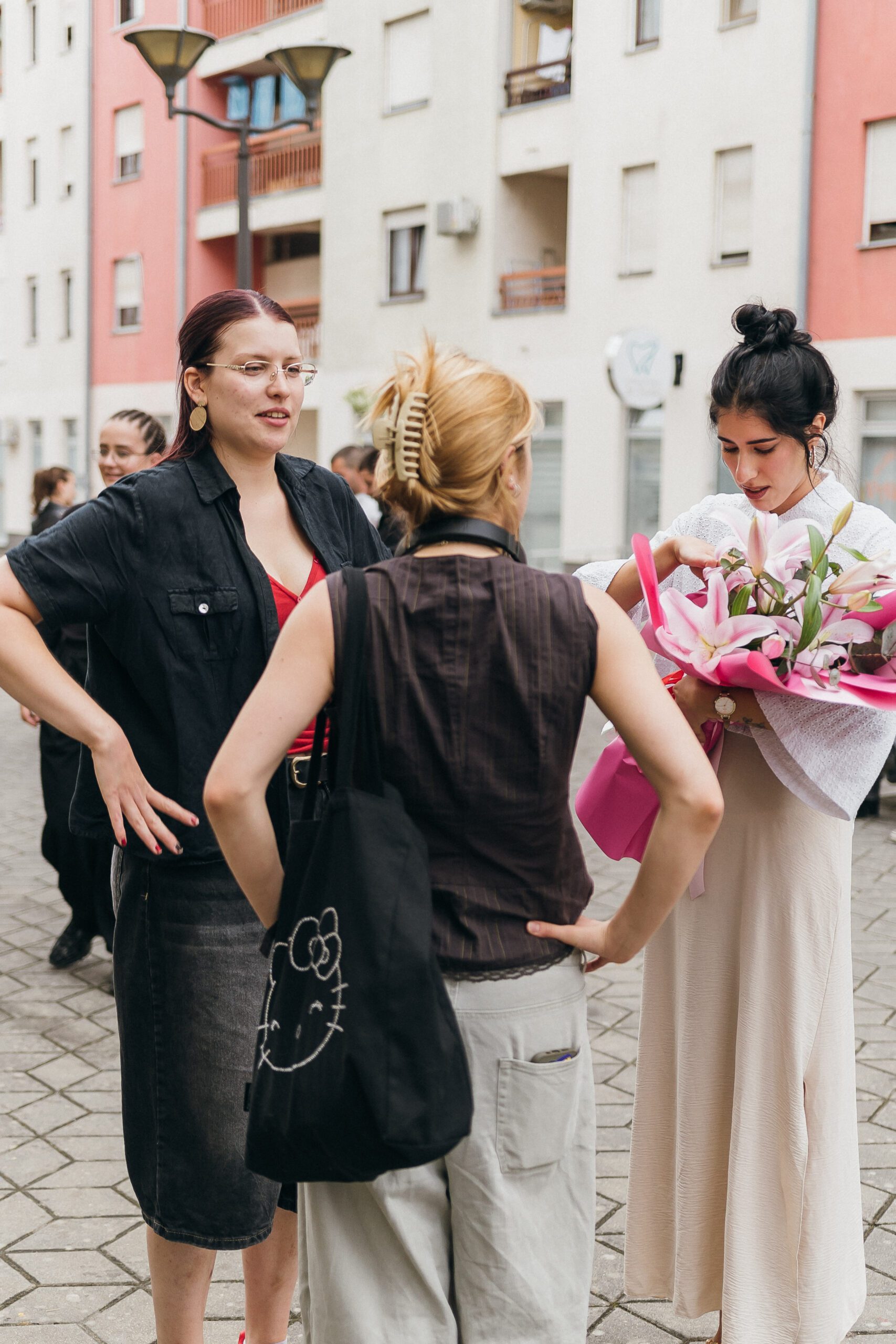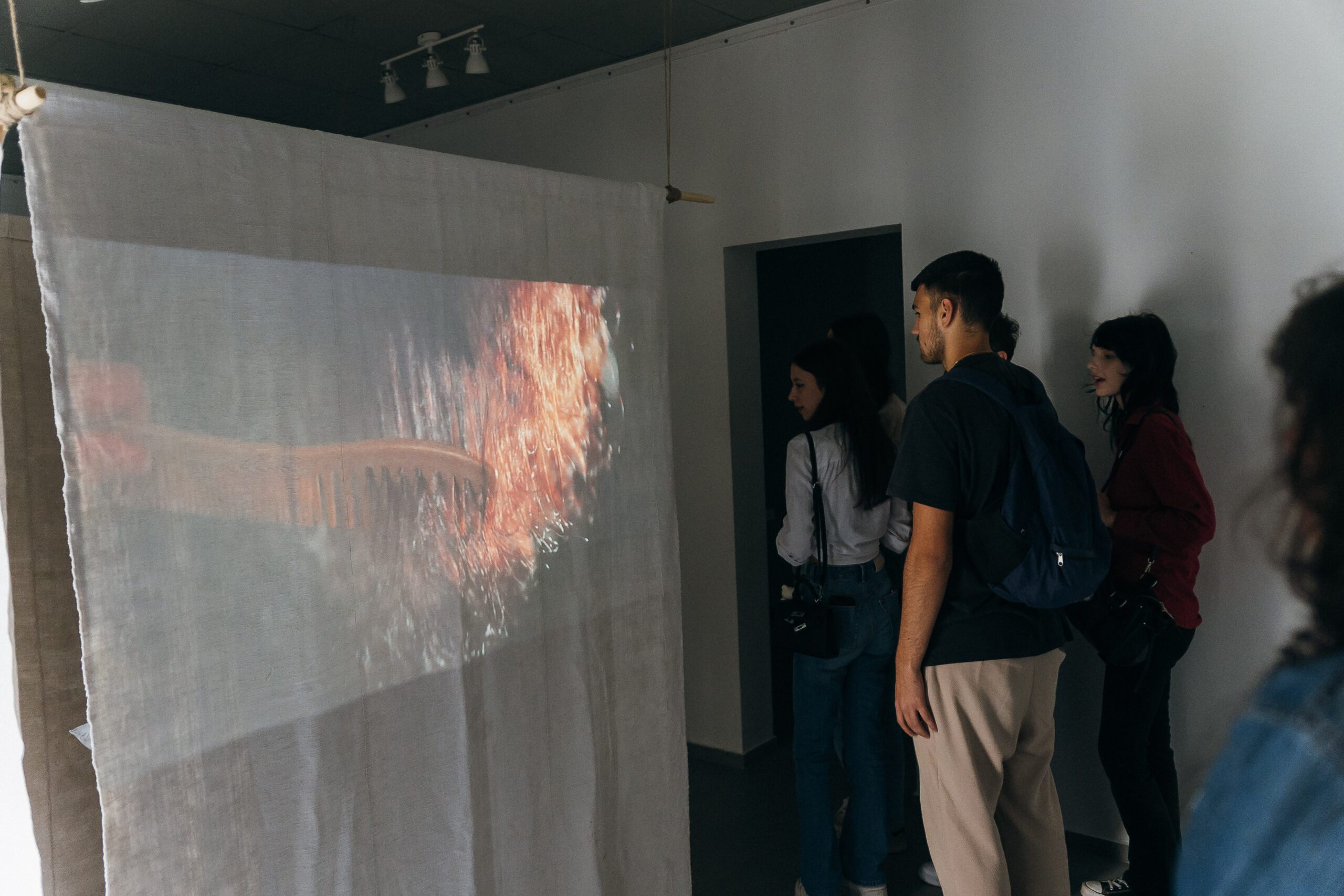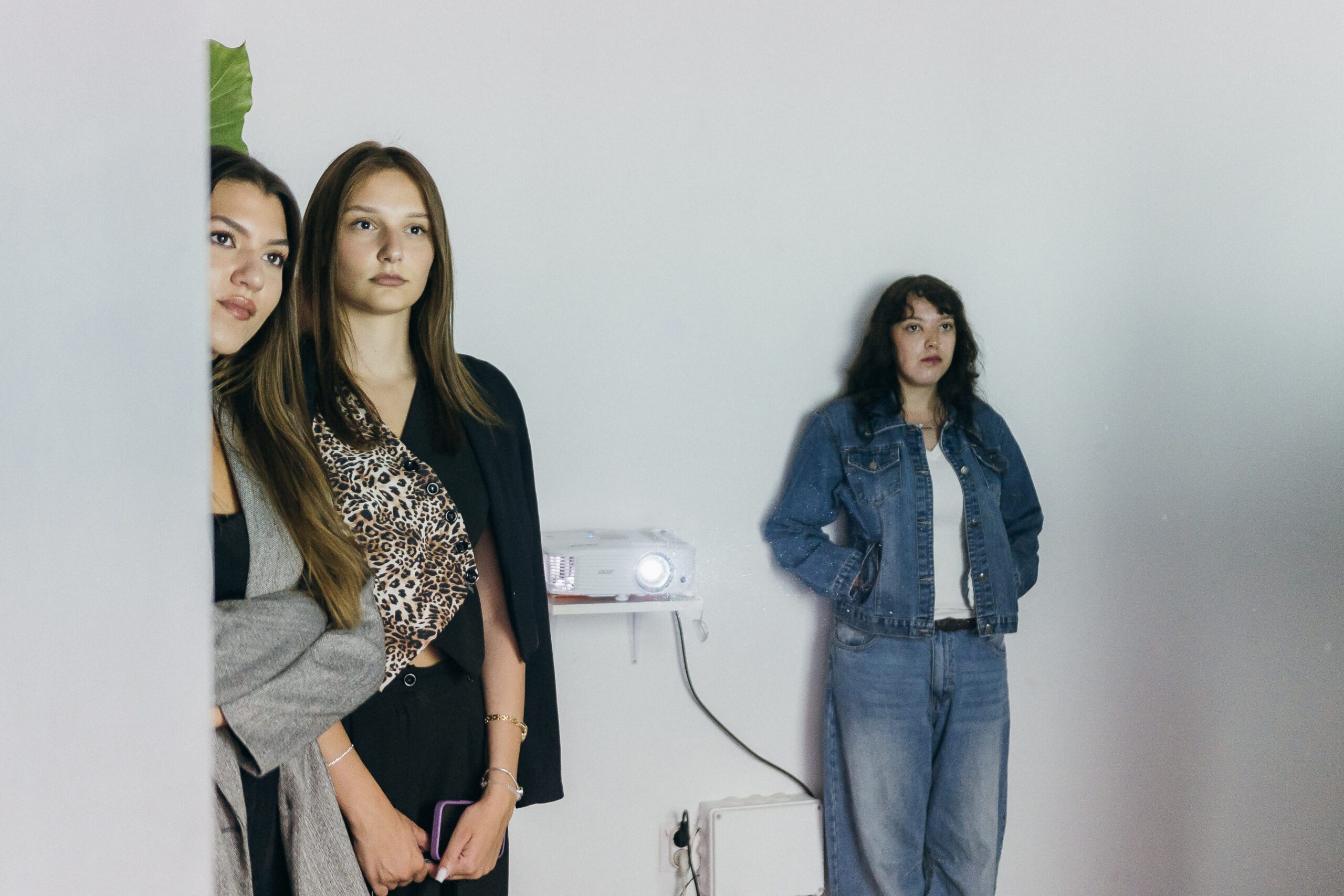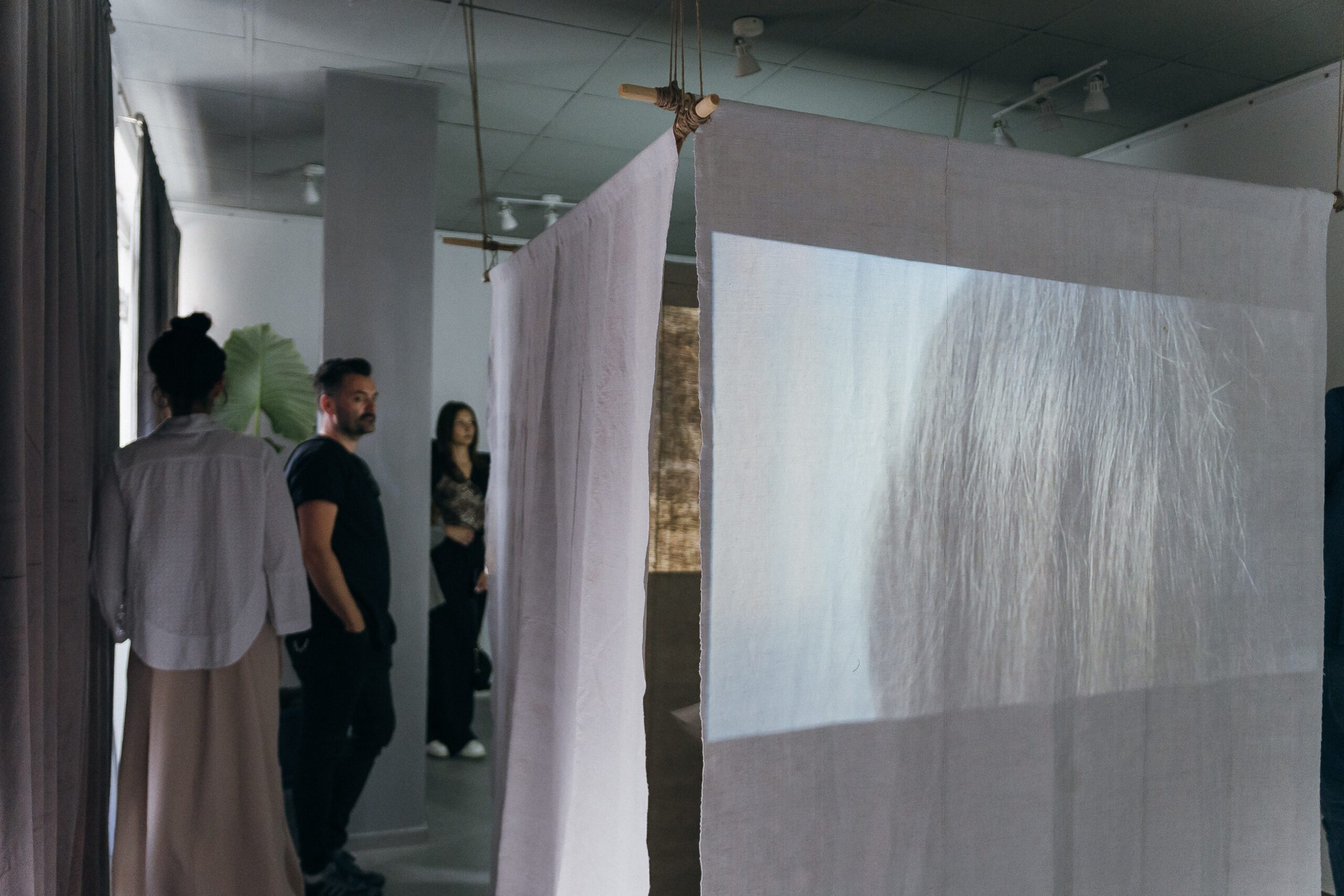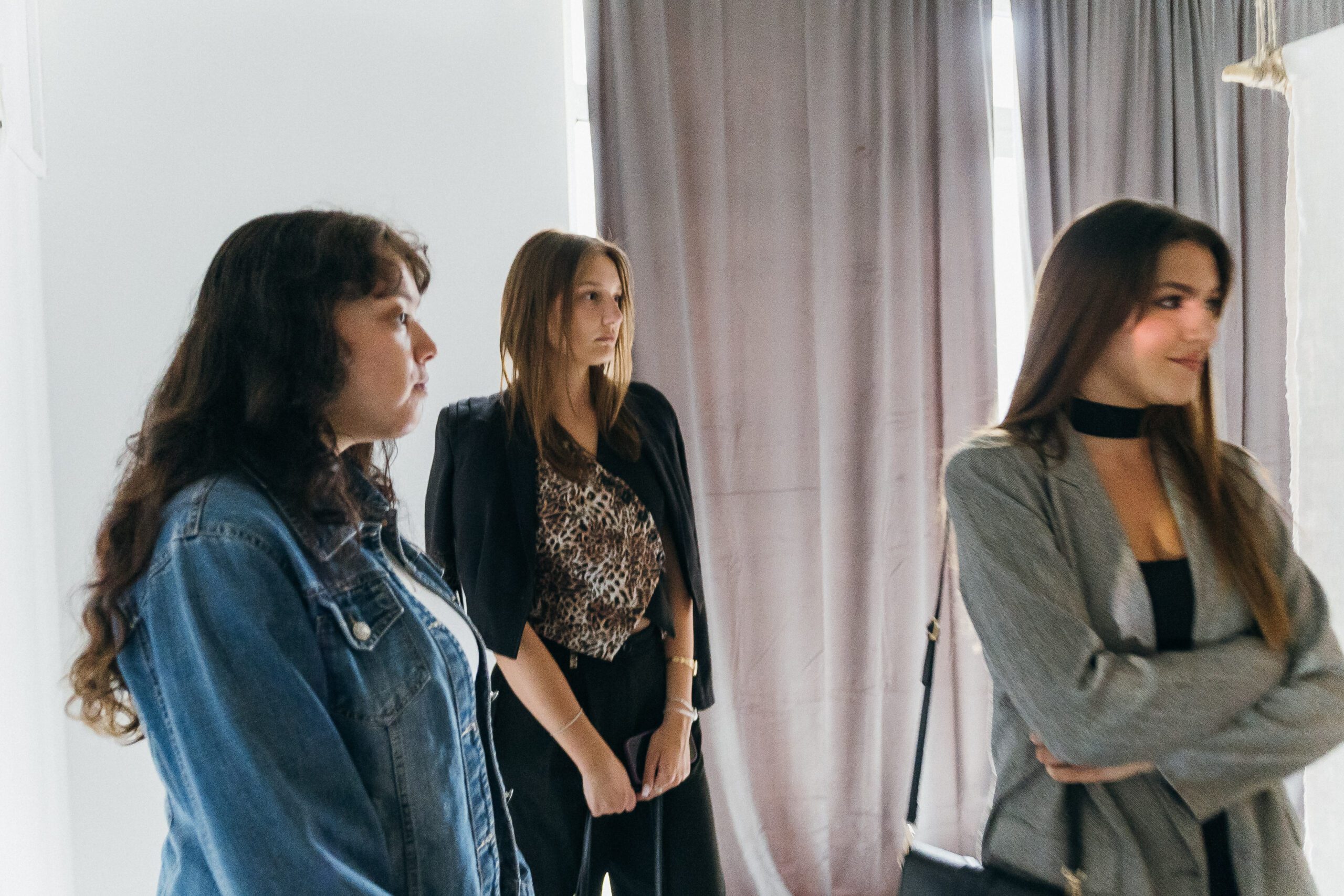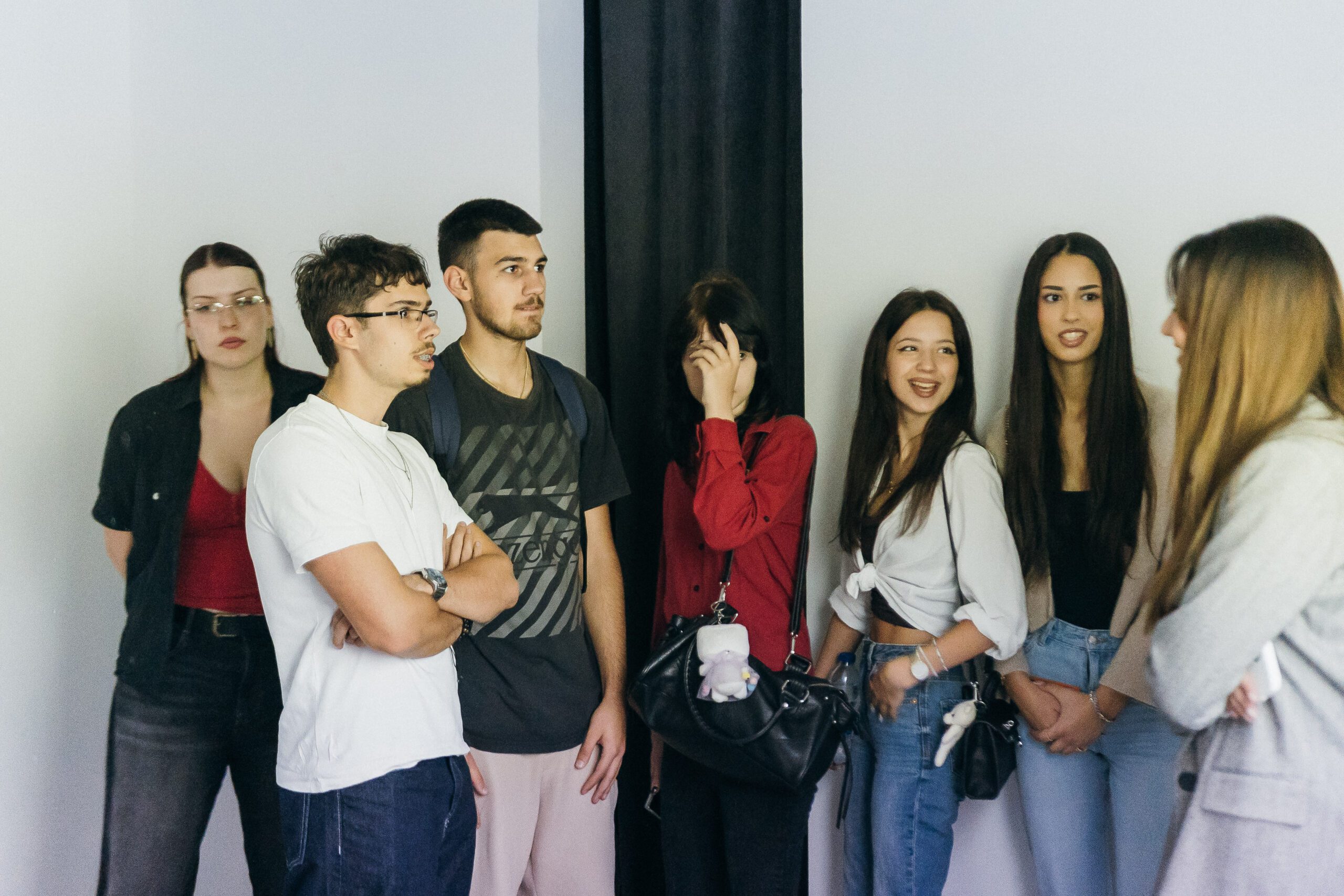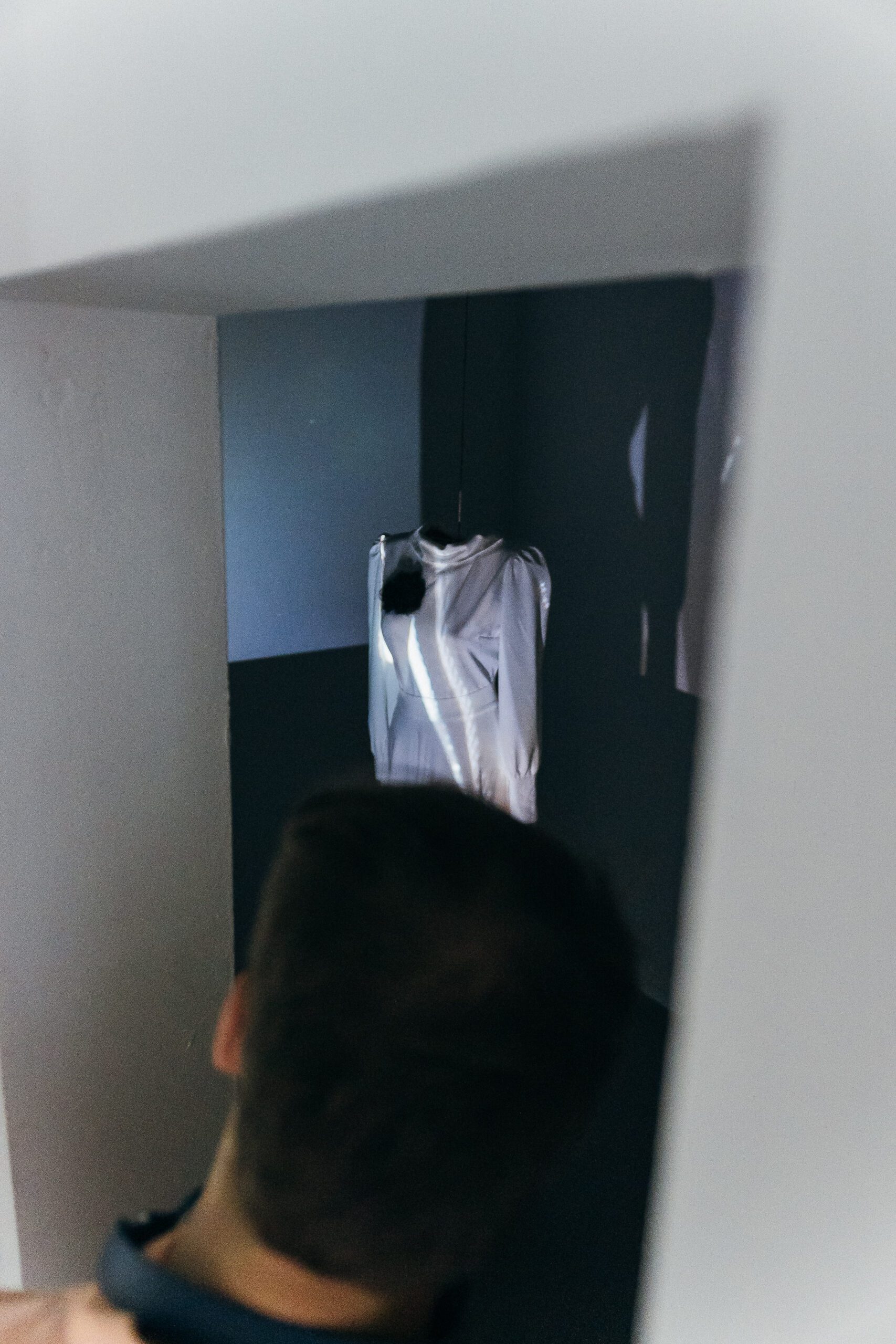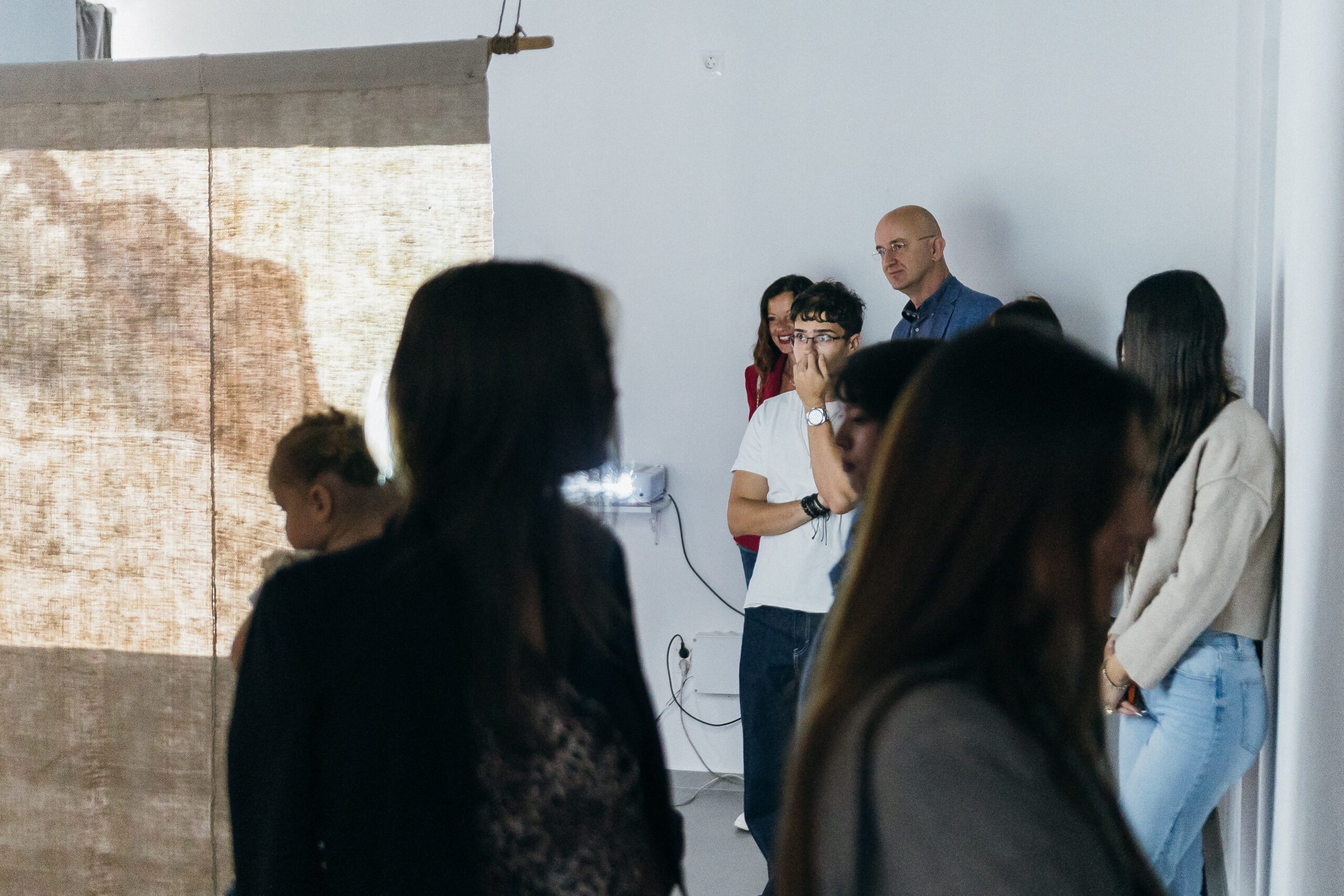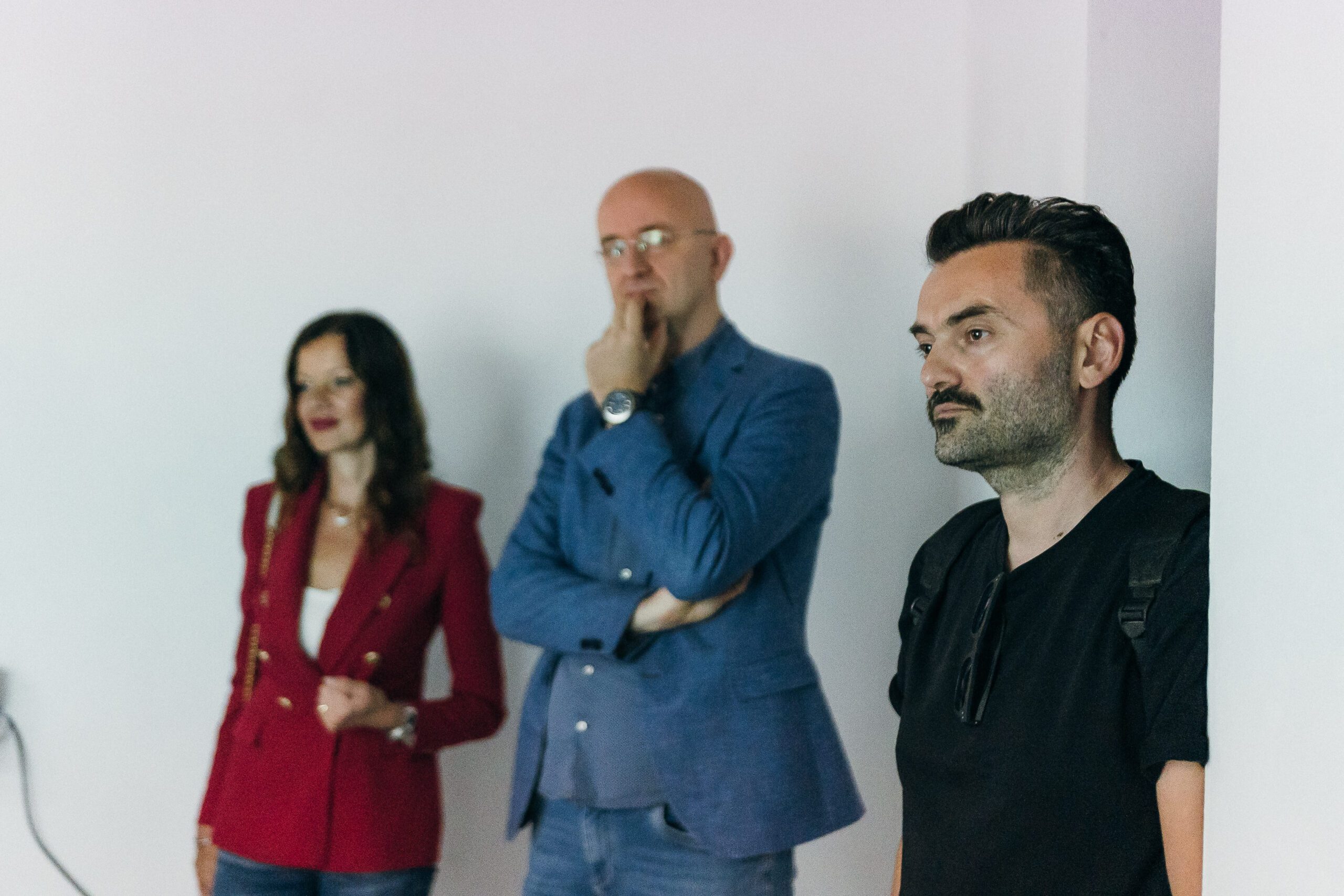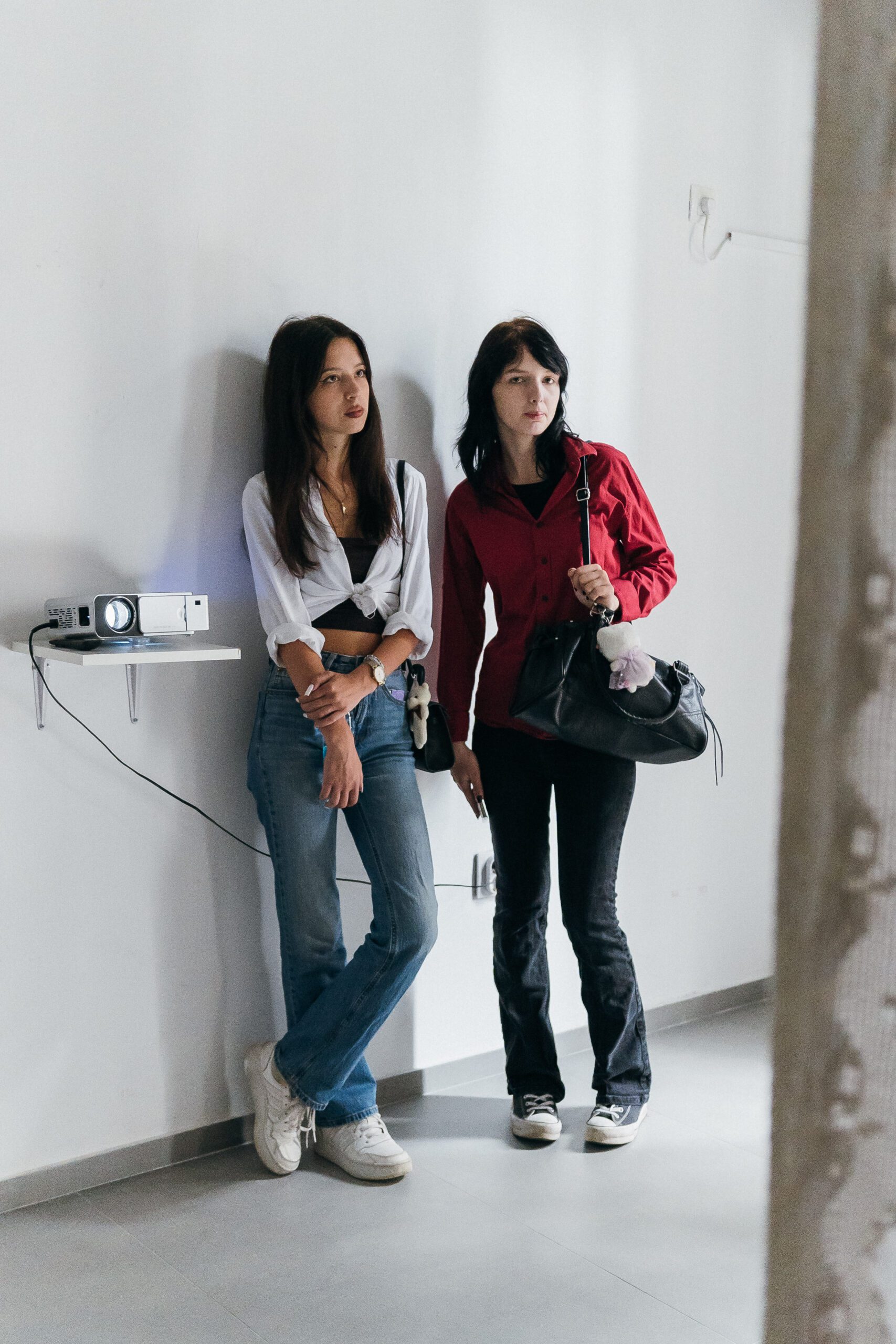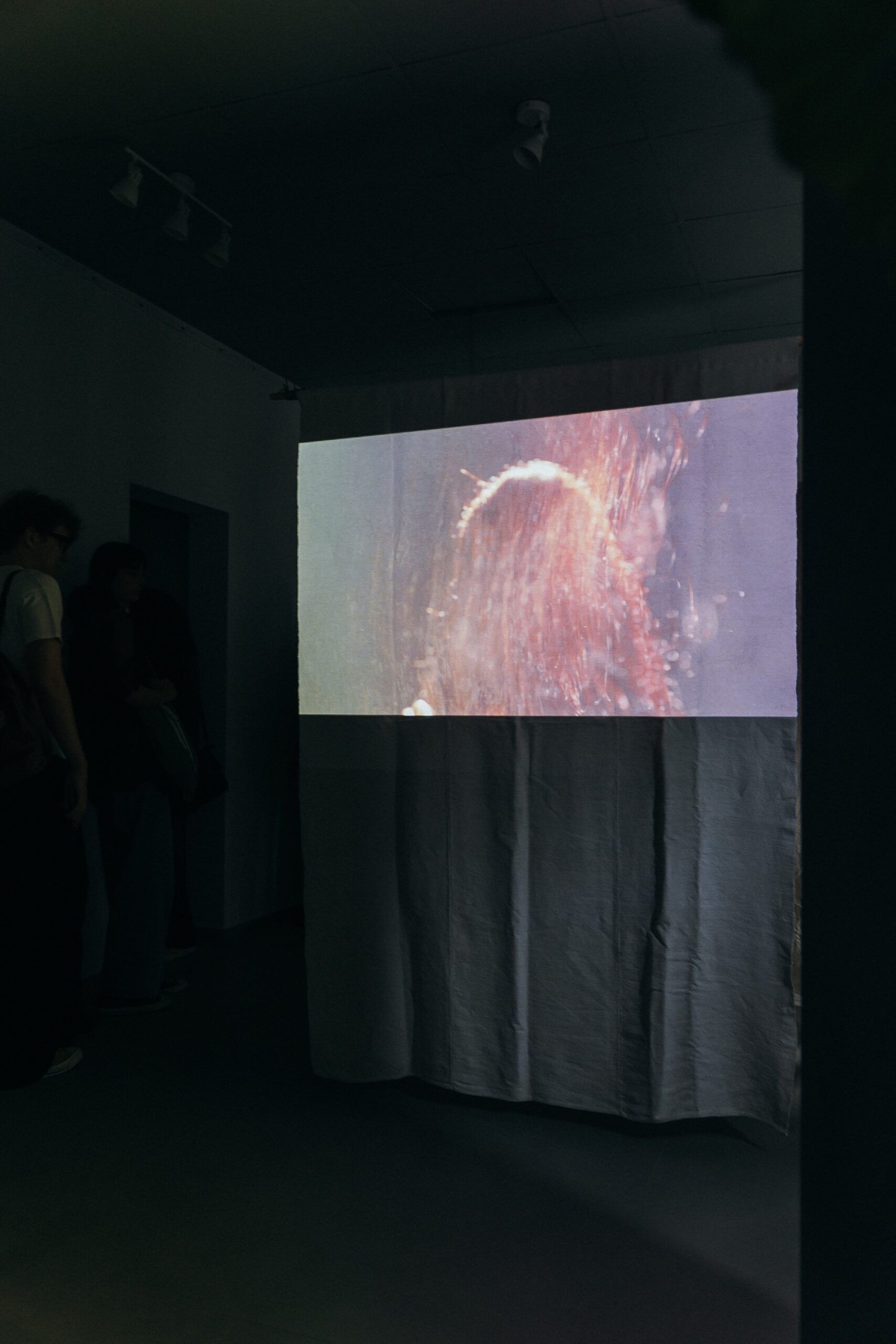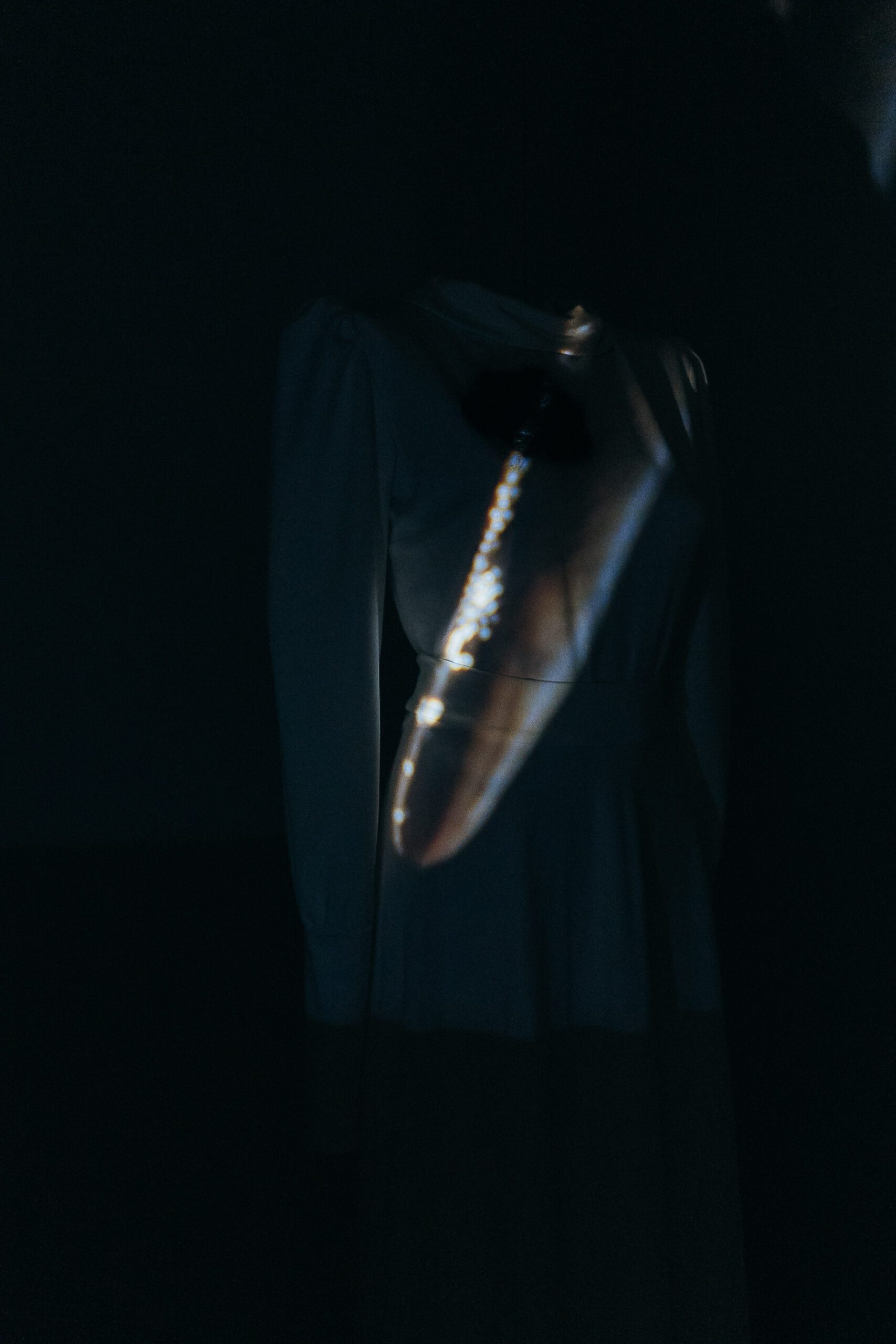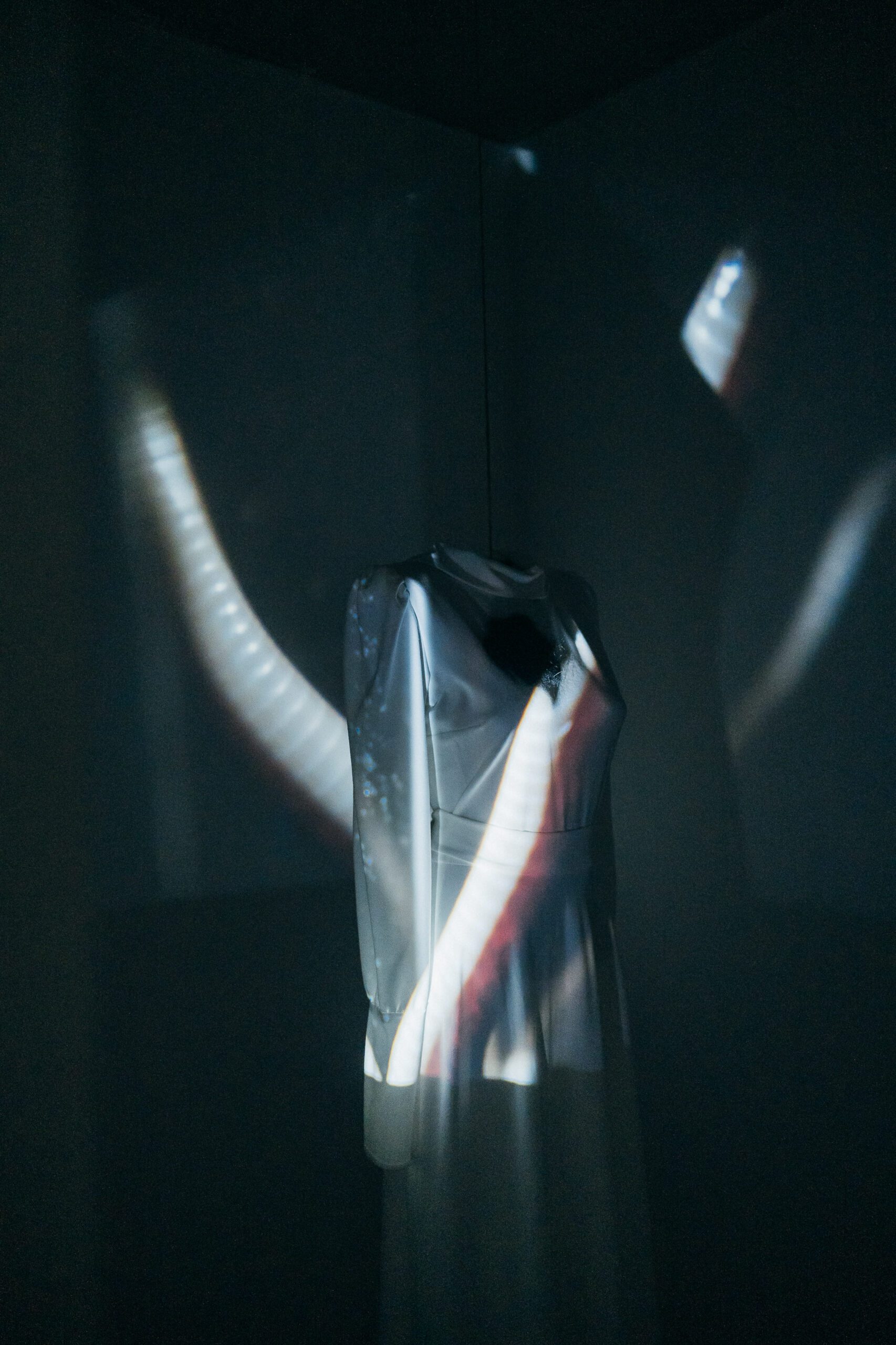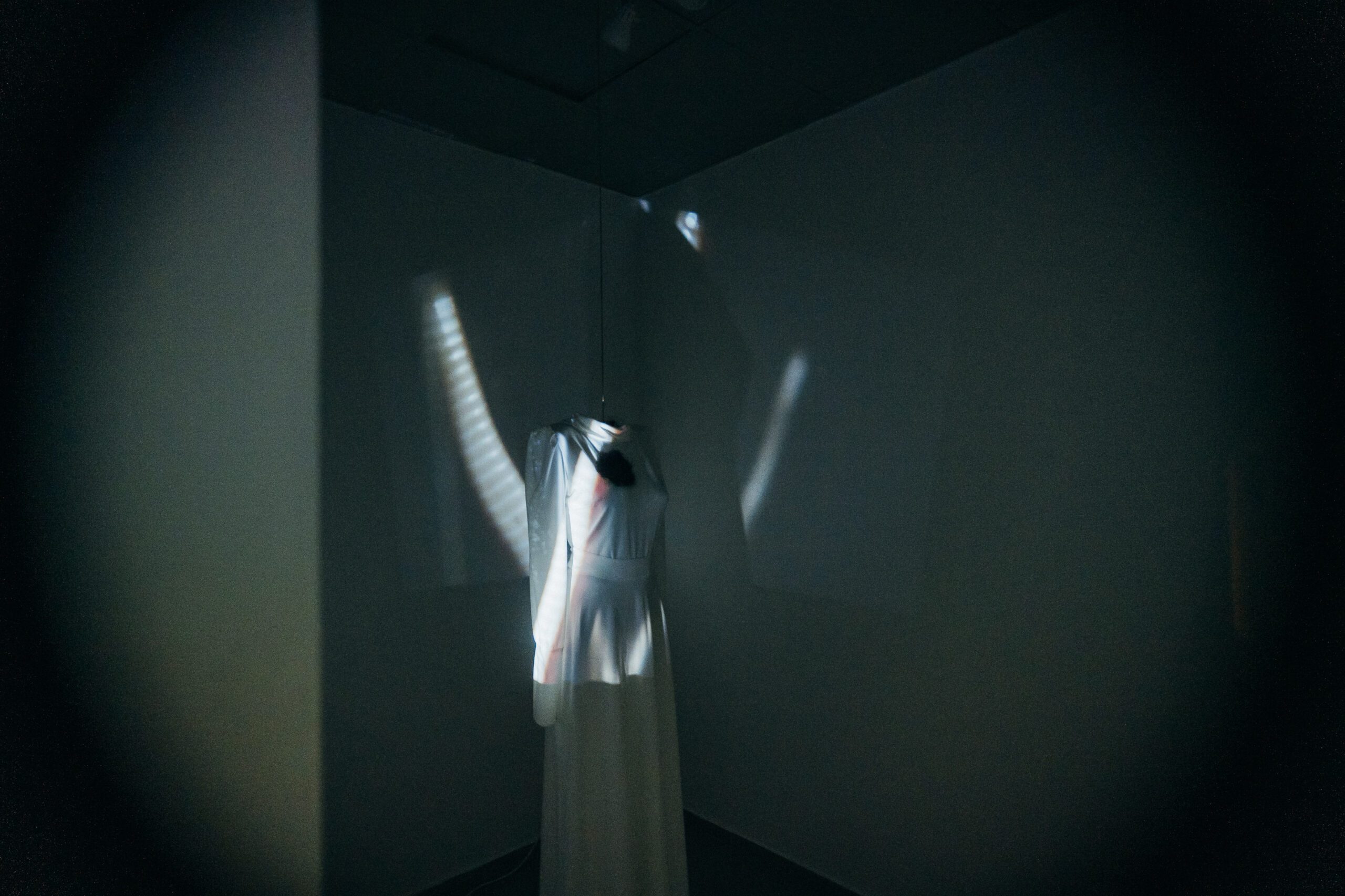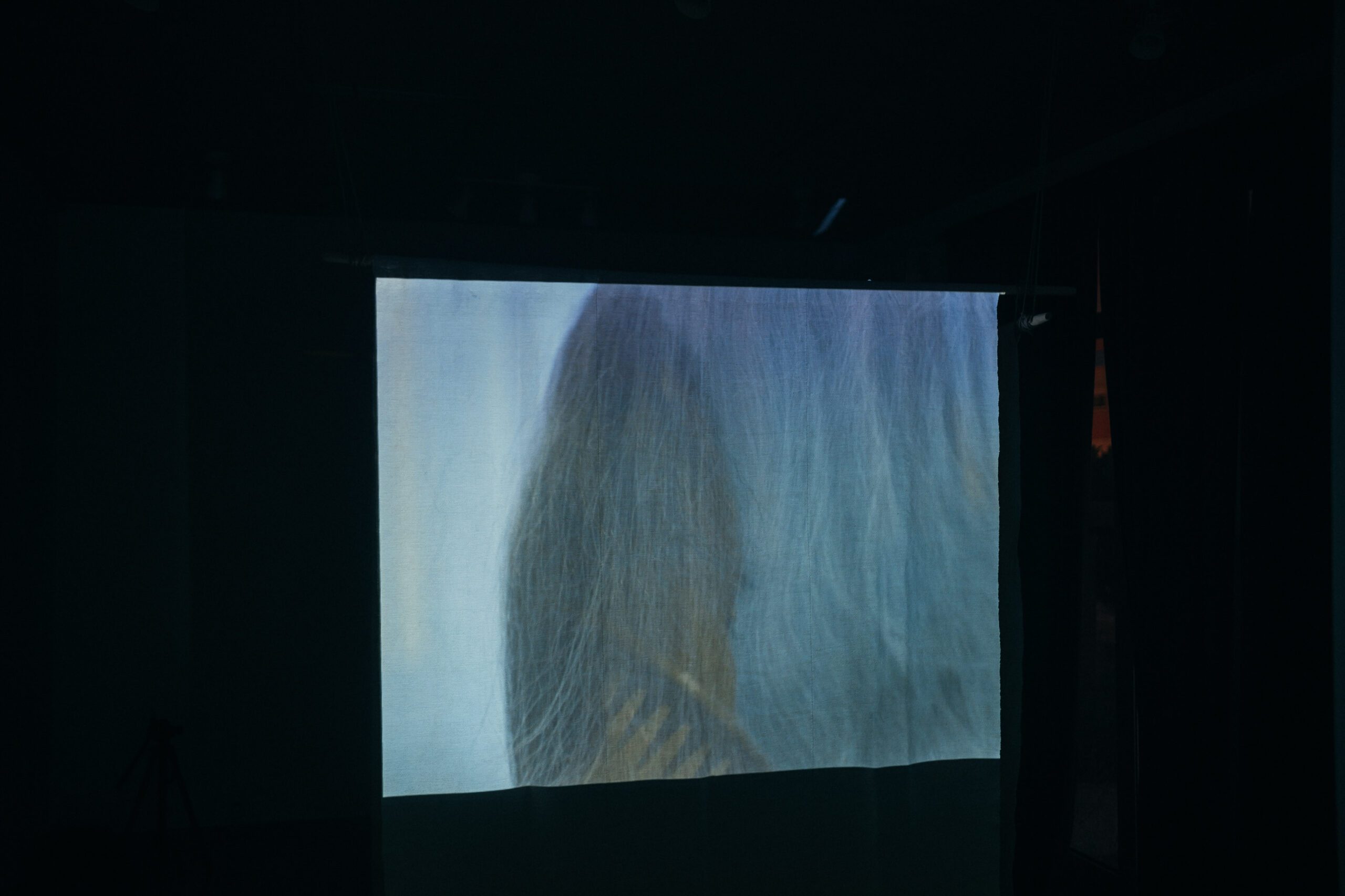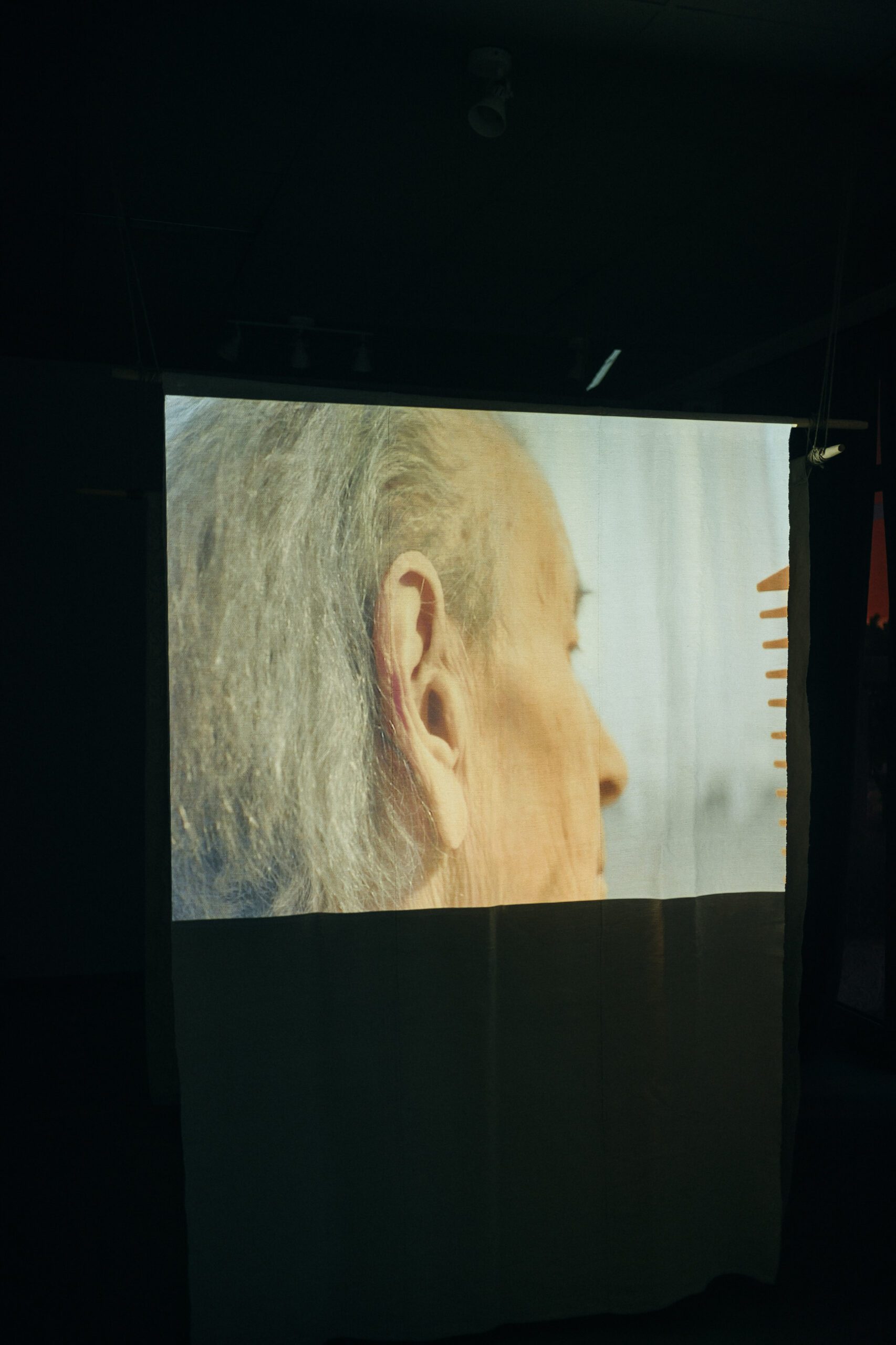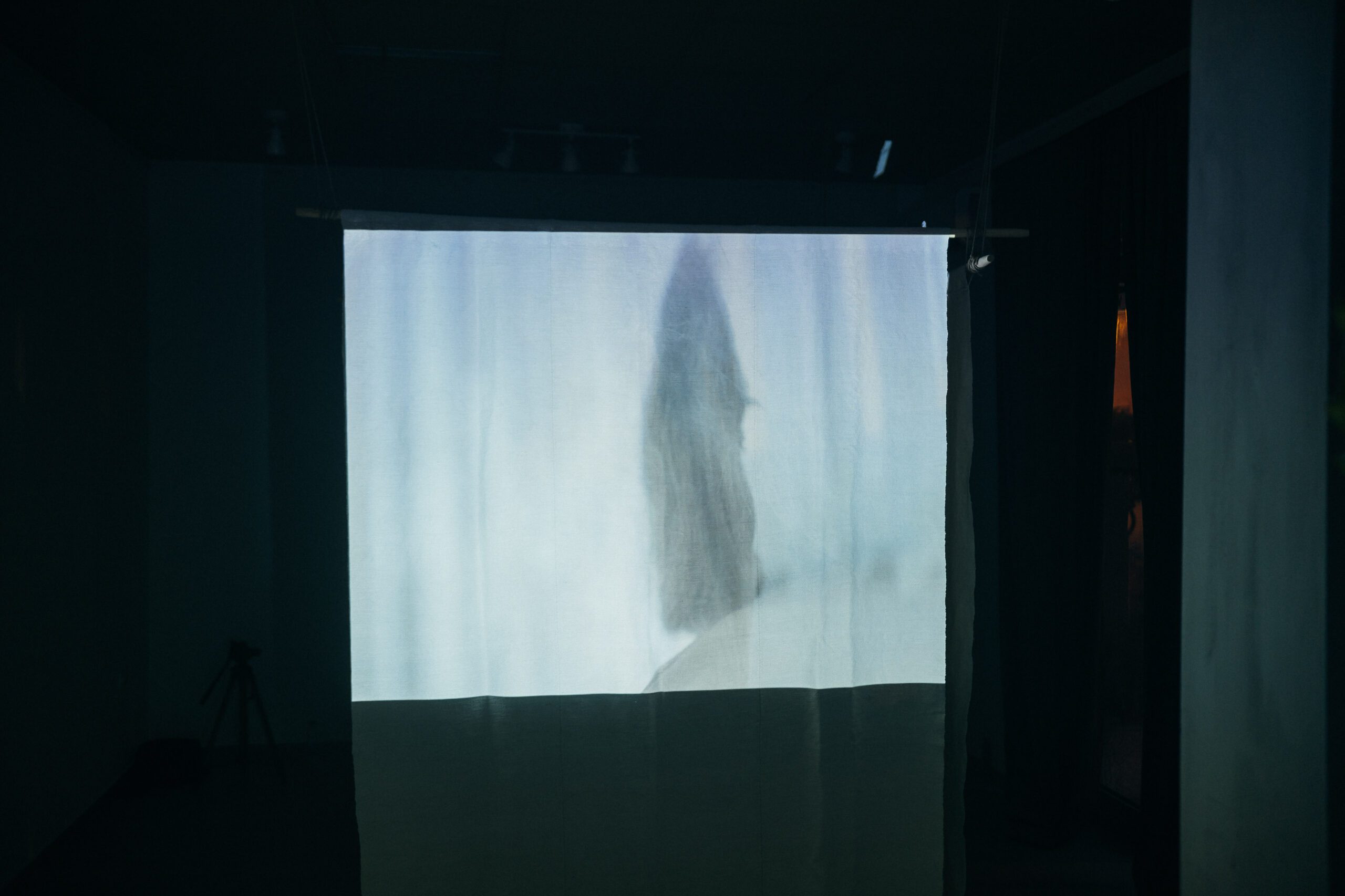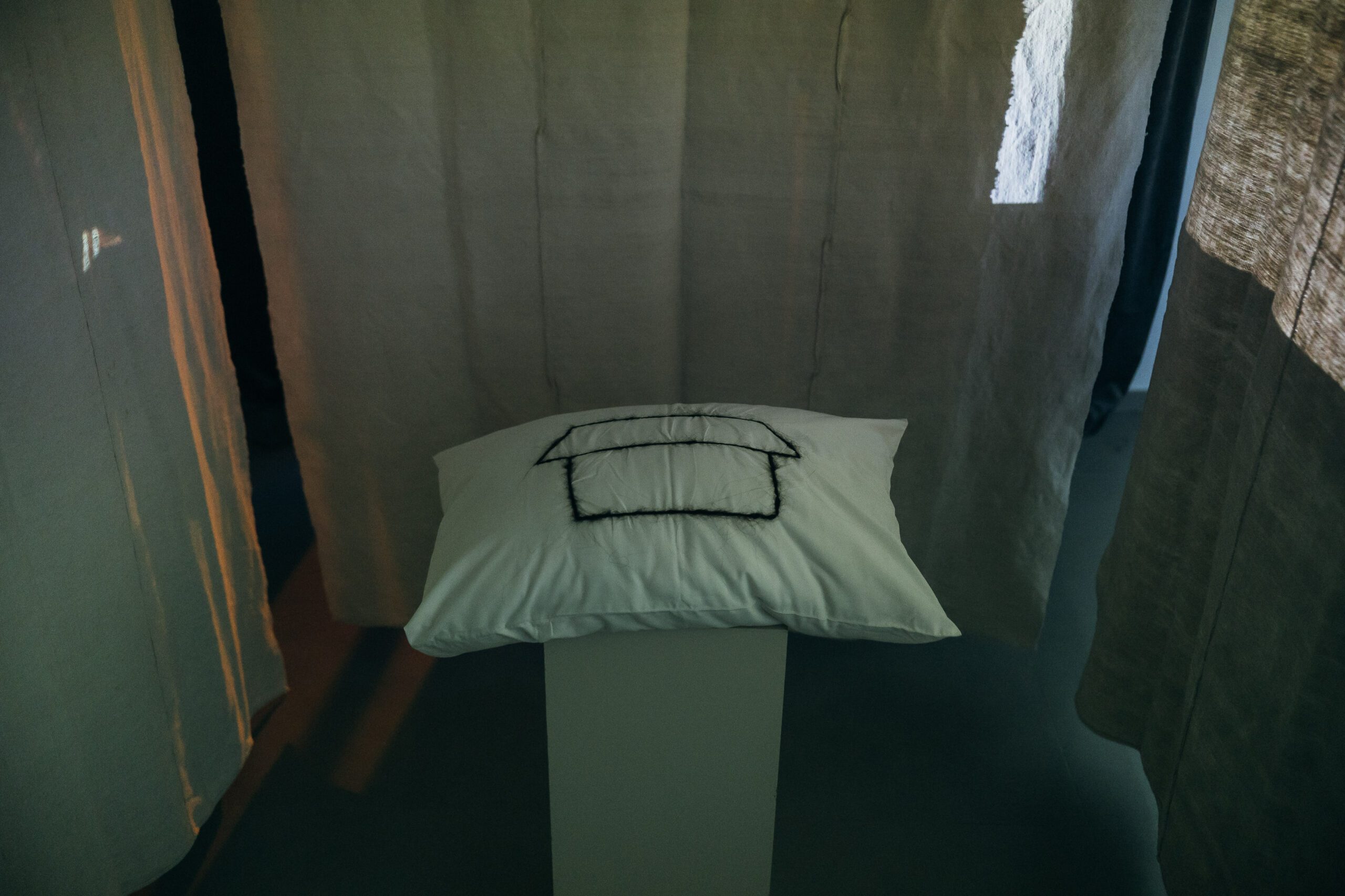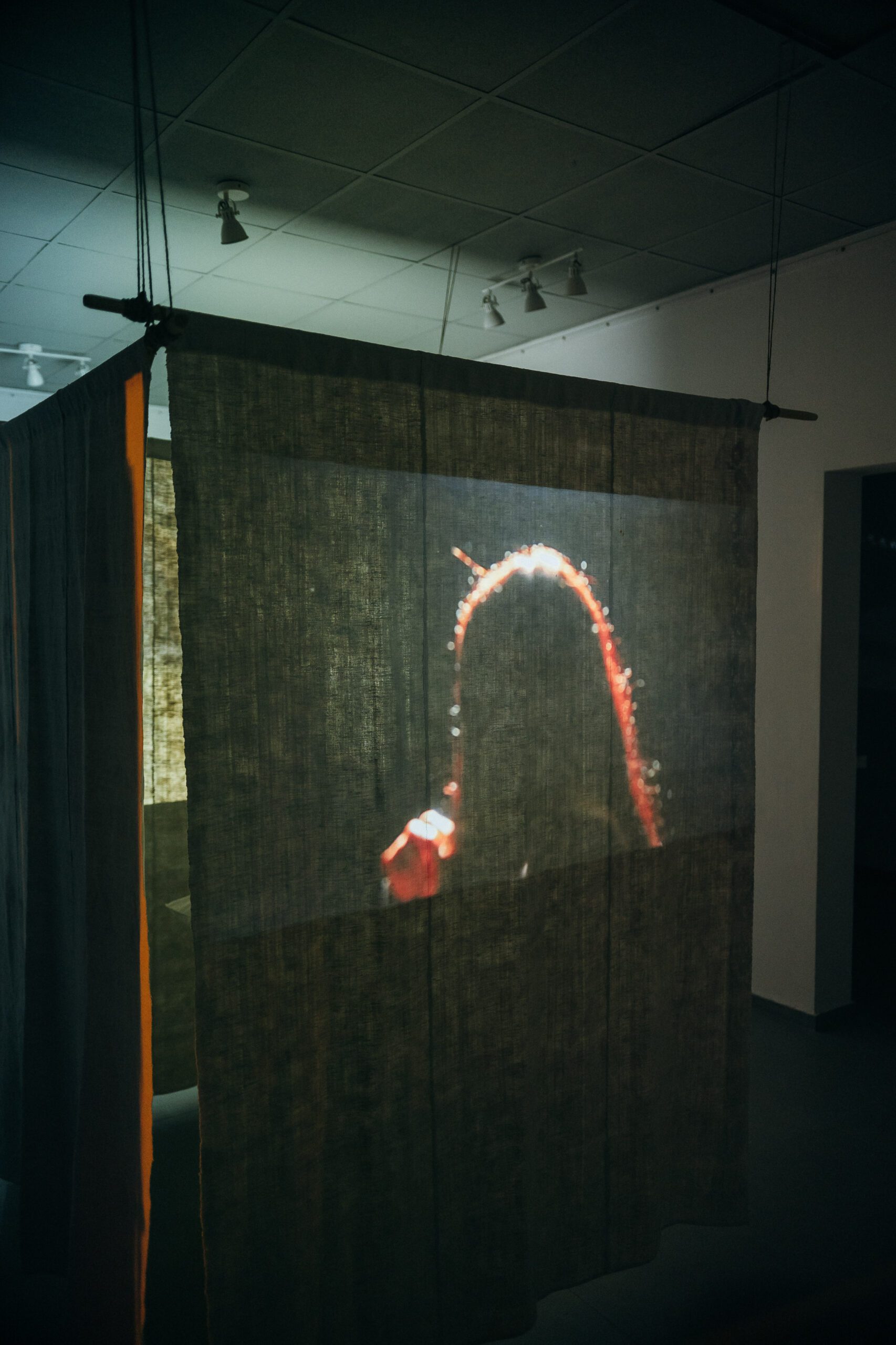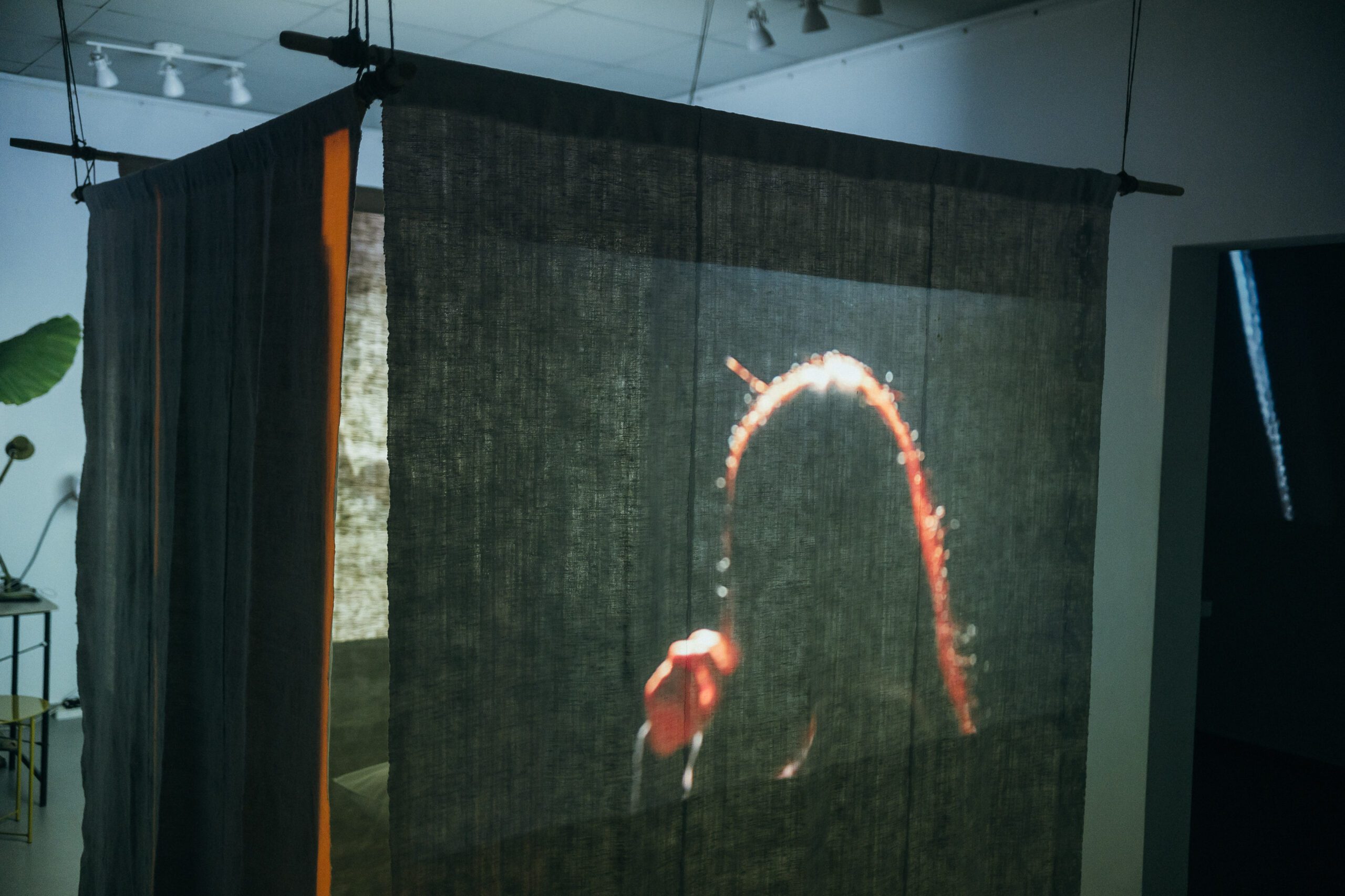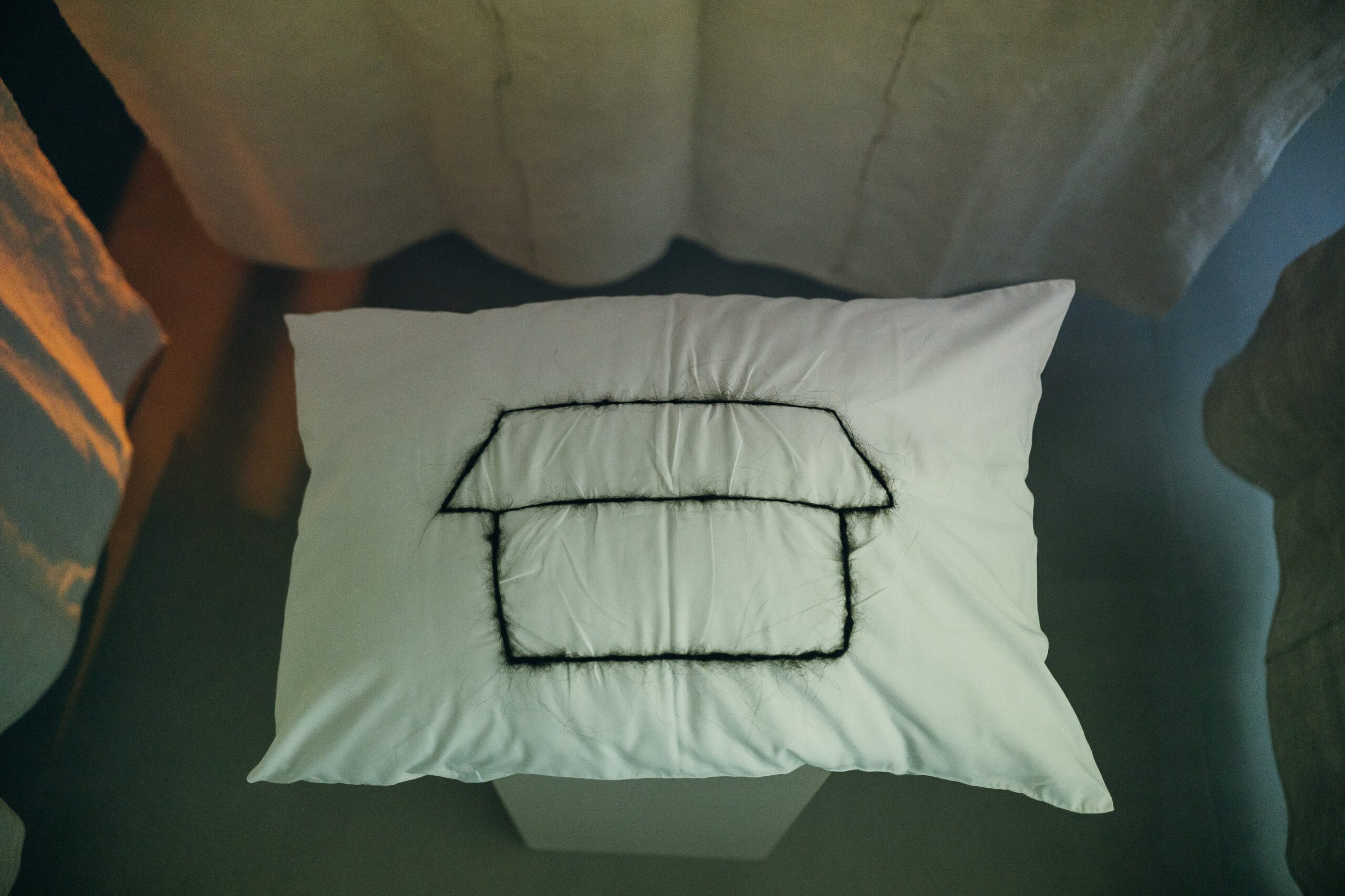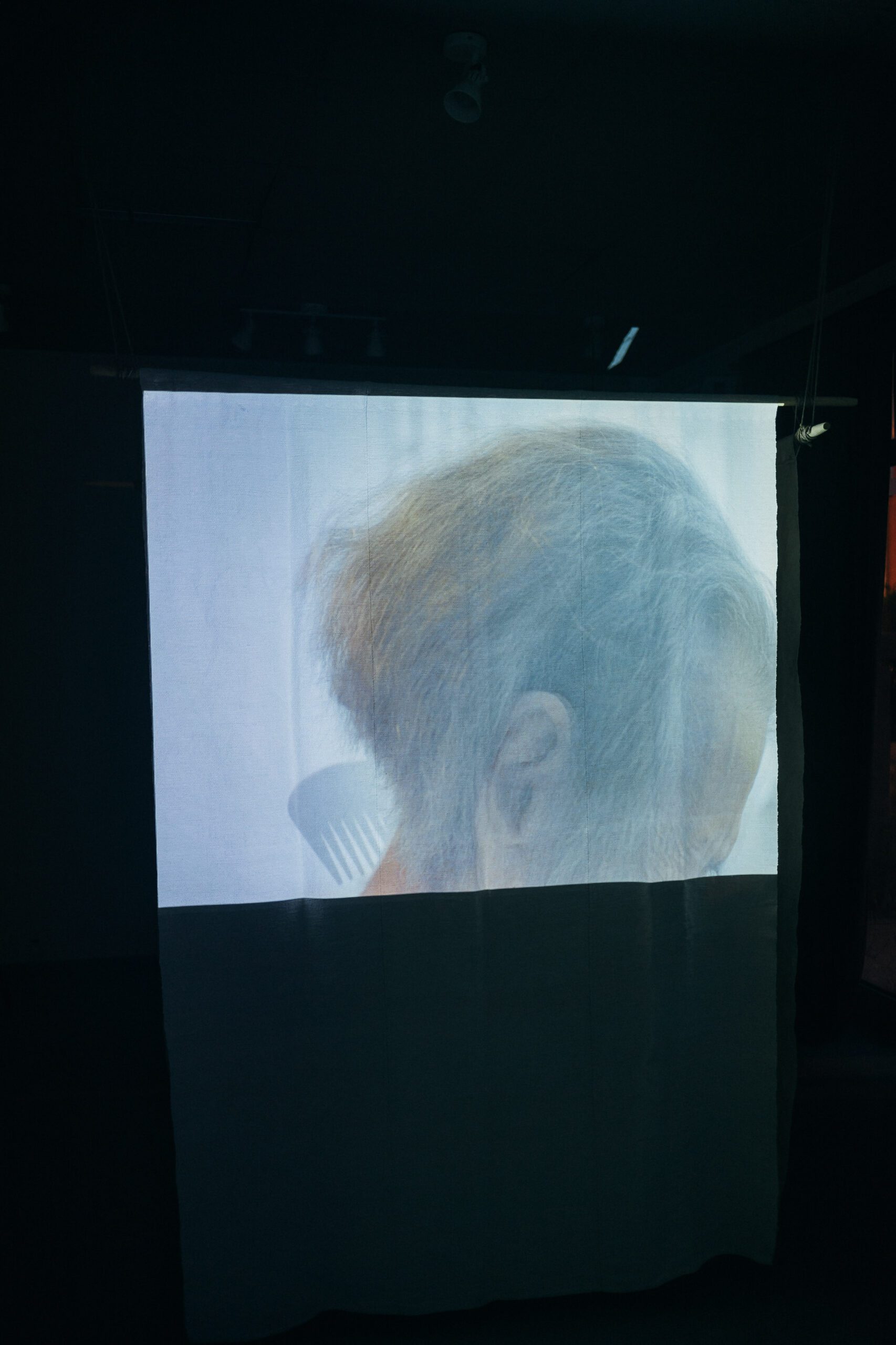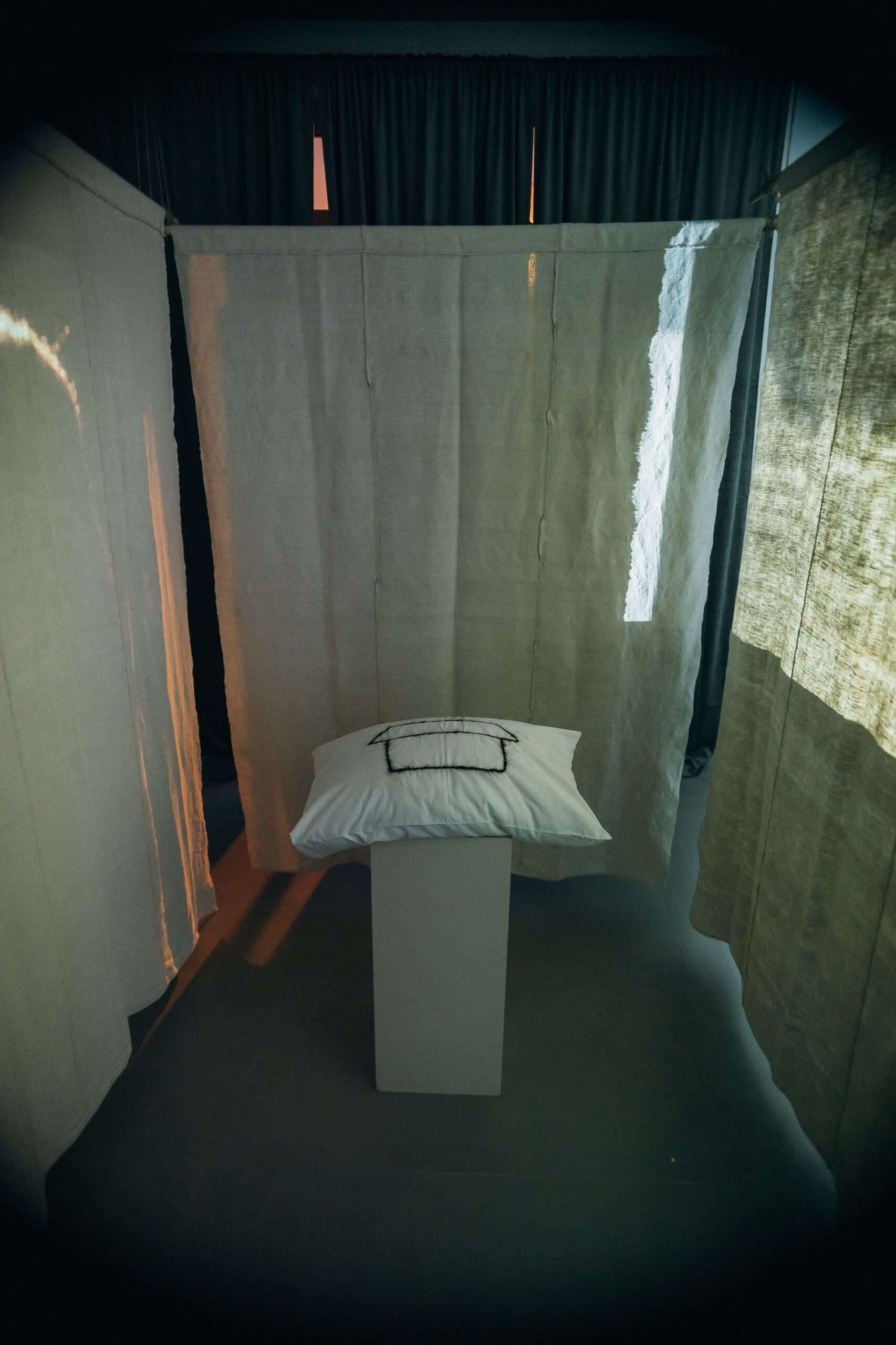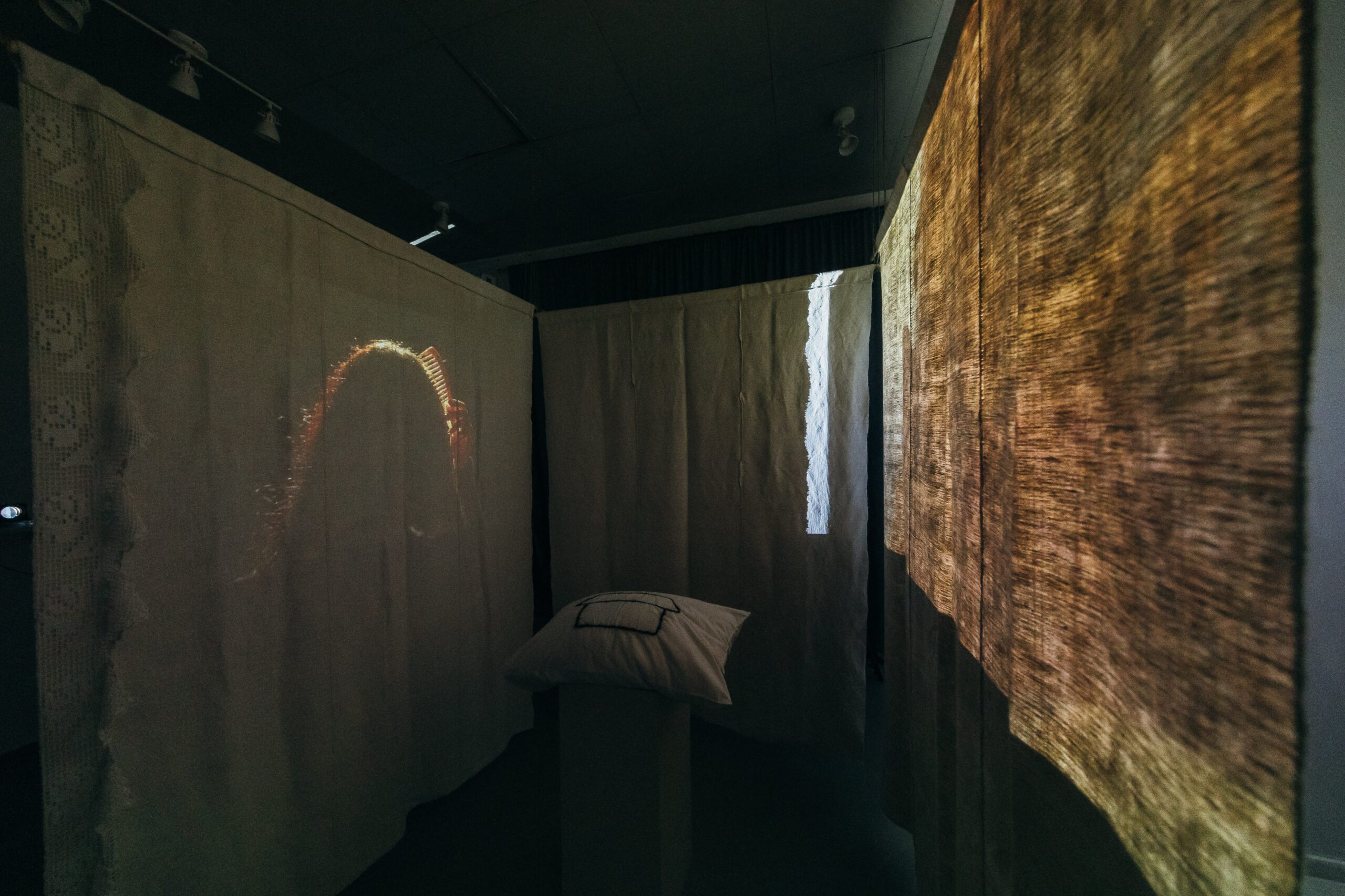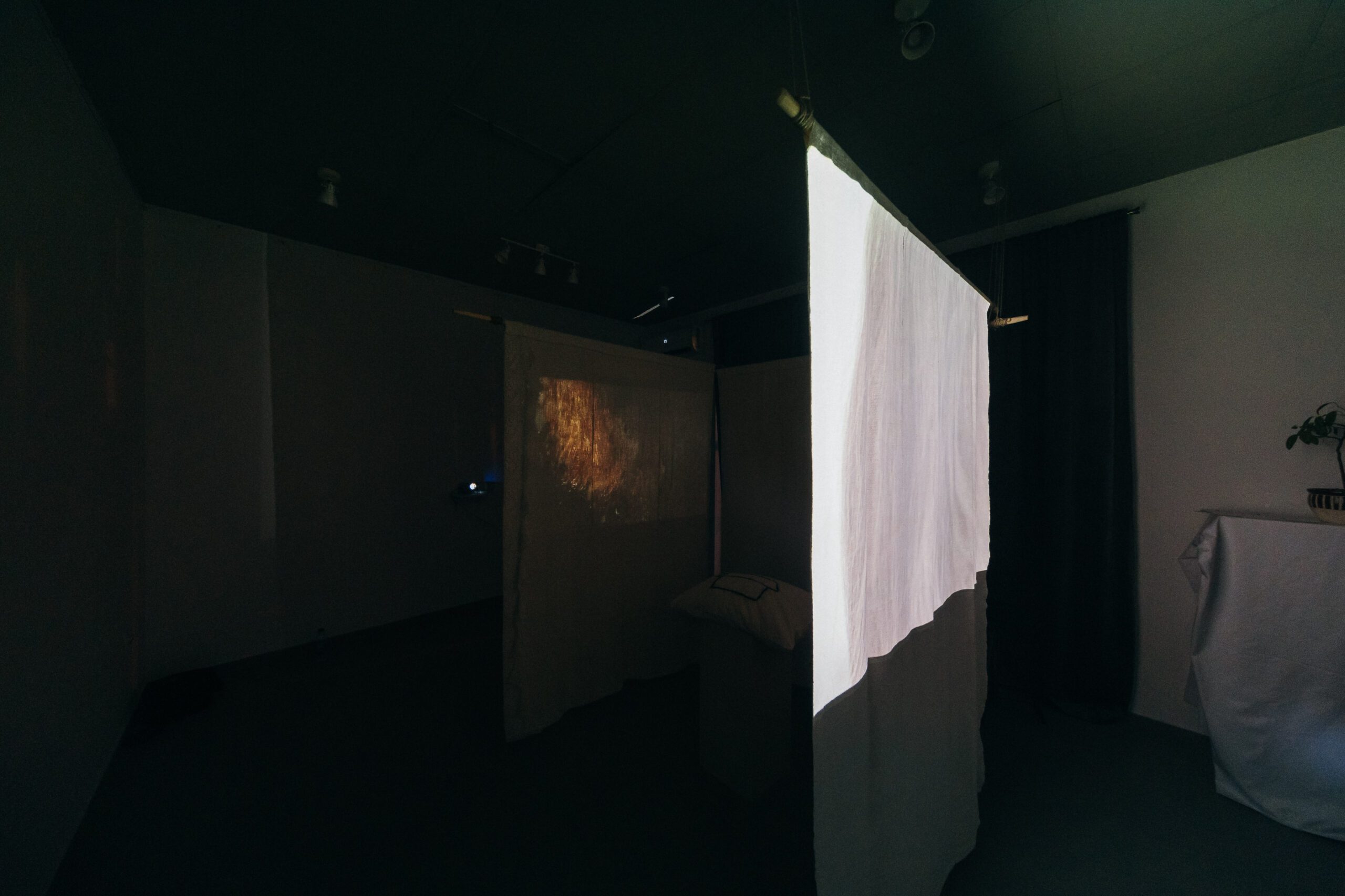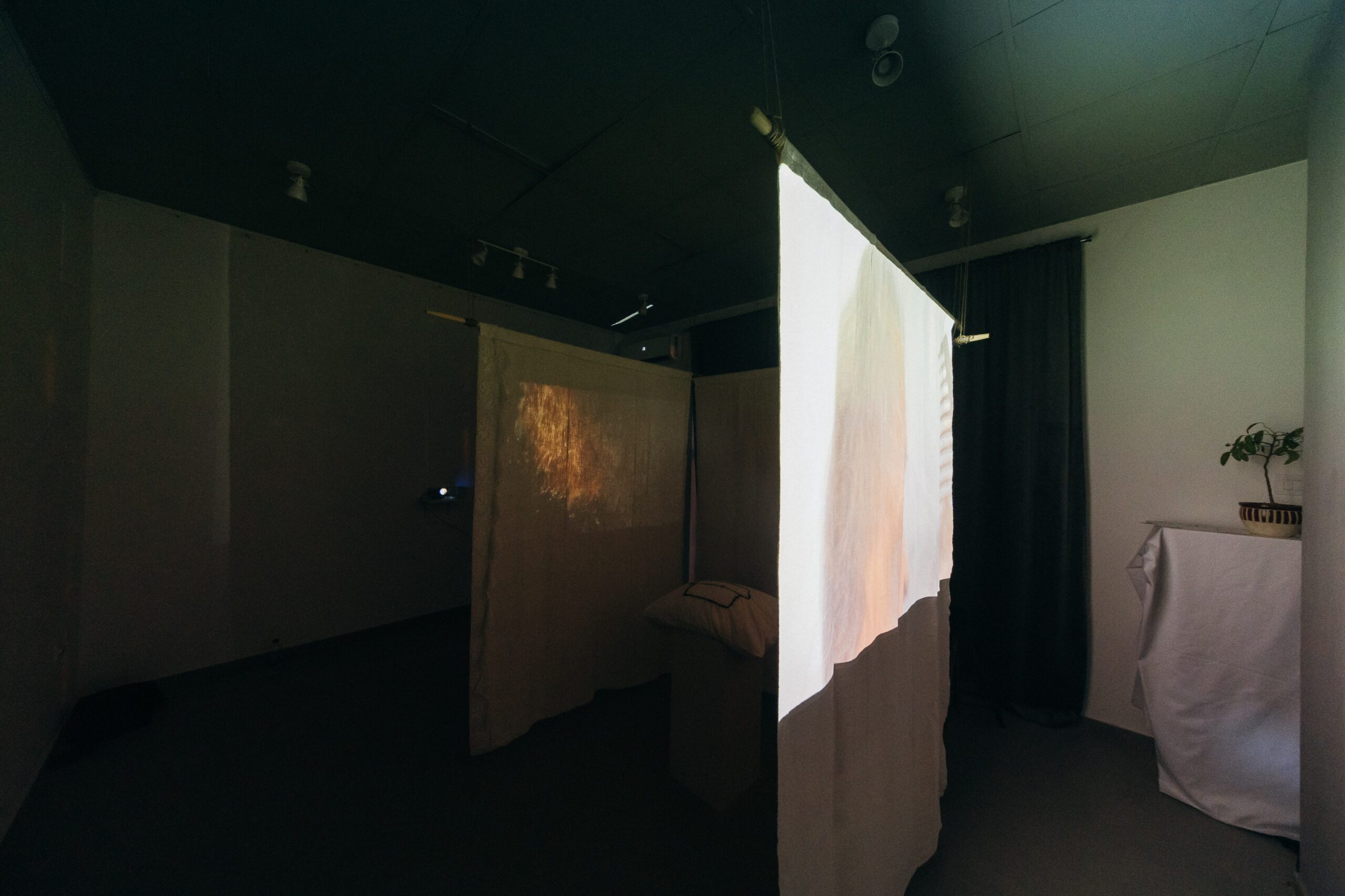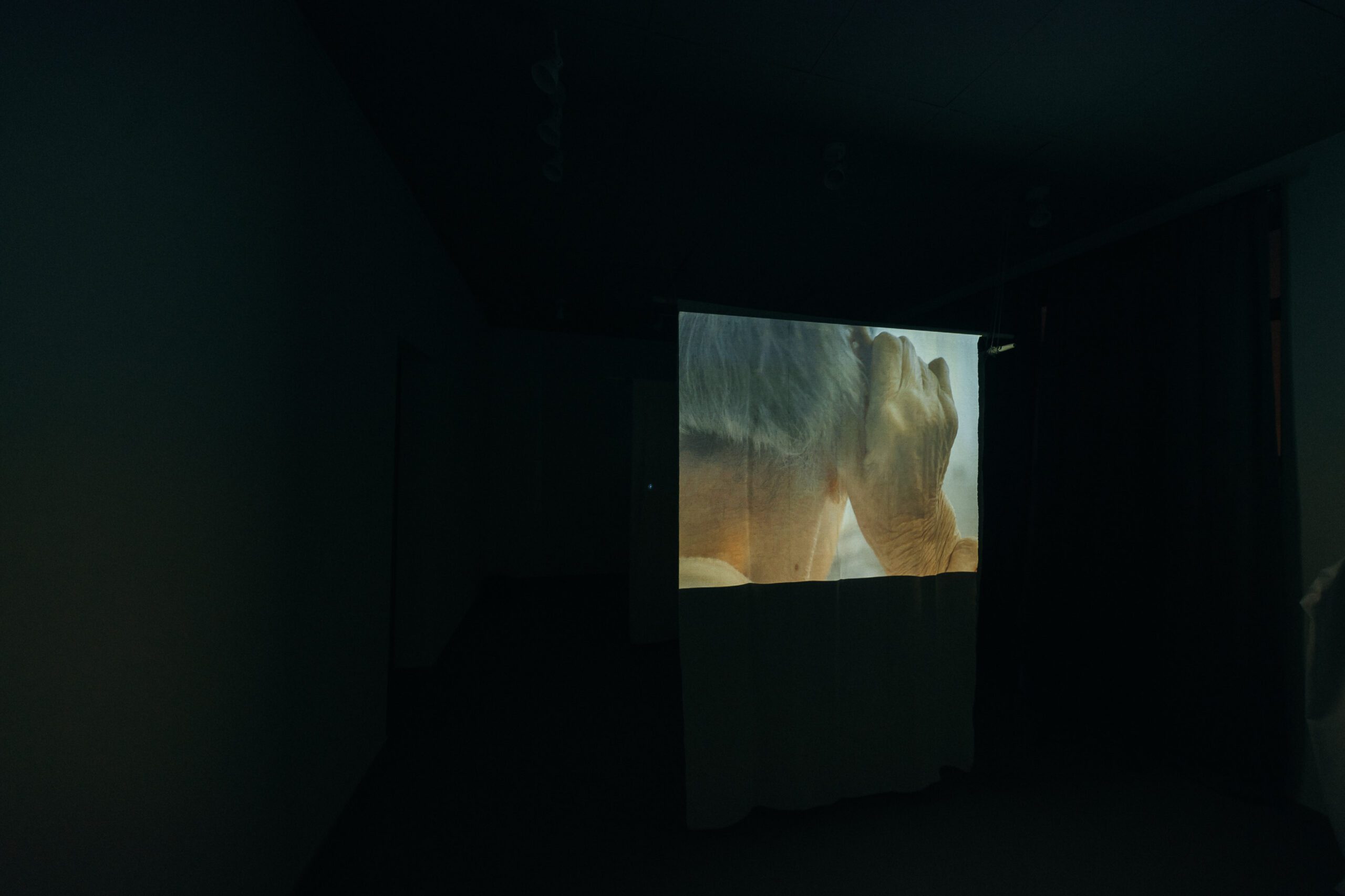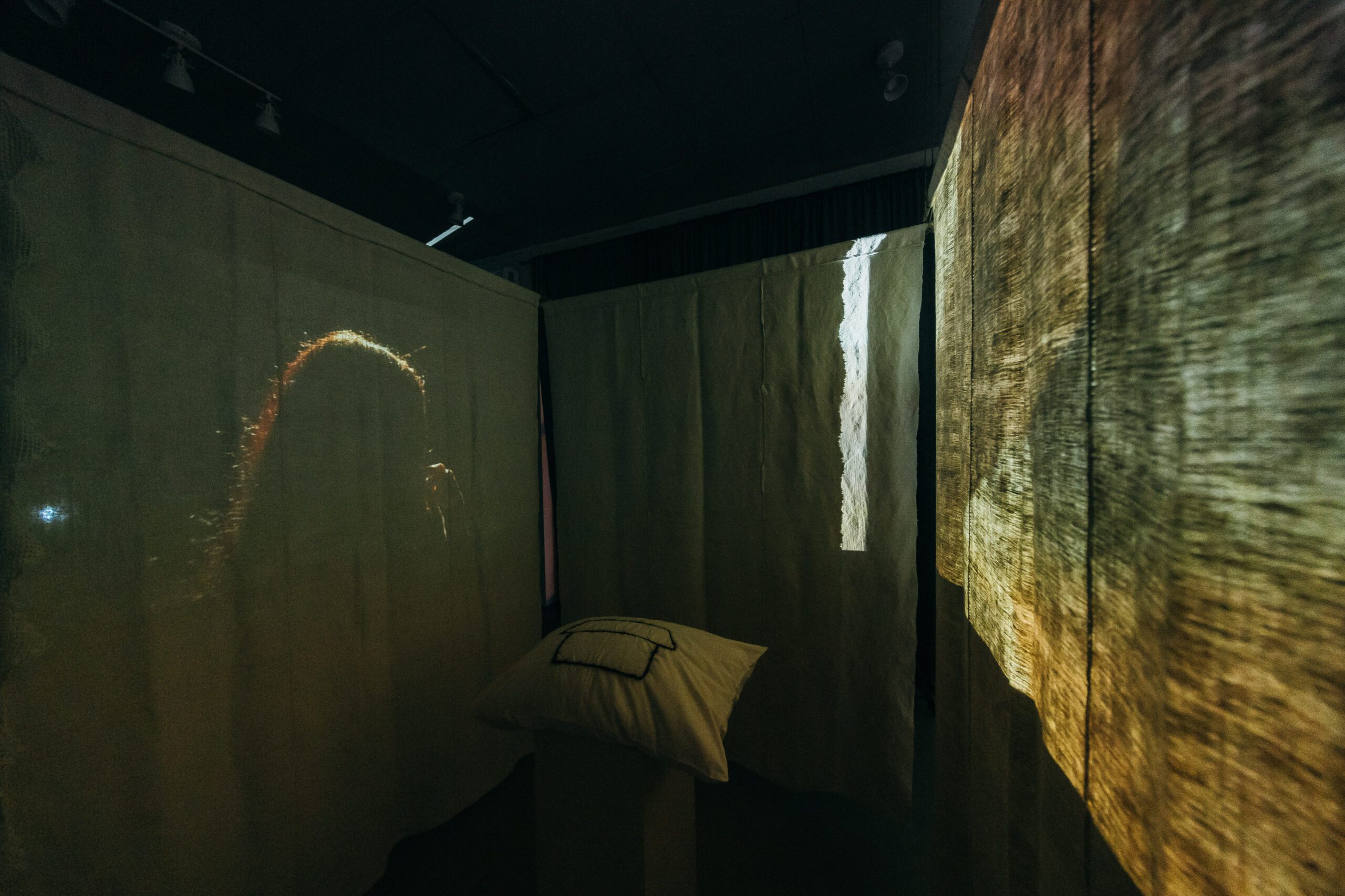
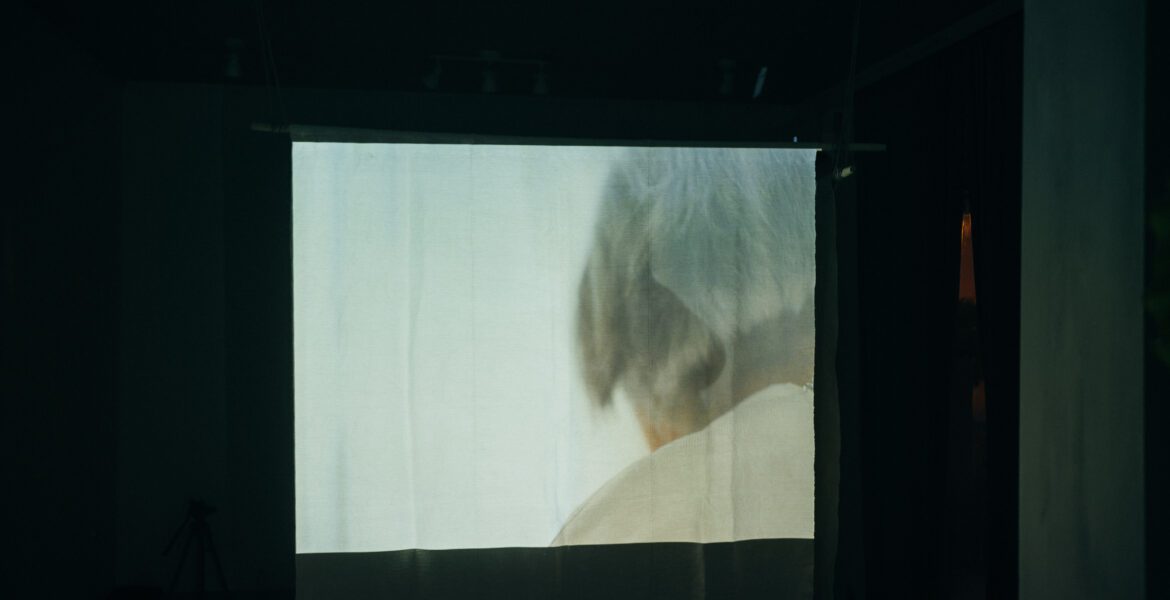
Home is never a neutral space. It is a product of power relations, cultural norms and generational transmissions. Especially in the female experience, home is a place where reproductive work, emotional economy, silence and belonging come together. In the exhibition Trilogy of Sorrow, this layered idea of home is mapped through a personal but deeply structured genealogy, focused exclusively on the female line of the family. The fairy tale that the grandmother tells at bedtime conveys a form of transgenerational knowledge. In this case, the fairy tale does not shape a story, but a model of transmission: through voice, rhythm, ritual and atmosphere. Trilogy of Sorrow relies on a matrix of knowledge that is transmitted through repetition, daily work, care and affective forms of presence. The artist uses her own hair as material. A biological trace that simultaneously belongs to the body, but can survive outside it. Hair becomes a carrier of time and work. It simultaneously preserves cellular information and emotional sedimentations. Hair embroidery functions as an epistemological gesture. It is a way of recording that is persistently present. That trace emerges slowly, rhythmically, through repetition that recalls the quiet forms of women's work in the household — sewing, guarding, preparing, surviving. This gesture activates a form of memory that is not individual, but not institutionally recorded either. It is a memory that belongs to the lines of female genealogy. Uncertain, fragile and persistent. In this context, biological material becomes a substance. A sense of circulation is formed through the three spatial units of the exhibition. No advancements. This is key to understanding the concepts of time and home: linear inheritance is replaced by repetitive practice. The home is maintained in this case. Trilogy of Grief maps home through physical and emotional infrastructure. This is where we come to the second key to the exhibition: biological elements are not only materials, but witnesses. Hair, body, voice, space — all function as media in registering experiences that are not usually considered knowledge. In this paper, they
become. When home can no longer be identified with a single location, it returns as a fragment. Vladimirka Velaga forms a structure of feelings through which grief, attention and belonging are organized. Here we are talking about feelings that are connected through relationships. Not events. What is behind home? The Trilogy of Grief deals with the infrastructure of everyday life. It focuses on the unpaid, invisible and gender-coded work that is at the foundation of maintaining life. Work that is not archived, institutionalised or valorised, but forms the material basis of social relations. Hair, textiles, space and repetition function as operational elements through which the continuous effort of maintenance is recorded. The artwork here does not mediate meaning, but models production relations.
Text: Isidora Branković
Vladimirka Velaga
Born in Banja Luka in 2002, where she is currently in her final year of studies at the Academy of Arts, University of Banja Luka, Department of Painting, in the class of Professor Borjana Mrđa. She uses painting, drawing, video art and art installations as media of artistic expression. She explores embroidery and uses it as an important part of her artistic expression. In her artistic practice, she questions family heritage and beliefs, as well as the individual's relationship to the home, all through the female family line. She also works as a costume designer in film and theater. She has exhibited in the country and abroad.