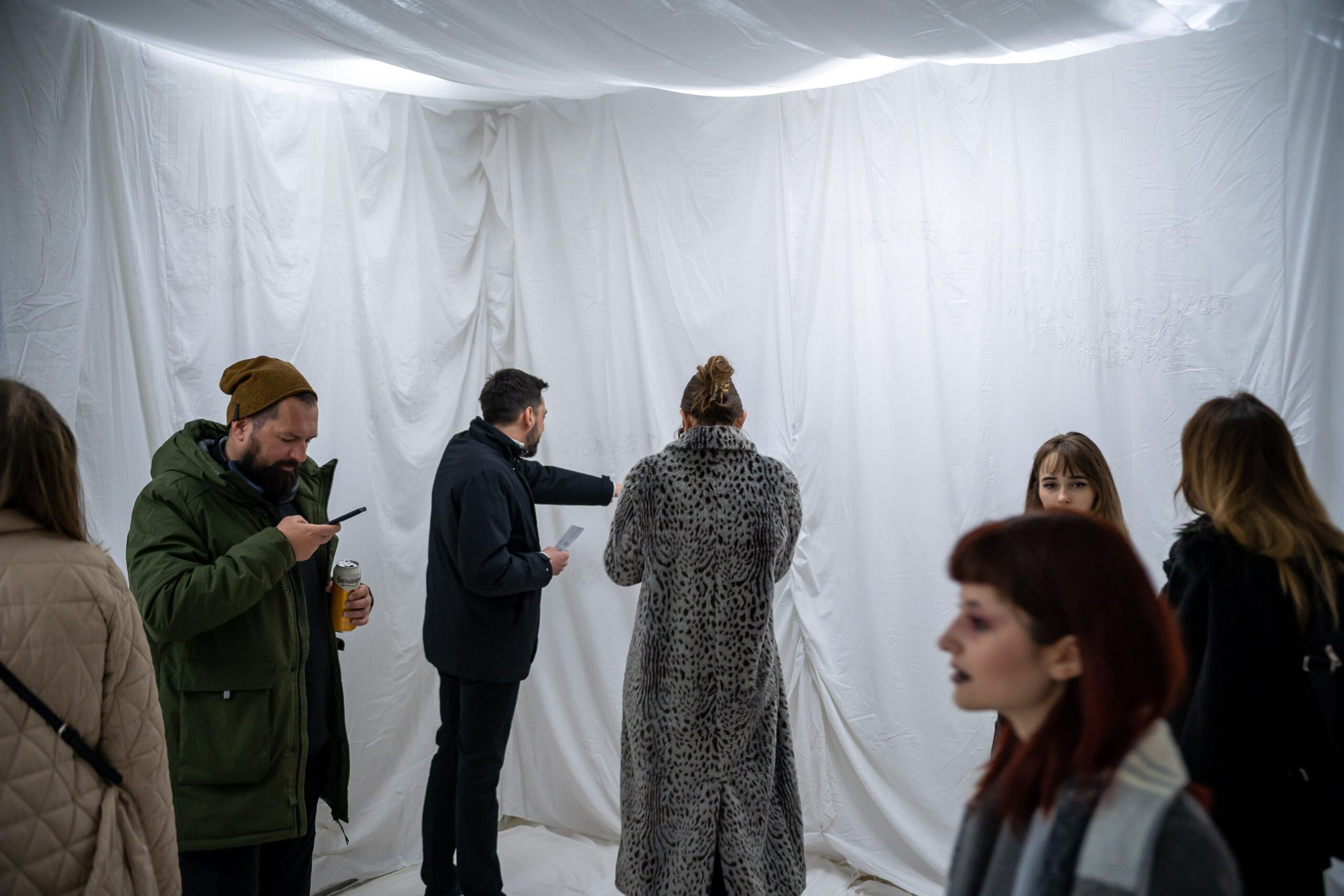
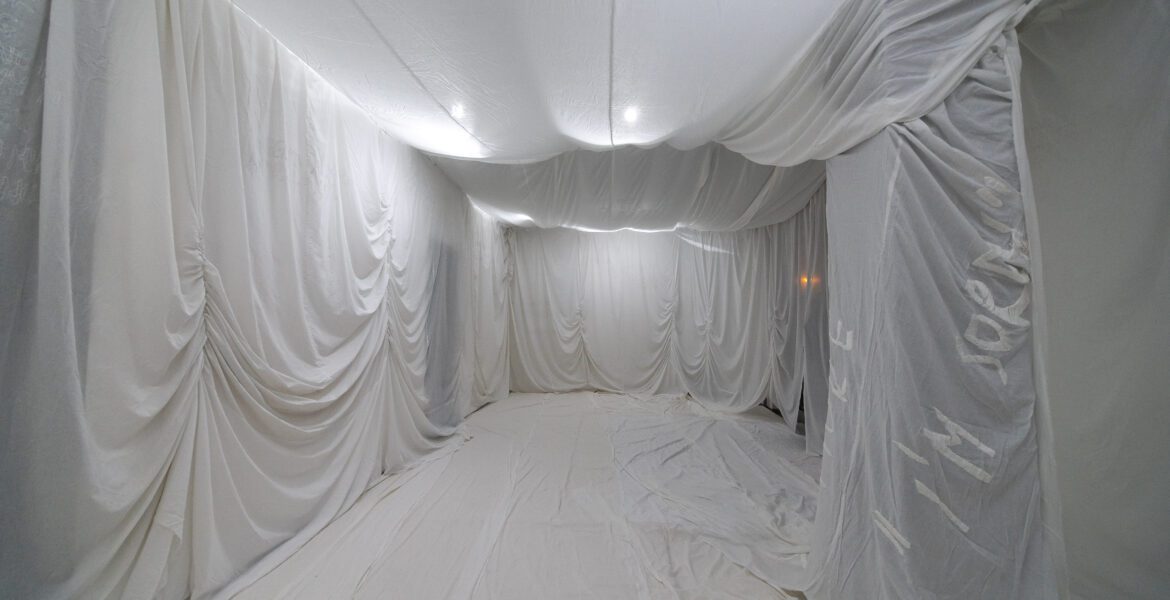
It frightened me that you were so interested in me; it felt like too much. You had only seen me once and it seemed
as if you wanted everything from me, literally everything.
I felt uncomfortable because I have issues with myself, so I’m focused on work, and it’s hard for me to deal with you.
in this moment.
I don’t want to waste your time because I’m not mentally present.
I need to recharge. I worry a lot.
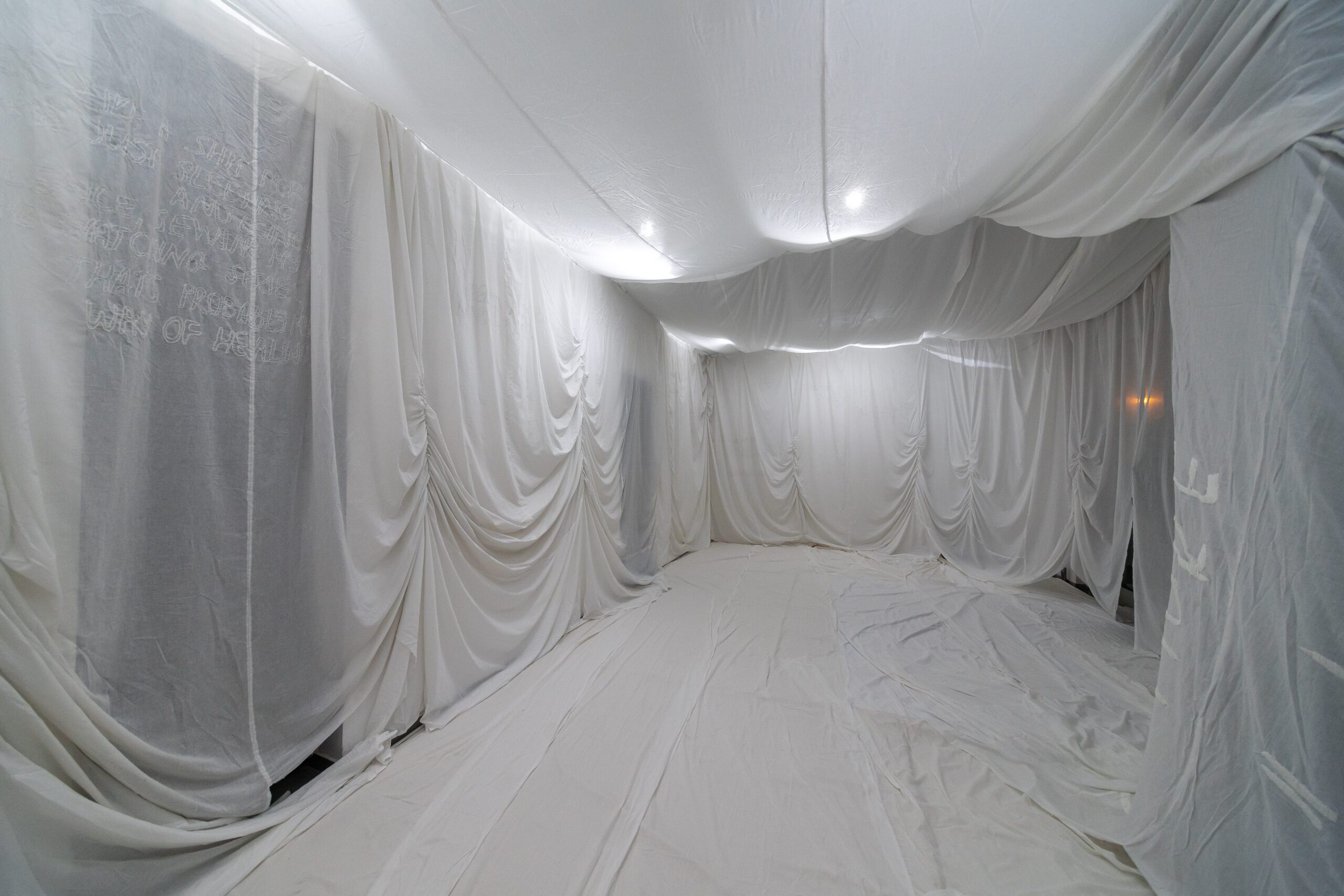
I feel like a bad person, so I slept and stayed in silence, sewed my work, and watched series. This is
probably my way of healing.
I don’t want to force things in life, so there’s no point in dating anyone right now. You know, when you’re content and in
peace with who you are, all the good things come to you.
I’m okay, but I don’t think we should see each other anymore as lovers; it’s too much for me. I’m sorry if you think that I
wasted your time; that wasn’t my intention. It’s just too hard right now.
I enjoyed your company, and it wouldn’t be fair if I were indecisive with you. Everything is simply
too much to handle, and I feel bad writing this to you, but at the same time I have to be honest about how I feel.
and I feel awful. Please don’t hate me.
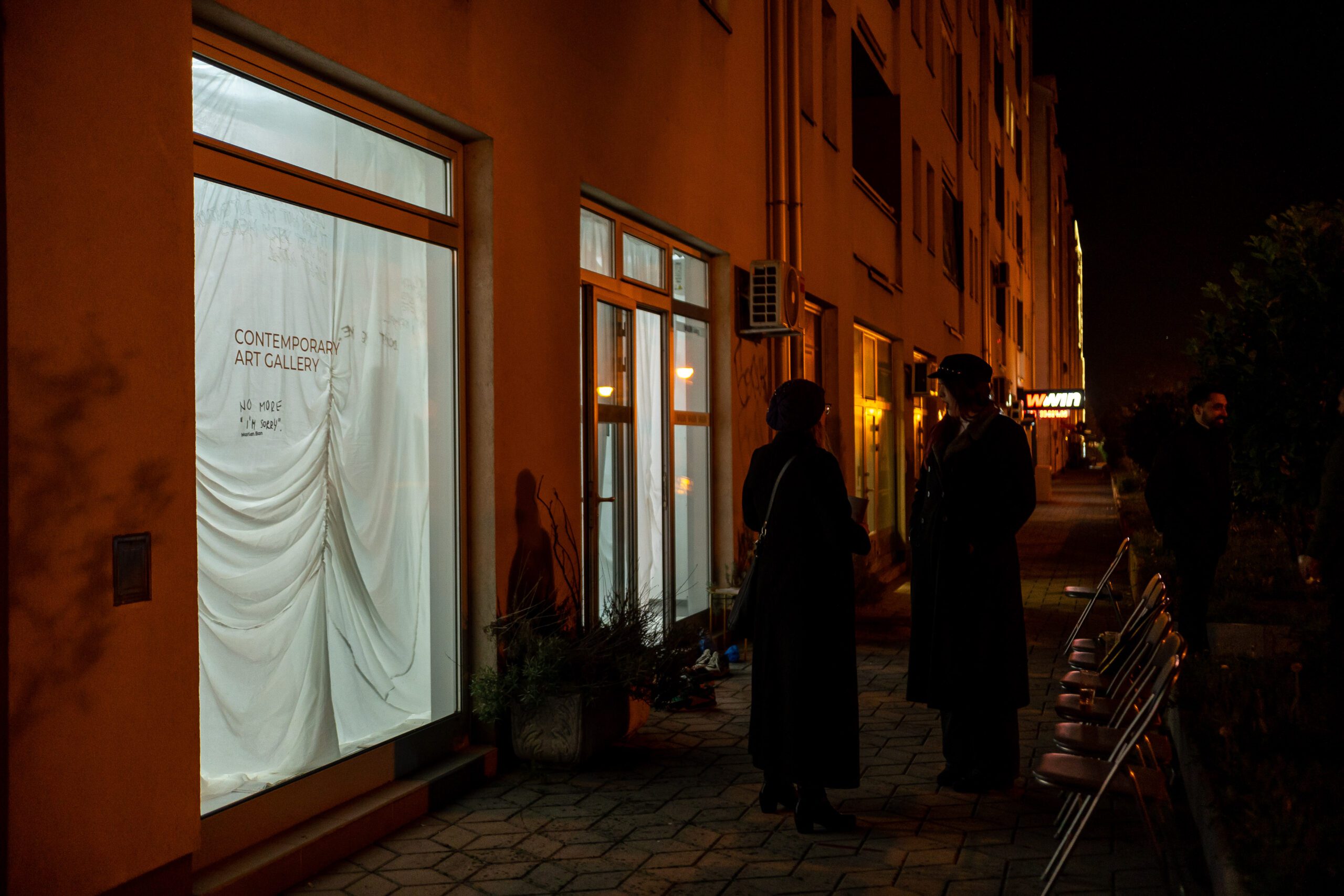
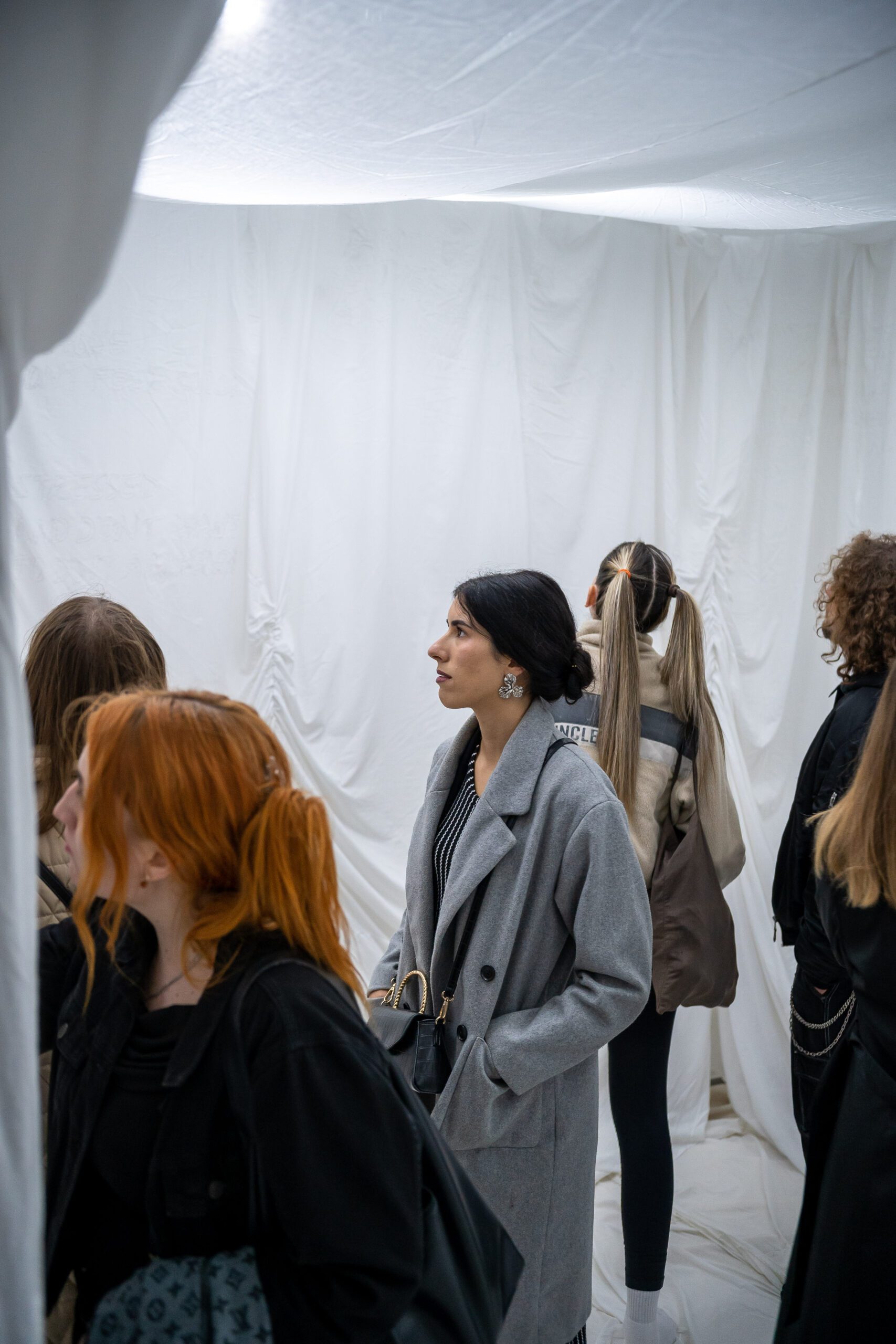
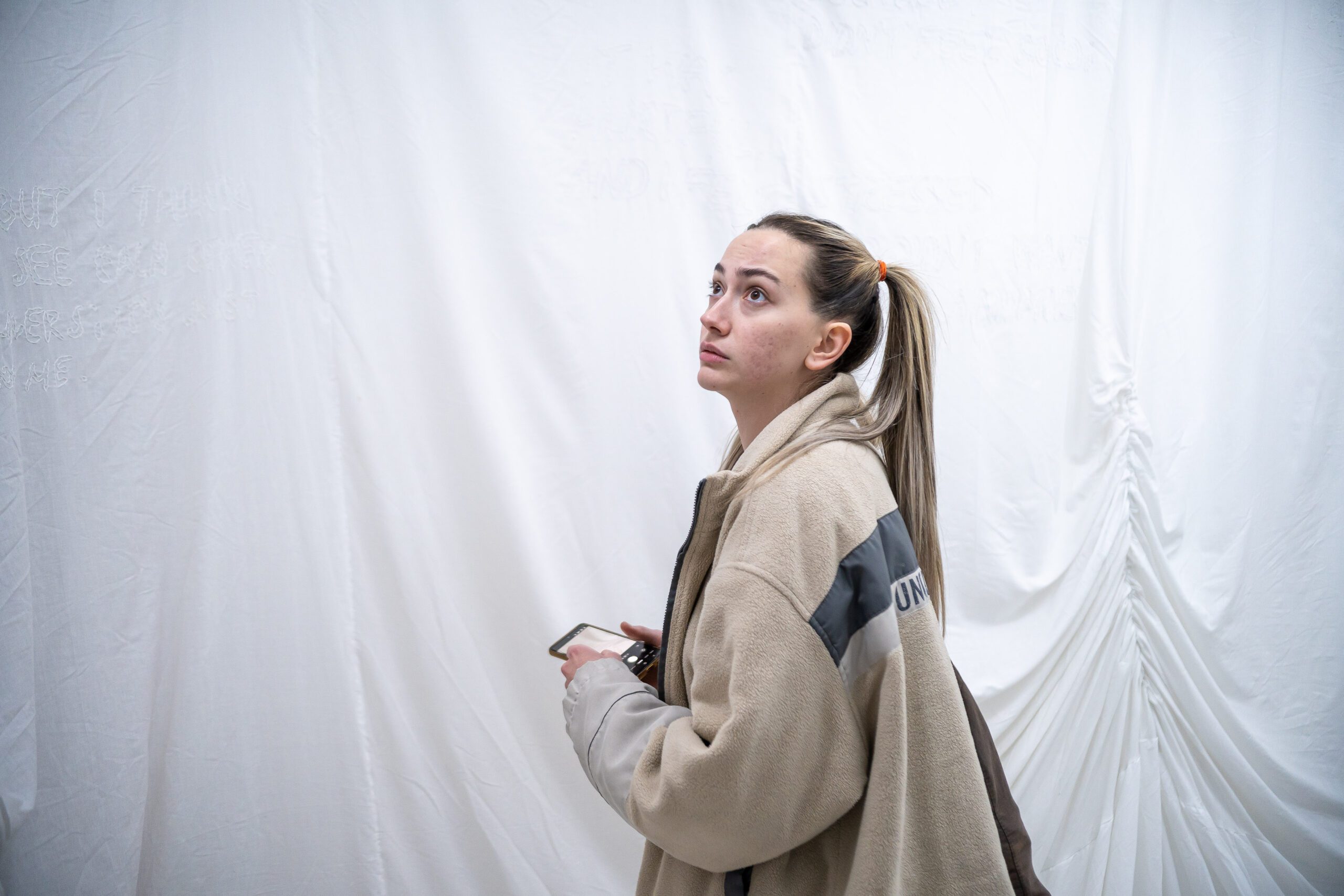
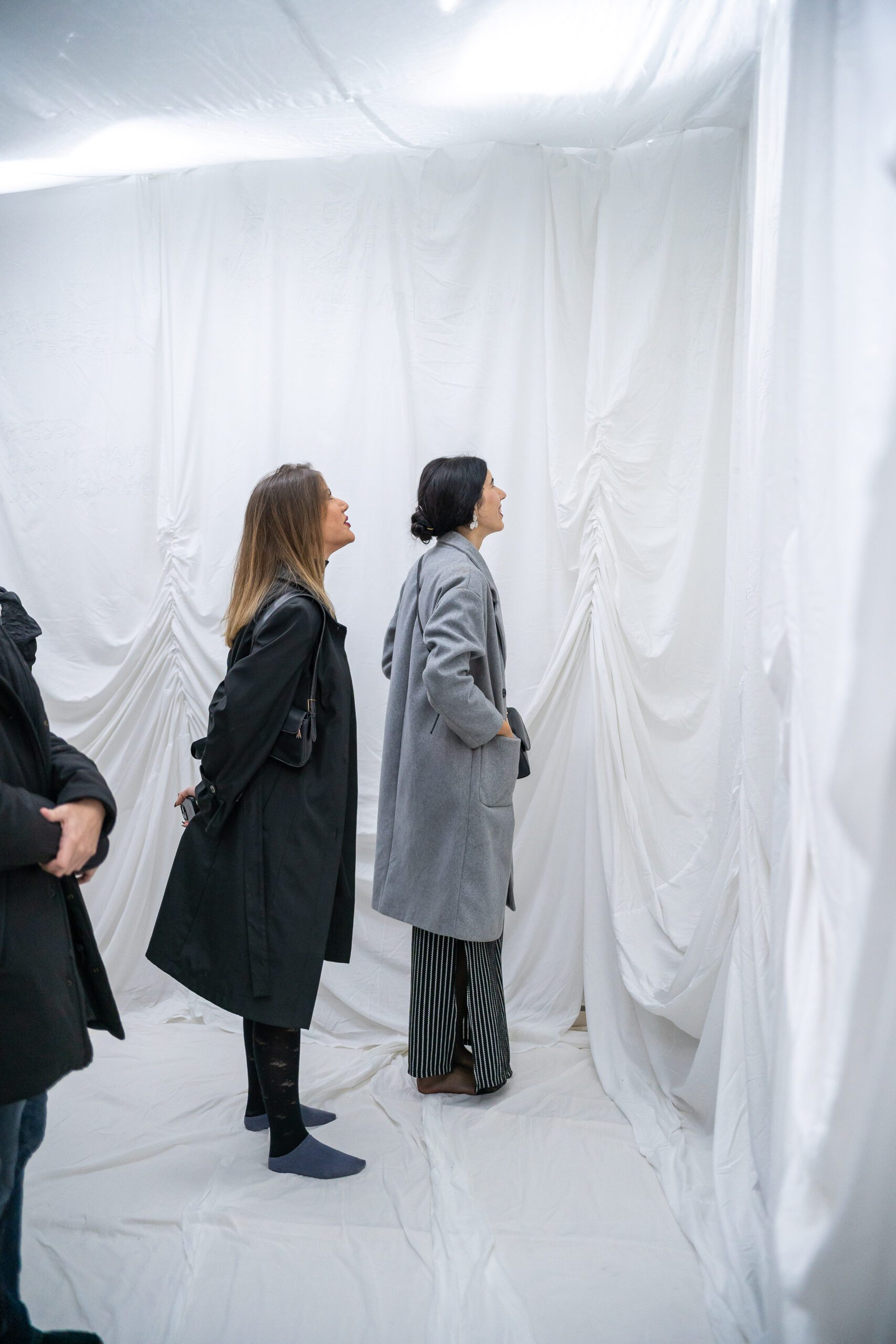
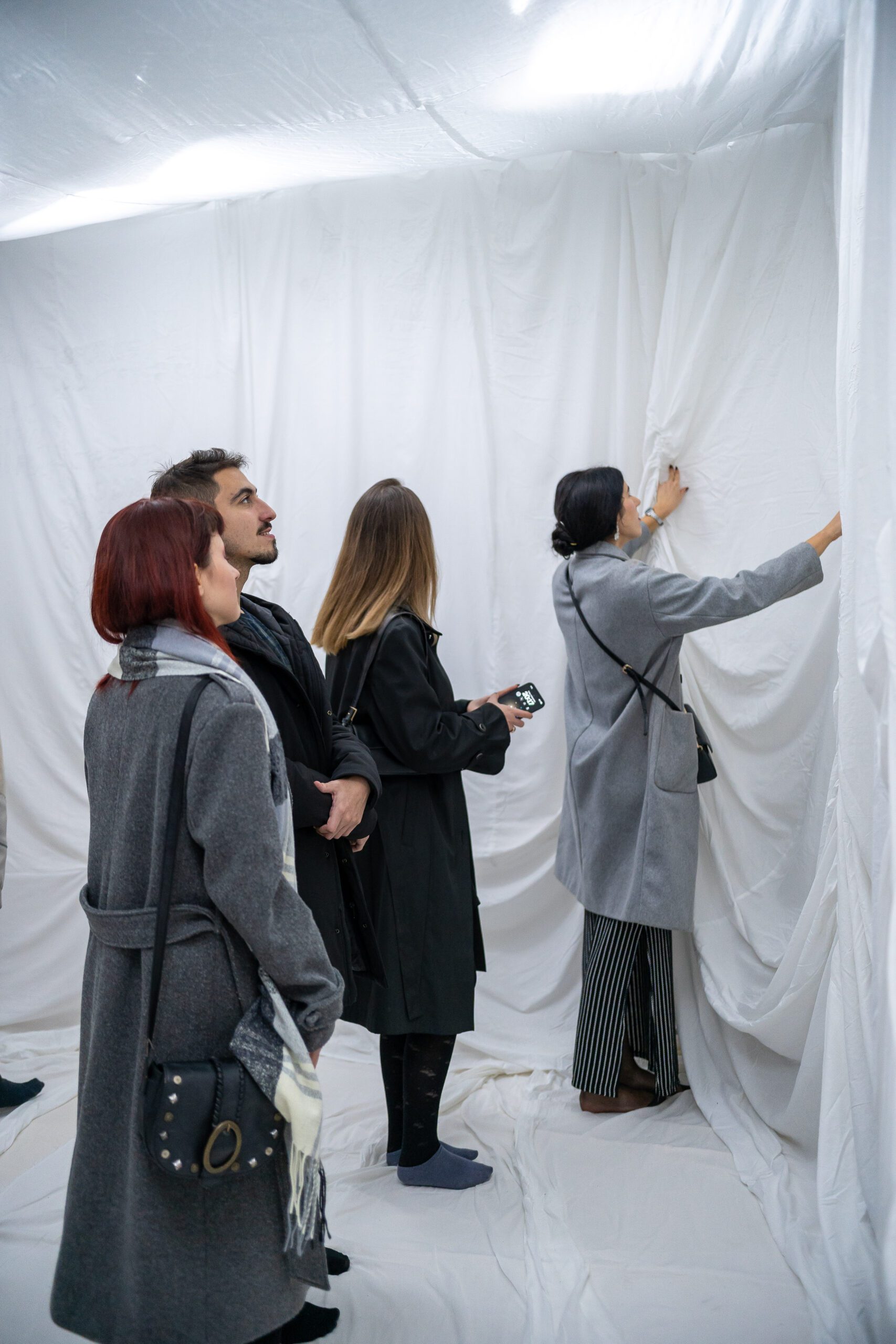
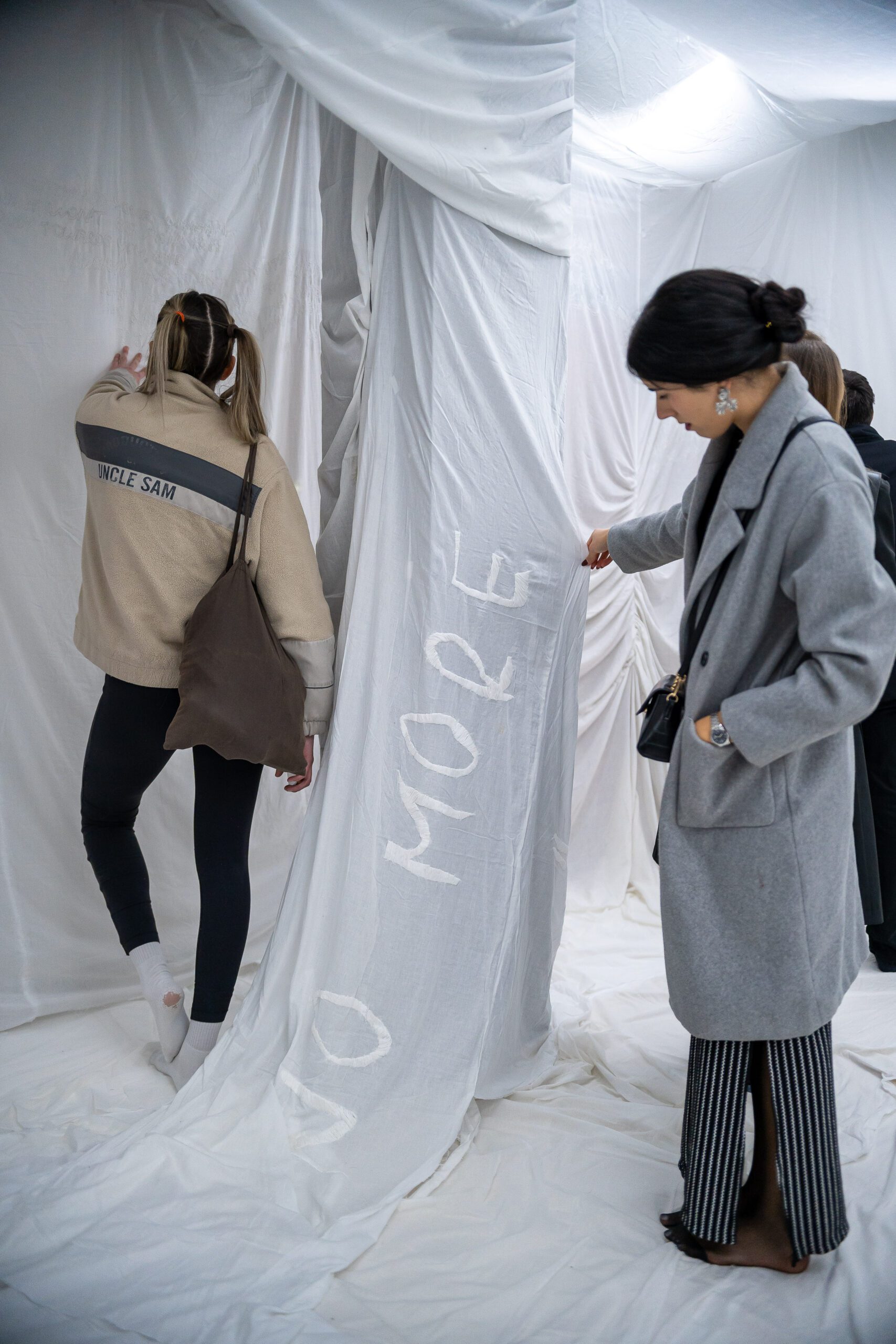
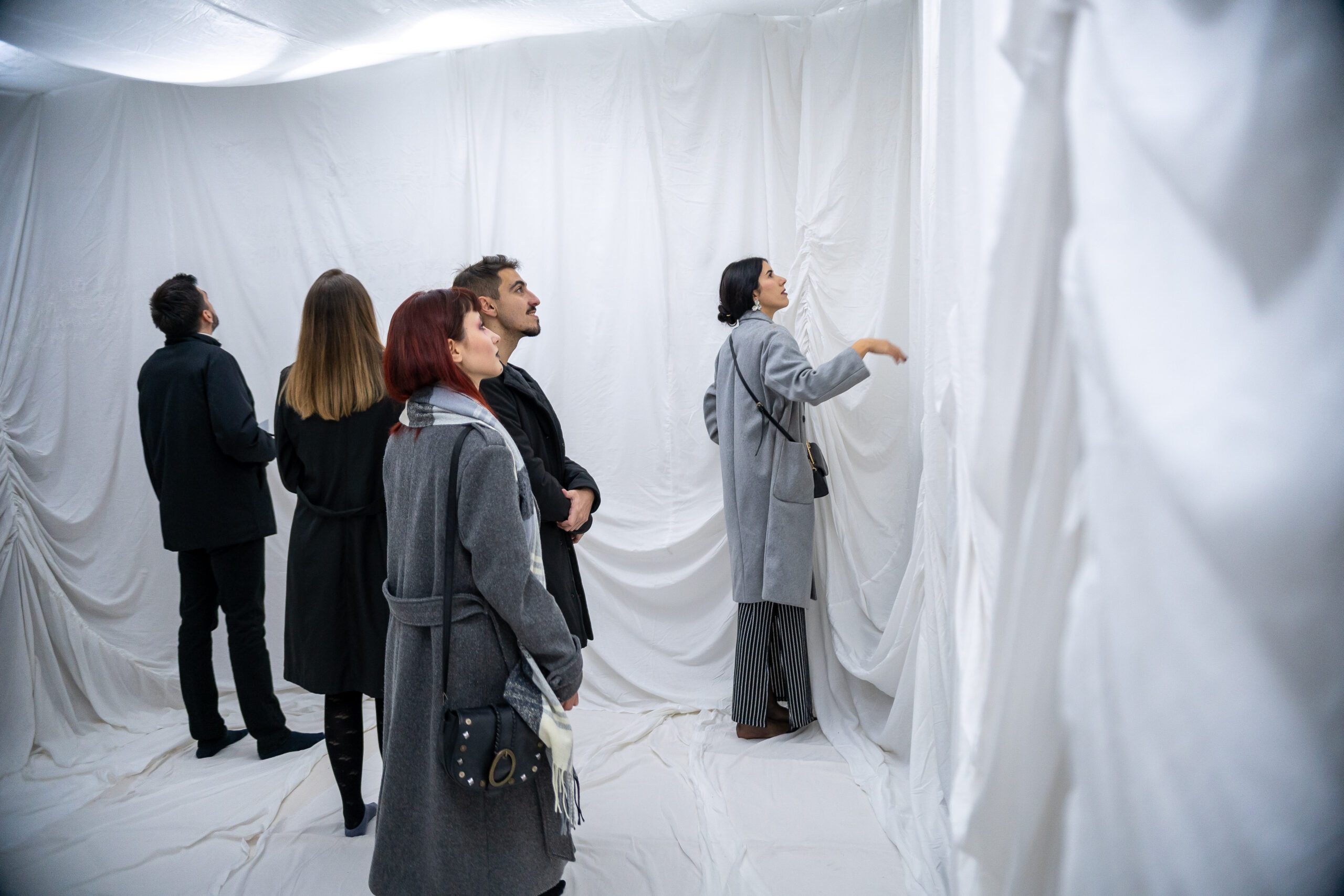
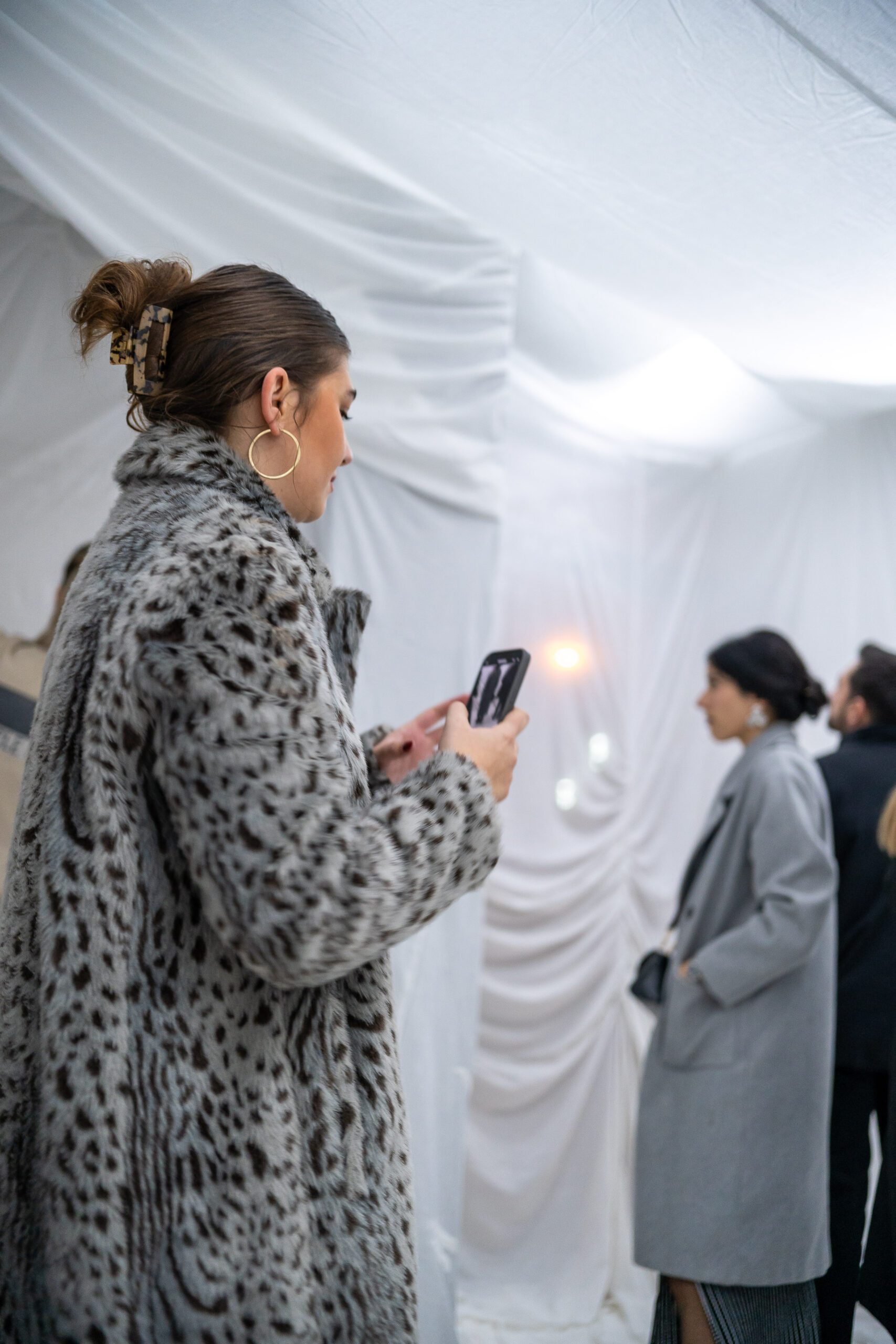
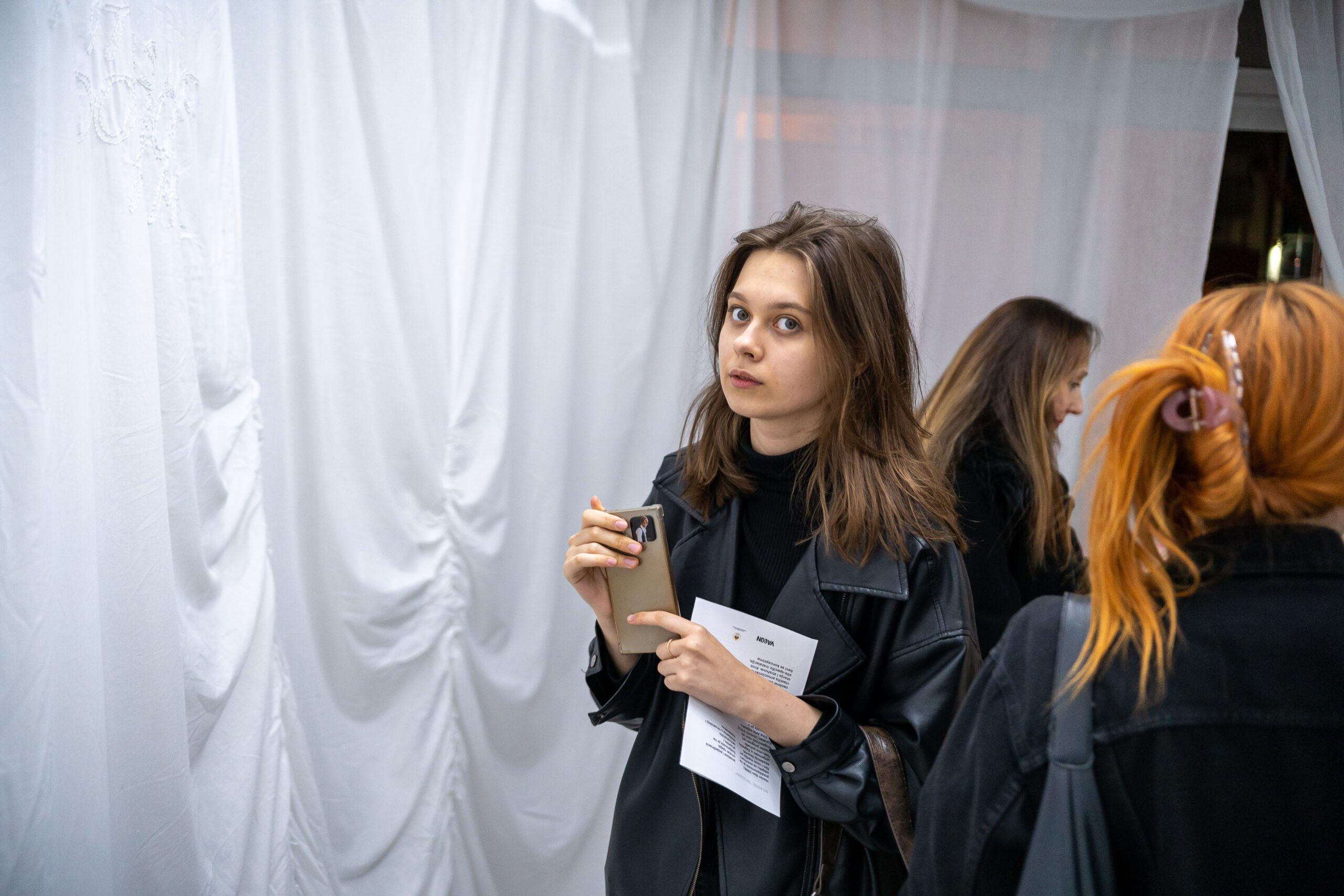
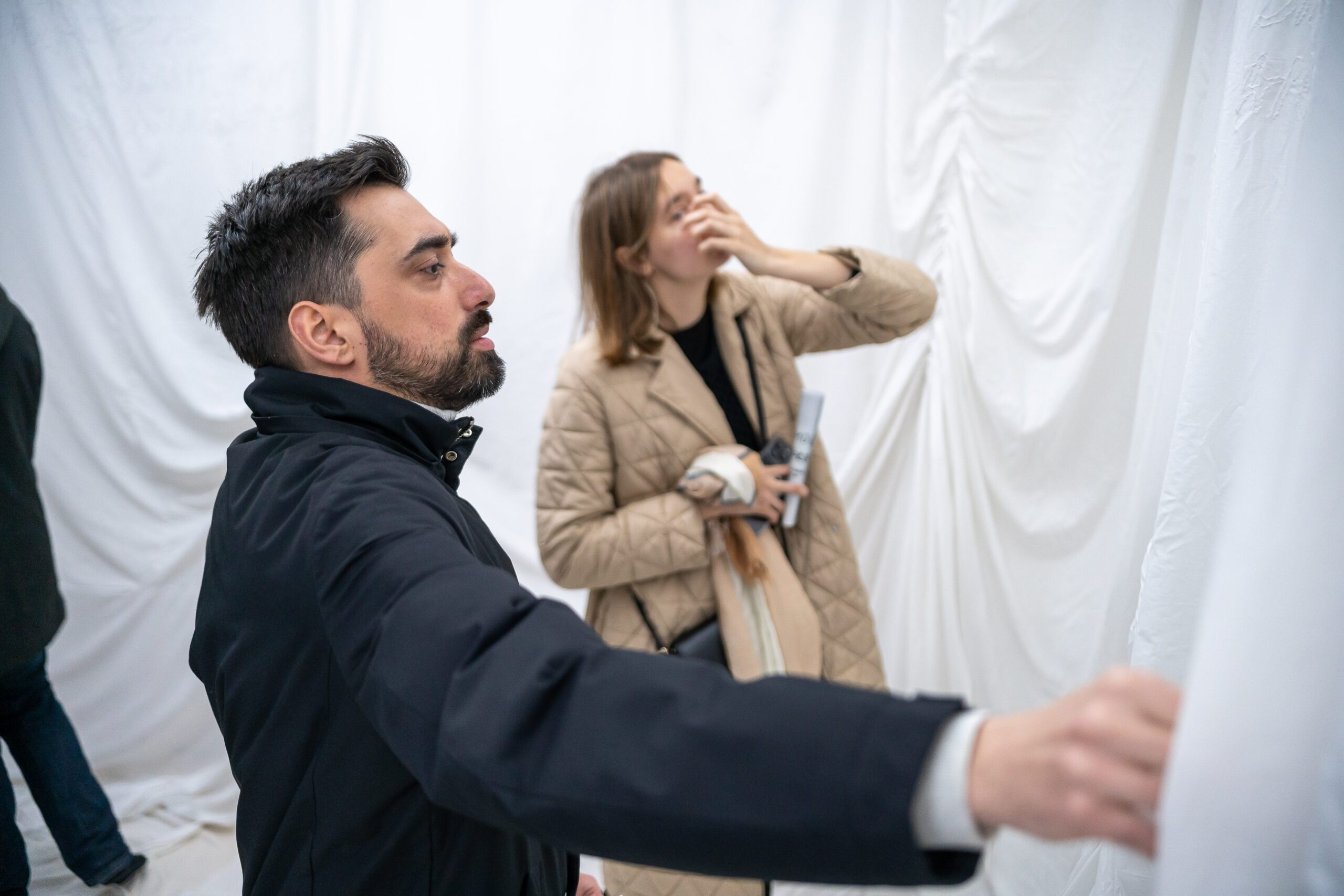
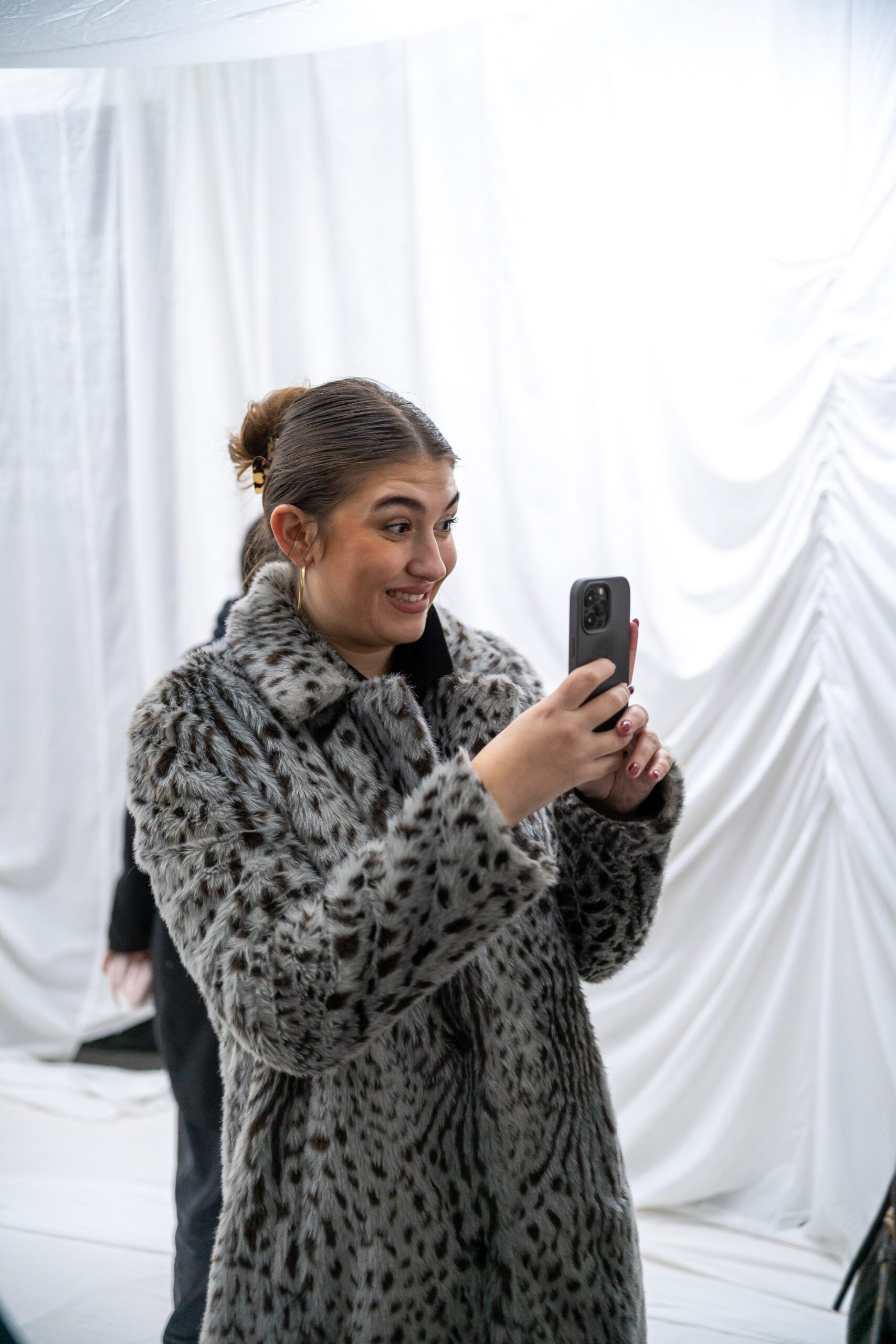
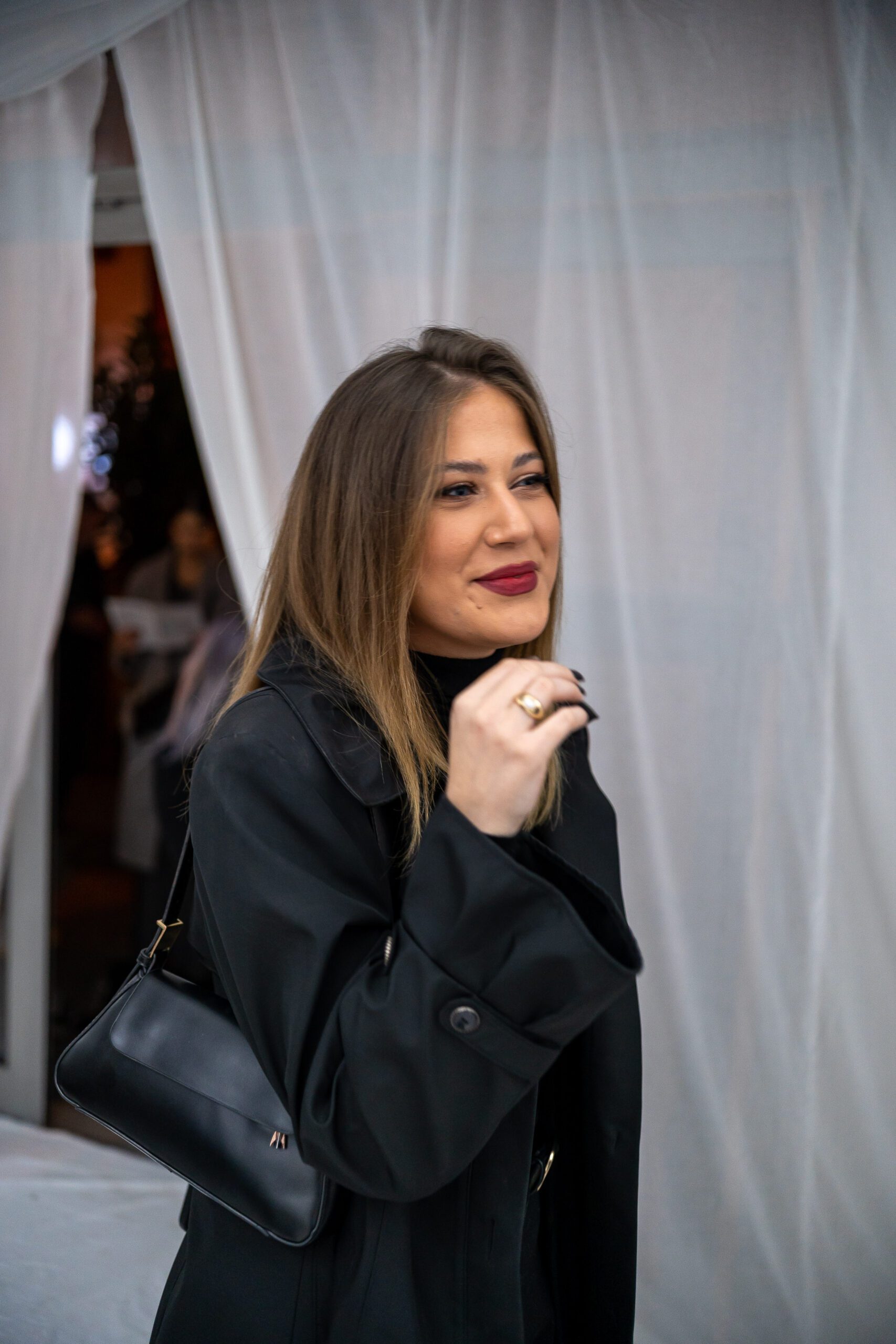
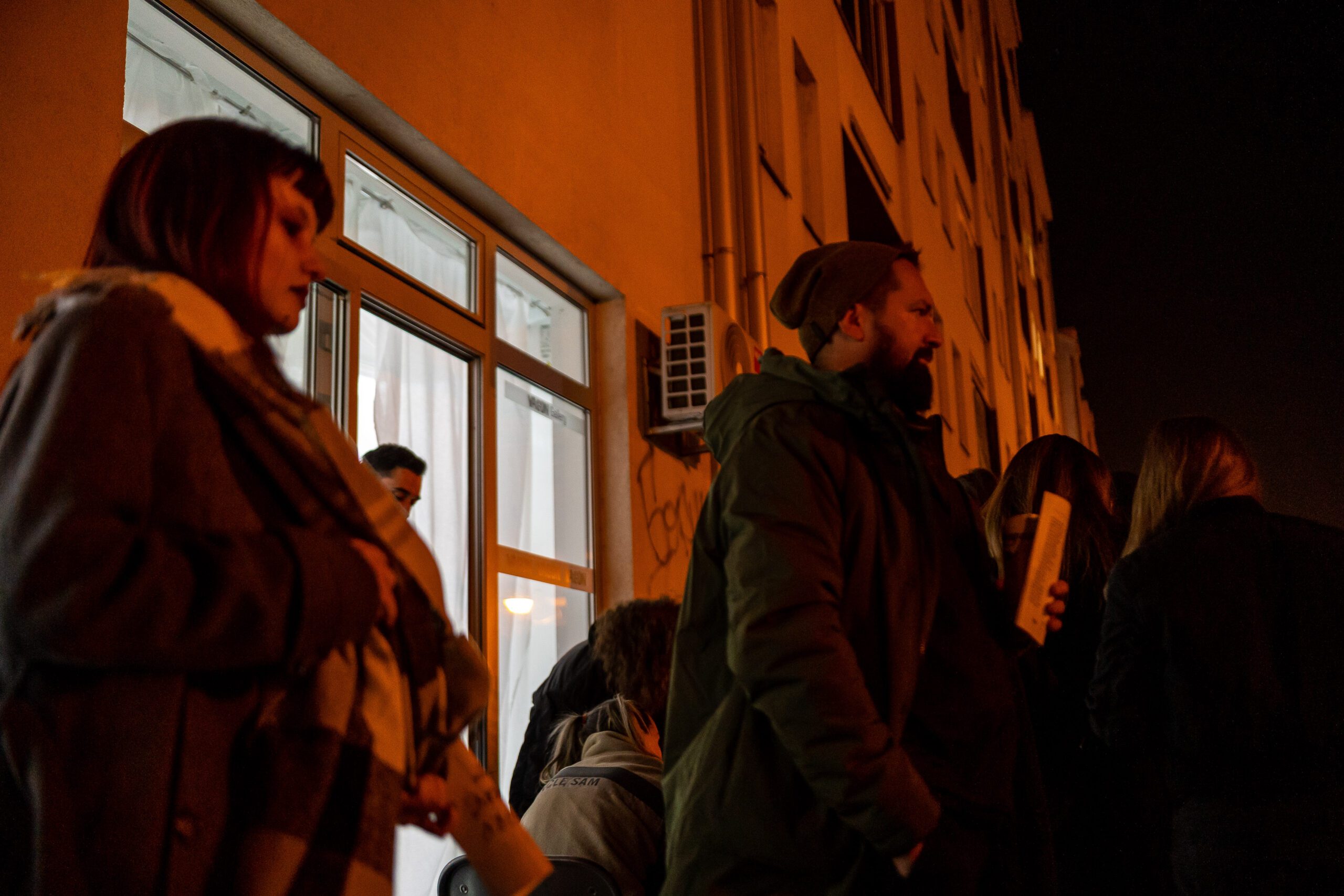
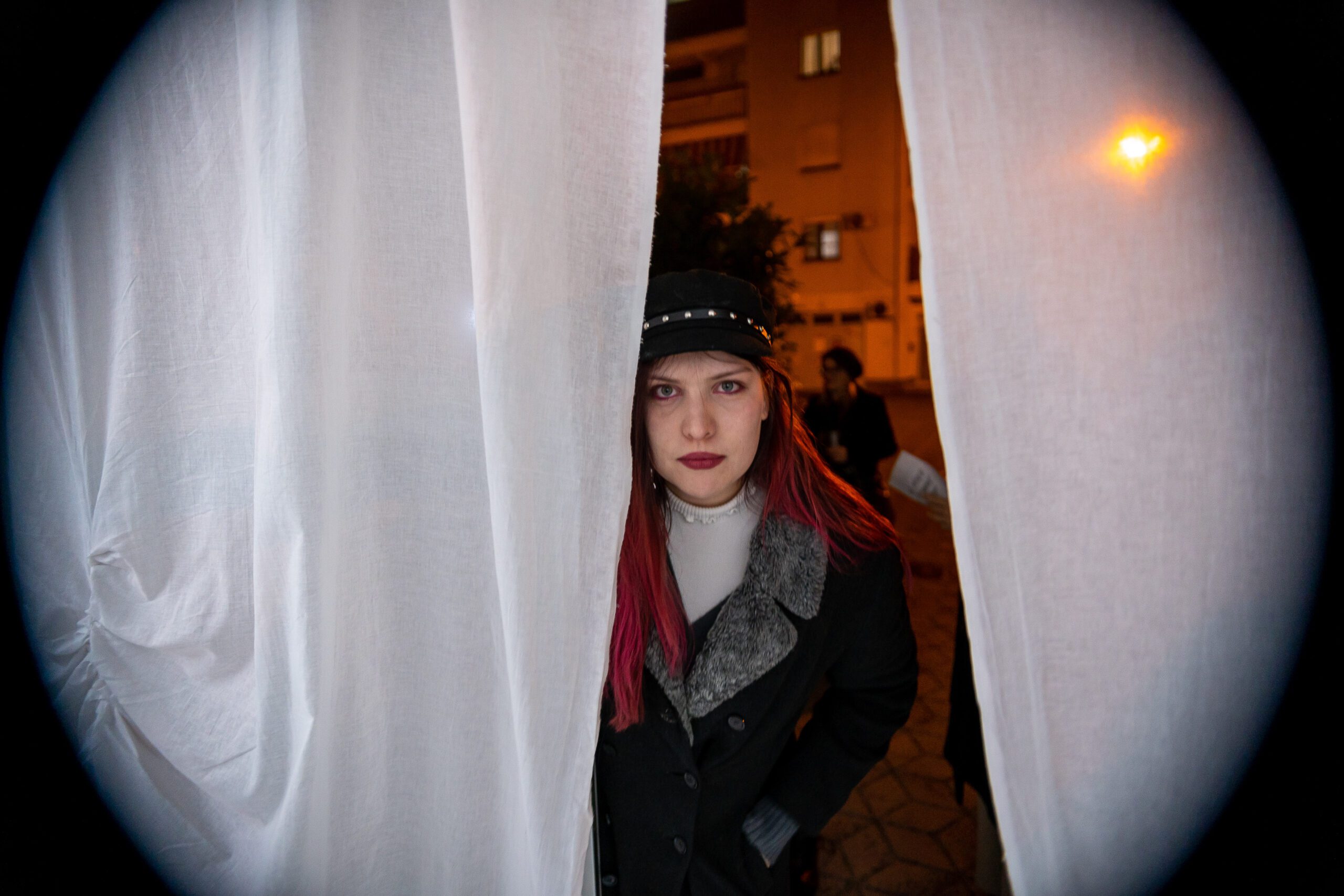
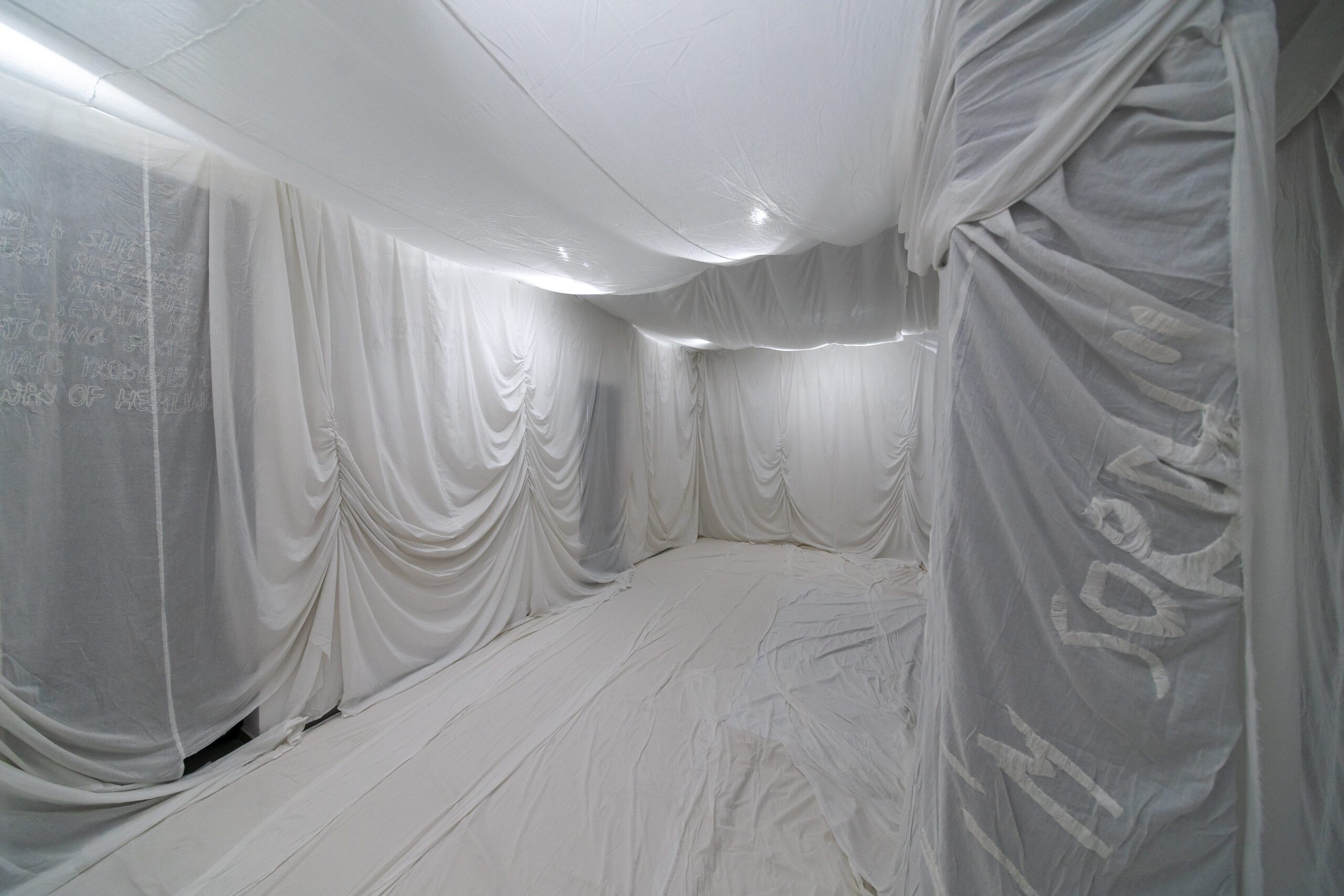
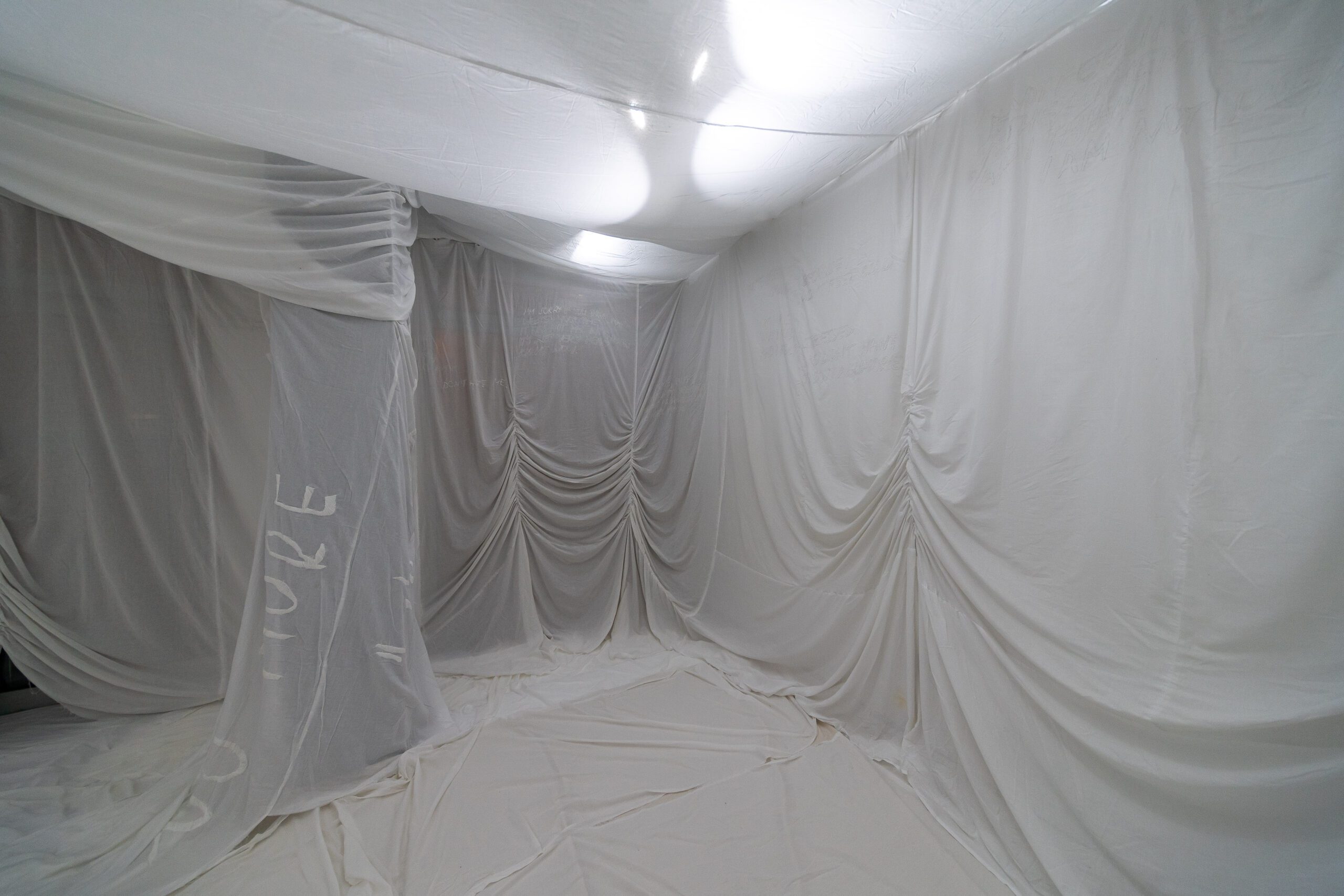
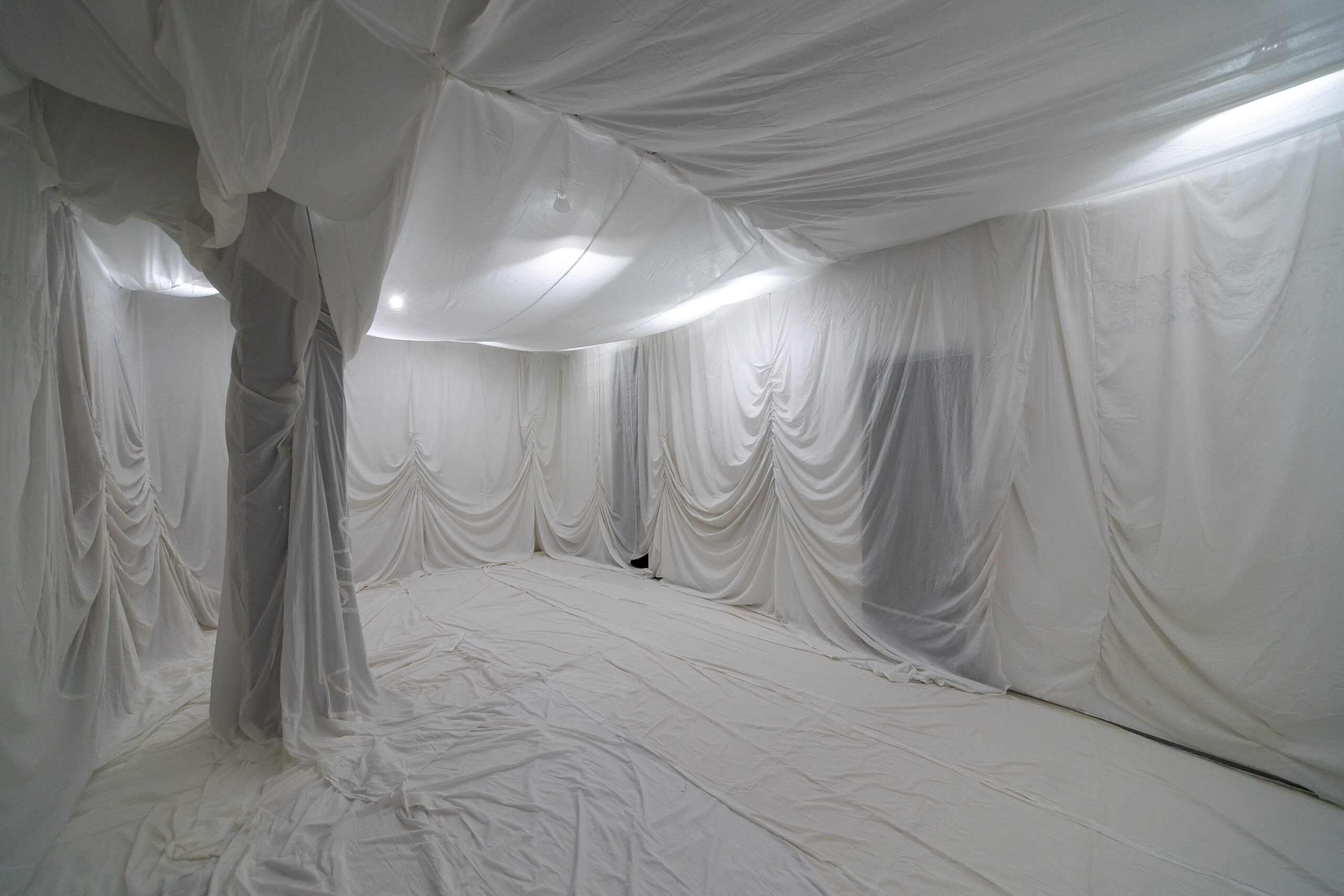
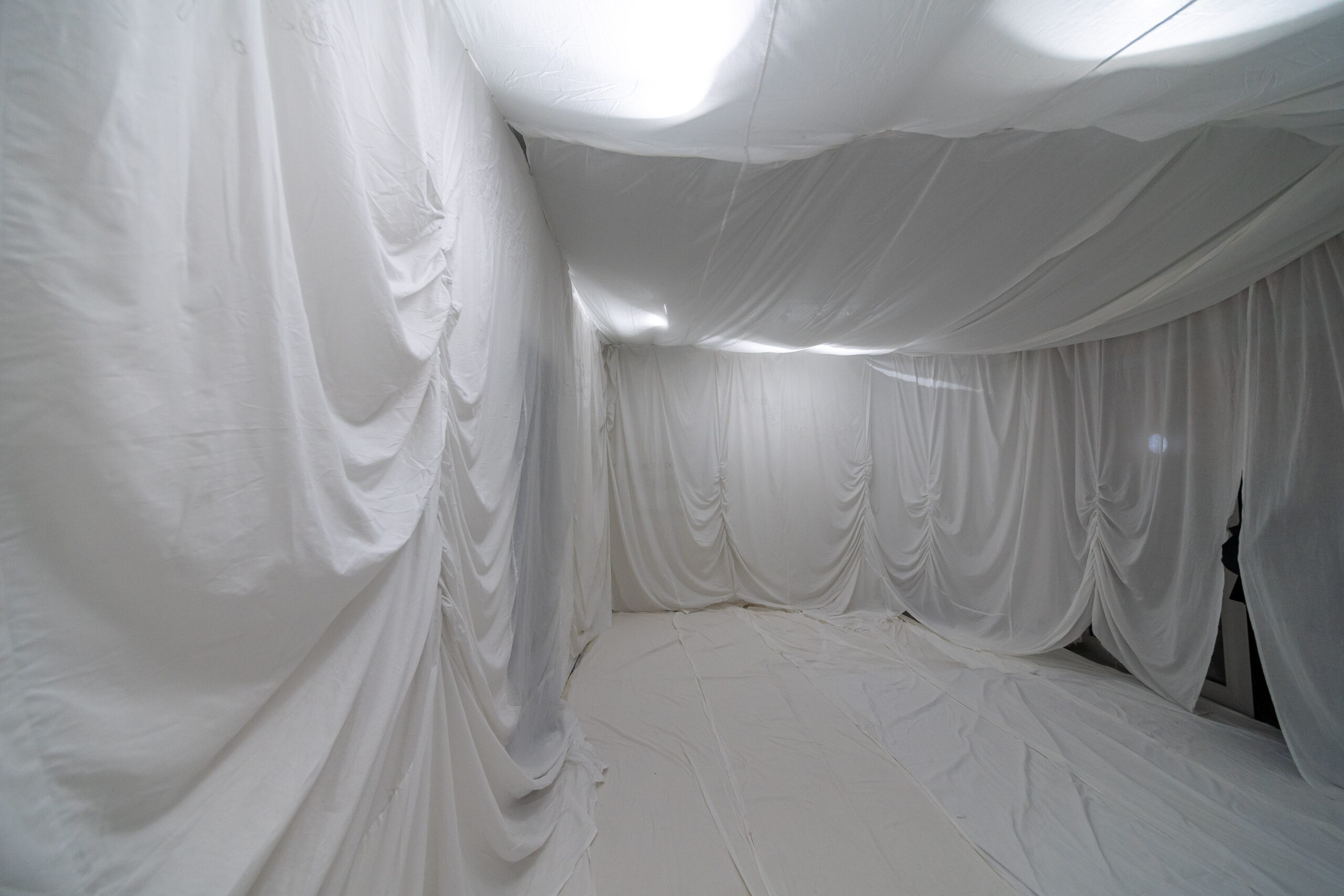
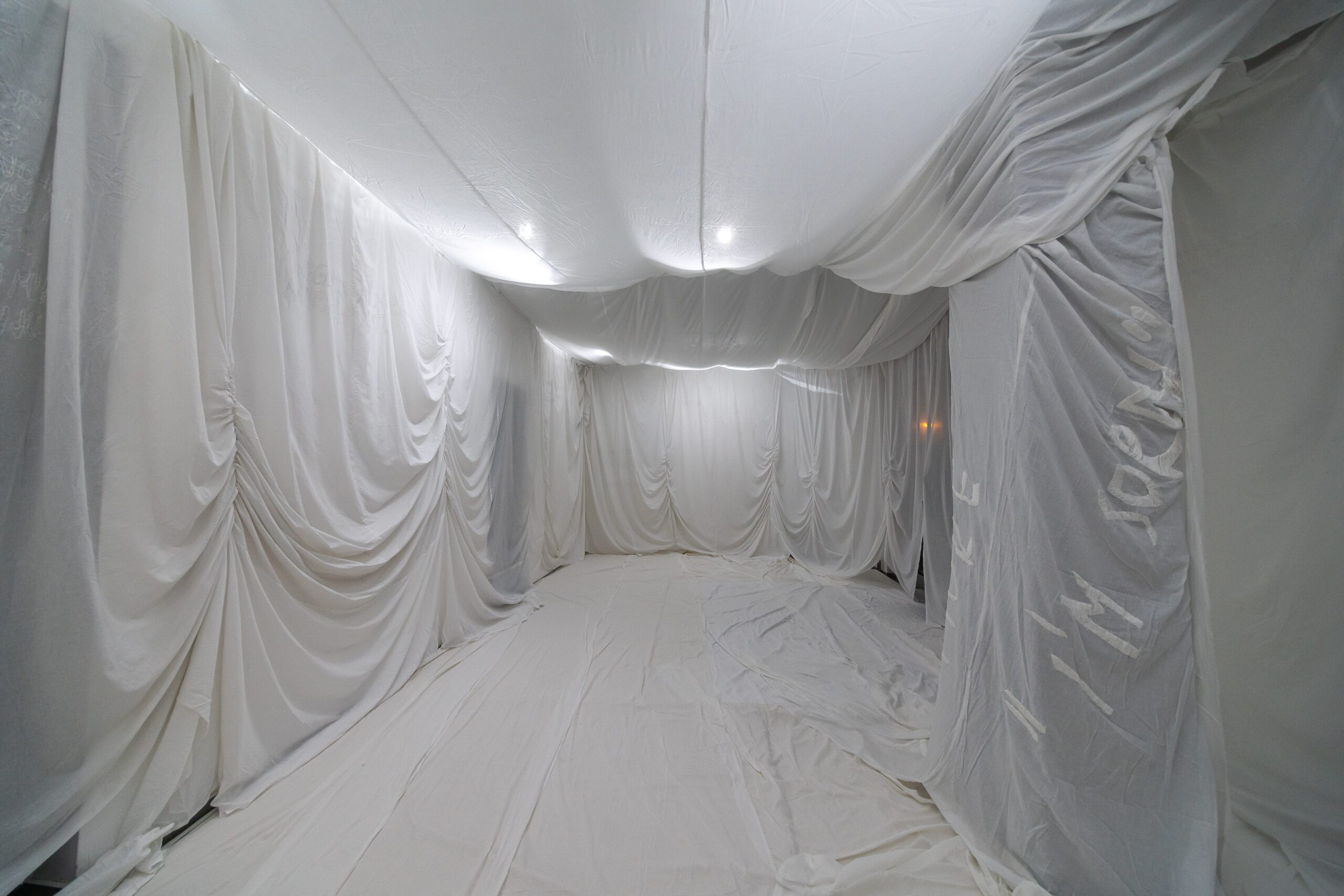
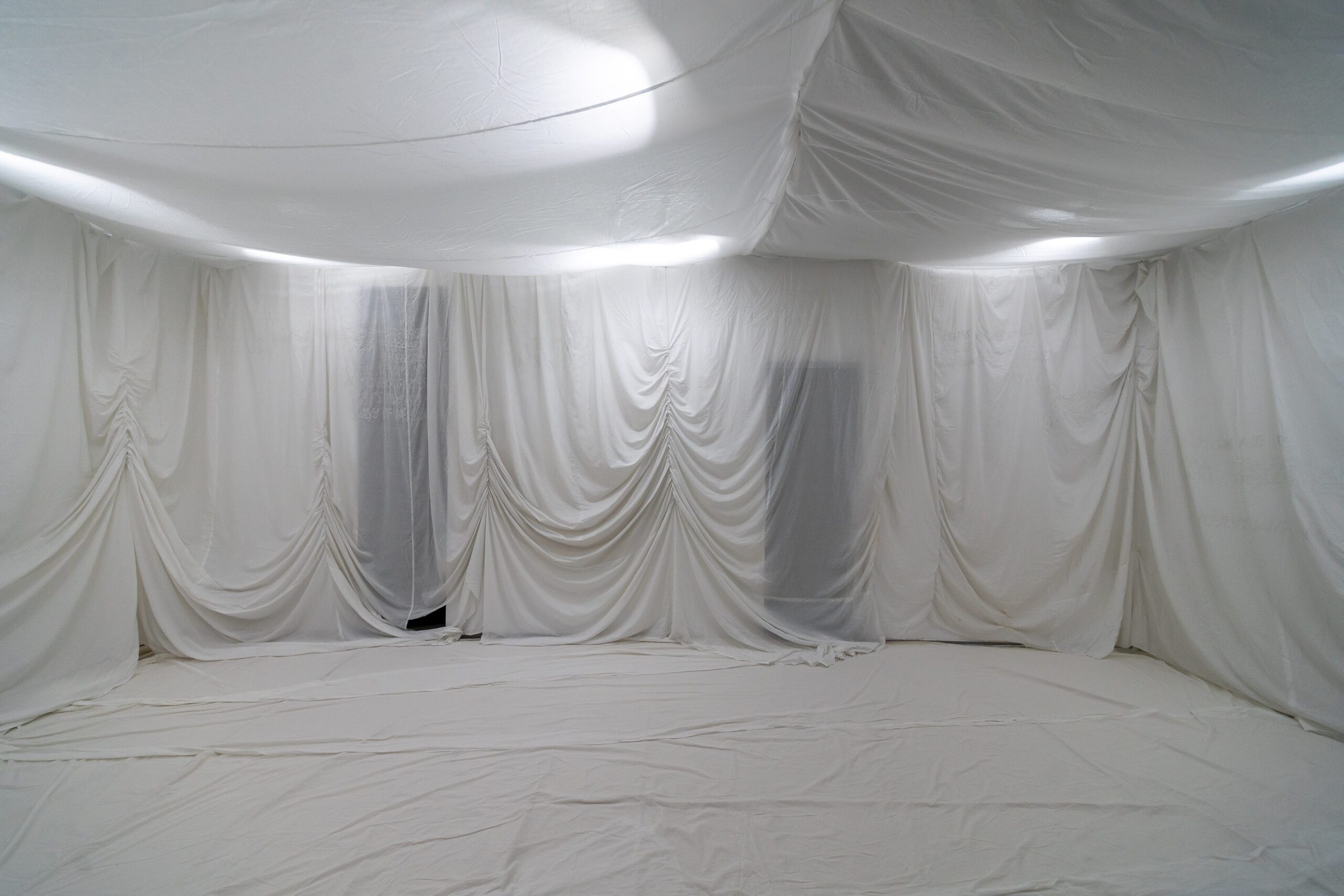
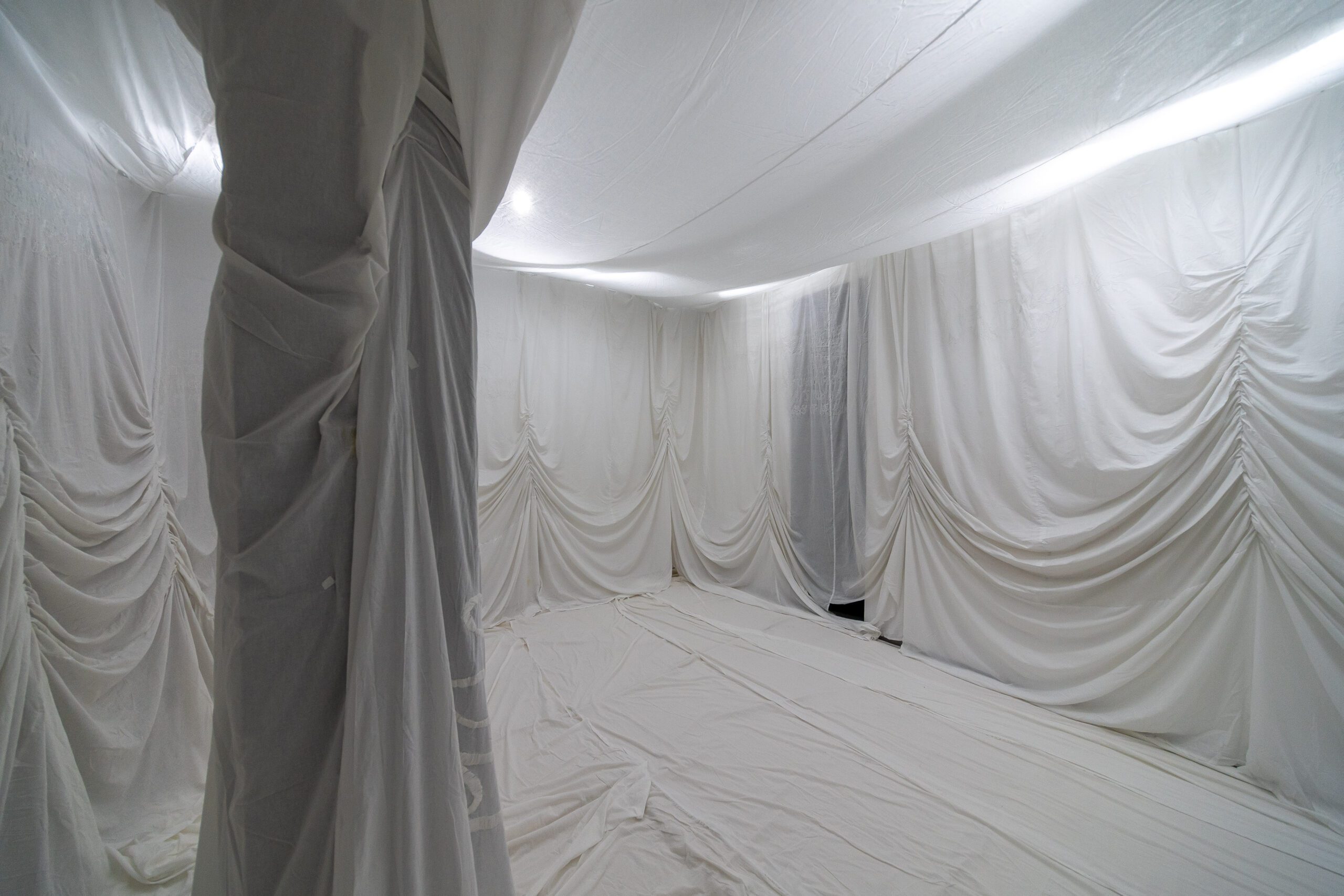
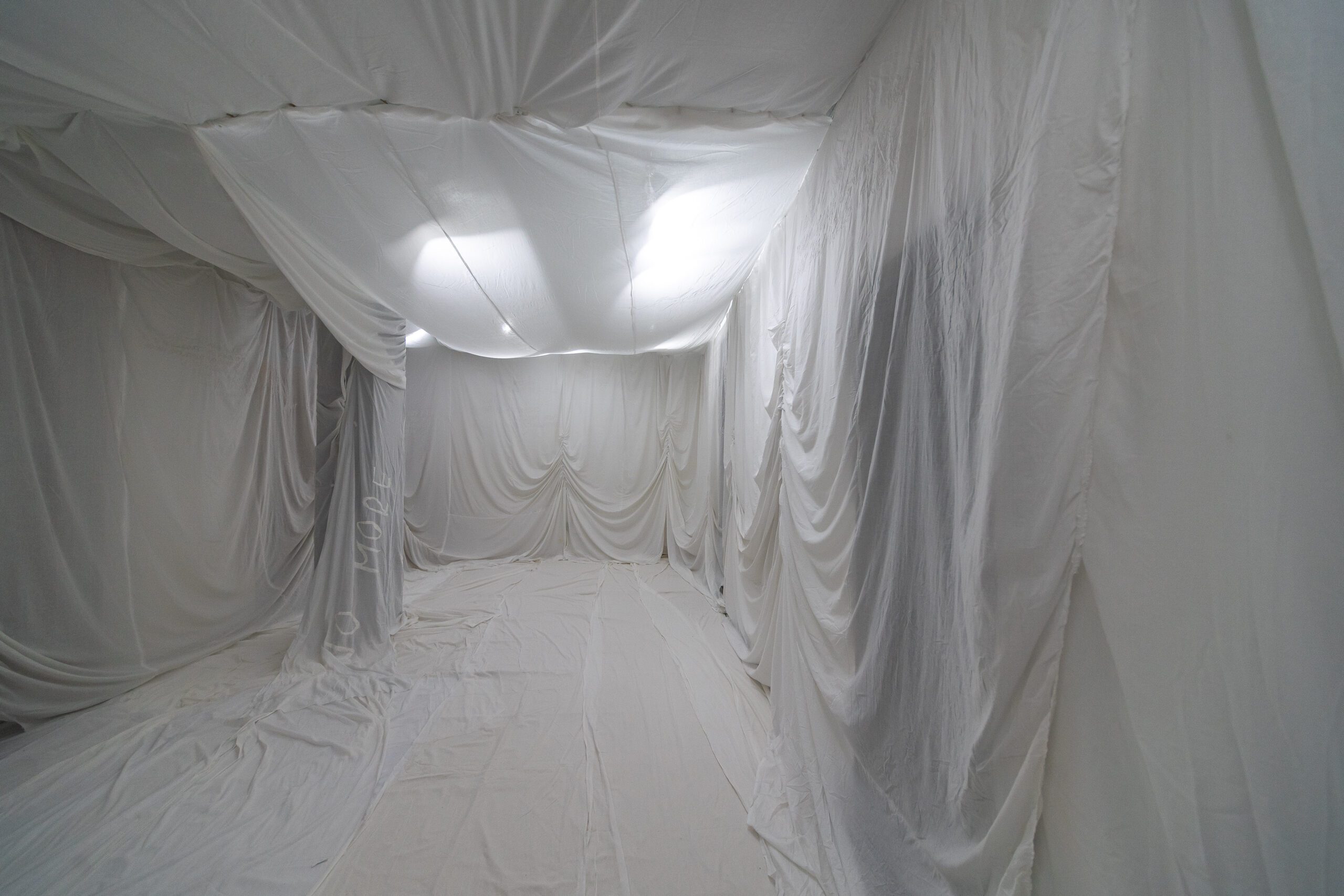
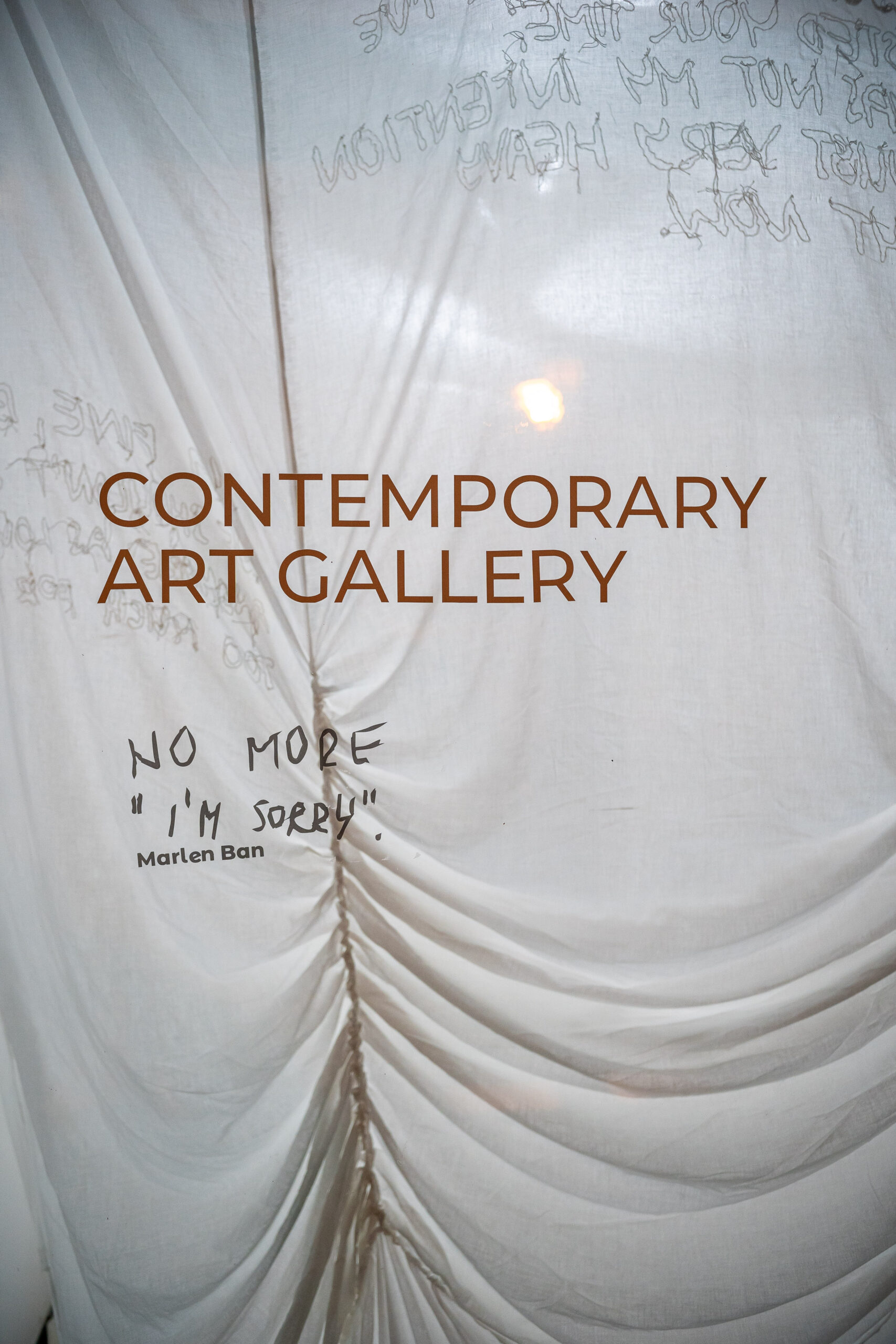
*No More “I’m Sorry”* is an introspective exhibition grounded in deep personal experience and a collective narrative of women’s voices, where the artist Marlen Ban, through the medium of embroidery, explores a female perspective on emotional, psychological, and physical harm within romantic relationships. It re-examines concepts of loneliness, the search for partnership, and the social pressures that shape female identity. Starting from a personal story of ending a traumatic relationship, Ban uses embroidery as a medium to convey a strong message of autonomy and resistance. The exhibition challenges the need for women to apologize in situations where they are, in fact, the victims, prompting the audience to reassess socially conditioned narratives.
Words of the curator
*No More “I’m Sorry”* opens the door to the complex theme of romantic relationships interwoven with expectations, hopes, conflicts, disappointments, fear, and rupture. Speaking from her own perspective, the artist Marlen Ban places in focus the female response to harm within romantic relationships—emotional, psychological, and physical.
In today’s immediate social reality, a woman is nominally independent from a man, yet the social belief remains strongly present that she can only become a fully realized person once she finds her “other half.” Preoccupied with ideas of unaccepted solitude and the forced search for a partner, the artist questions what these constructs mean to her now, and what they meant in her personal history. How are they embodied in the community around her? What role has social pressure of humility and silencing one’s own voice played in these processes in order to be liked? What are the consequences of this?
There is no single answer—apart from general patterns of patriarchal upbringing, traditional understandings of women’s roles in relationships, and consent that ensures survival—Ban turns to the polyvocality of experiences.
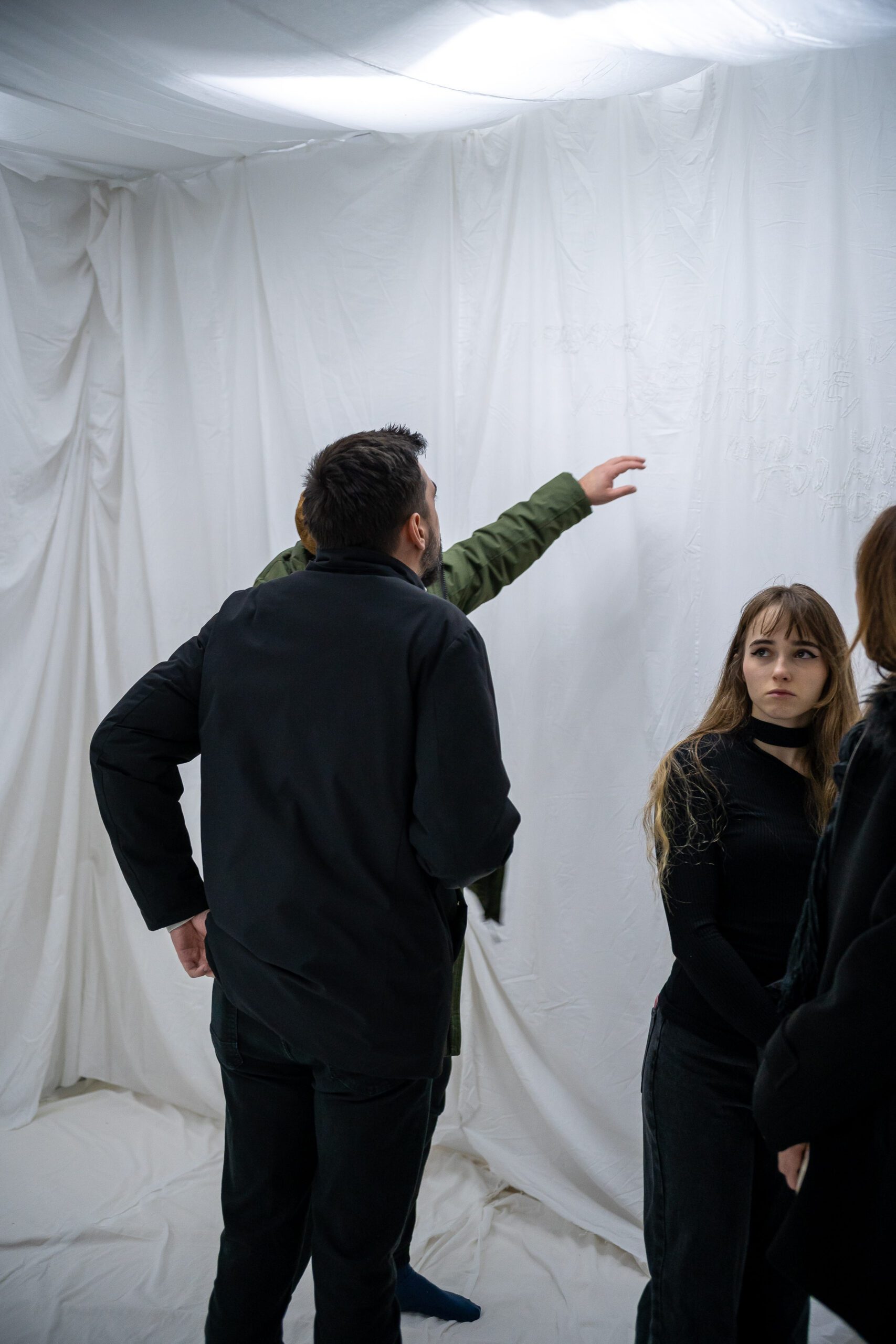
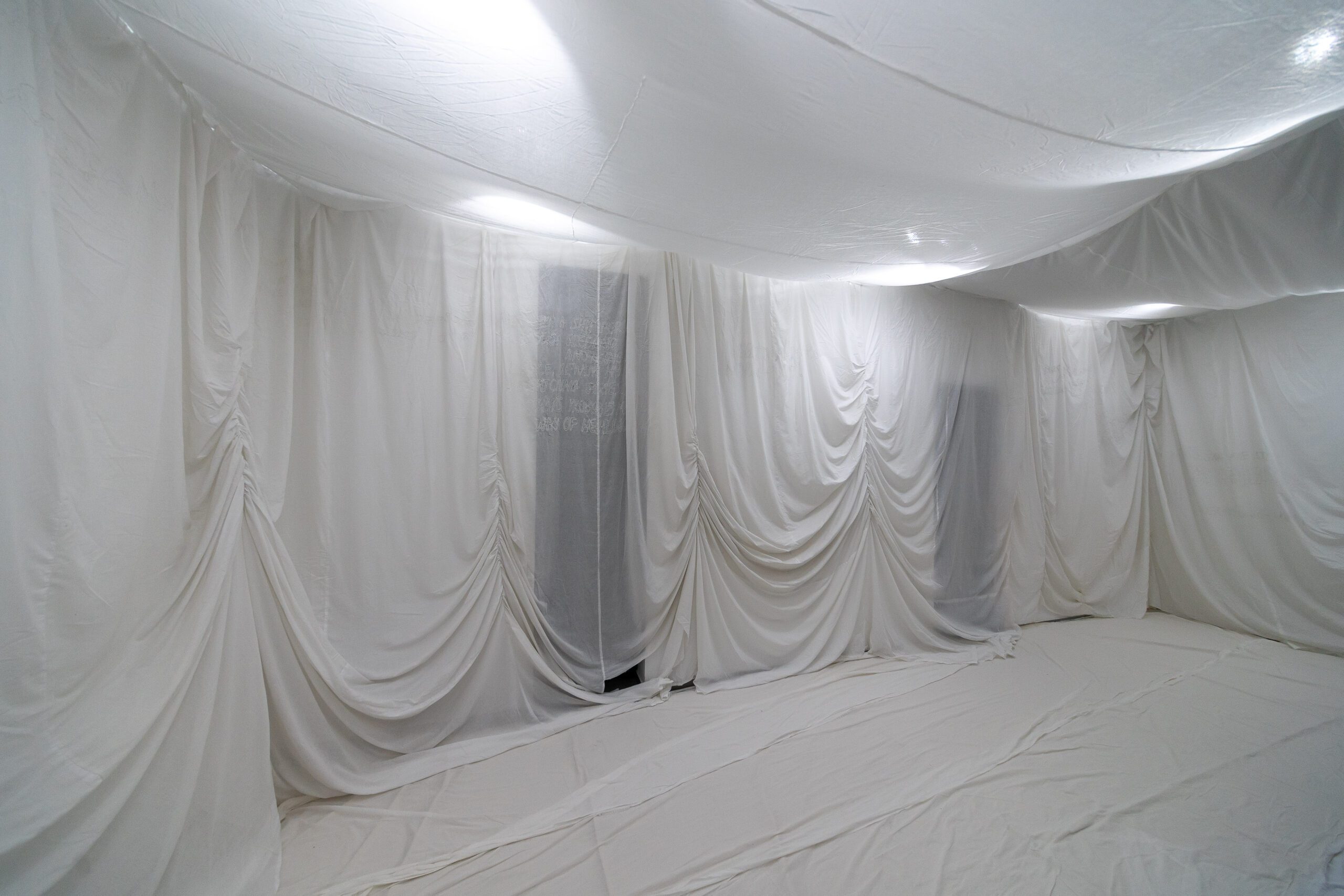
The work emerges from the embroidery of a text about the artist’s breakup of a traumatic relationship, and through the choice of embroidery as a traditional medium culturally associated with women’s handcraft and togetherness, empathetic communication is intuitively encouraged. By involving women in the process of creating the artwork, the artist creates a safe space for sharing and dialogue.
Through exchange, collaborators become co-authors whose, in the words of Sara Ahmed, “...telling the story of pain and injury is not necessarily therapeutic...” but becomes a testimony that demands active listening.
Through direct exposure of herself, the artist protects the potential need for anonymity of collaborators, taking into account the layered nature of stories and contexts that no single work could encompass.
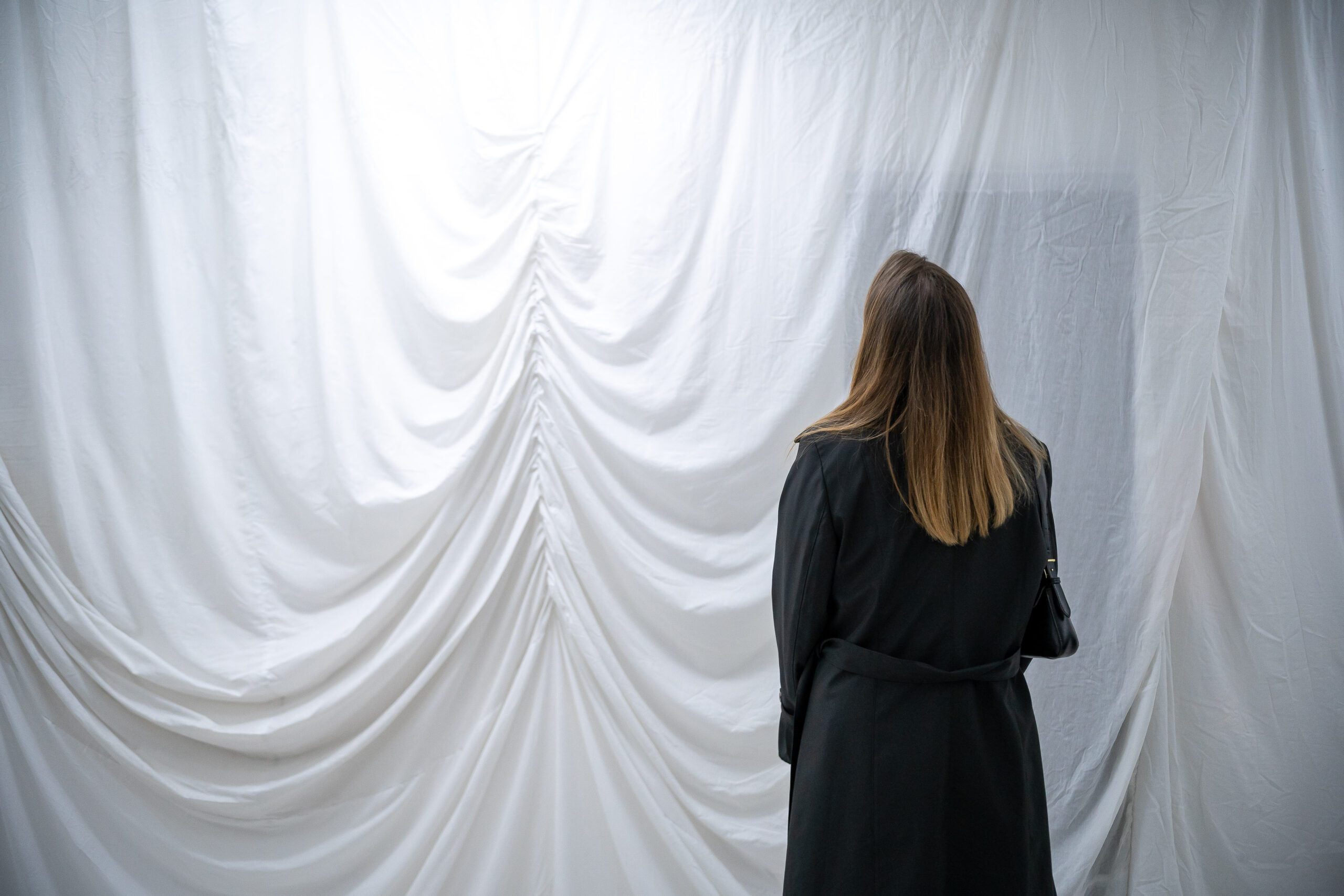
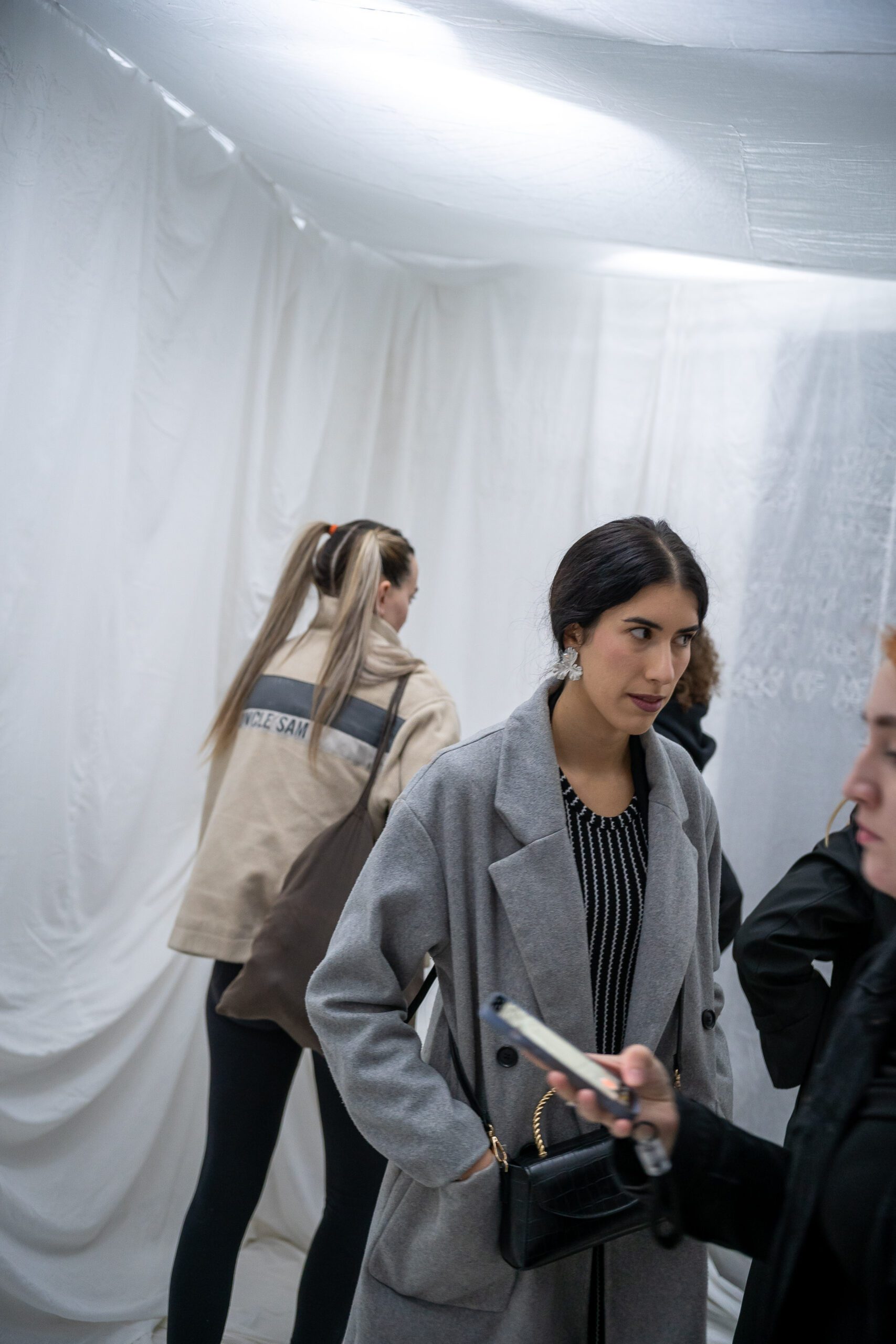
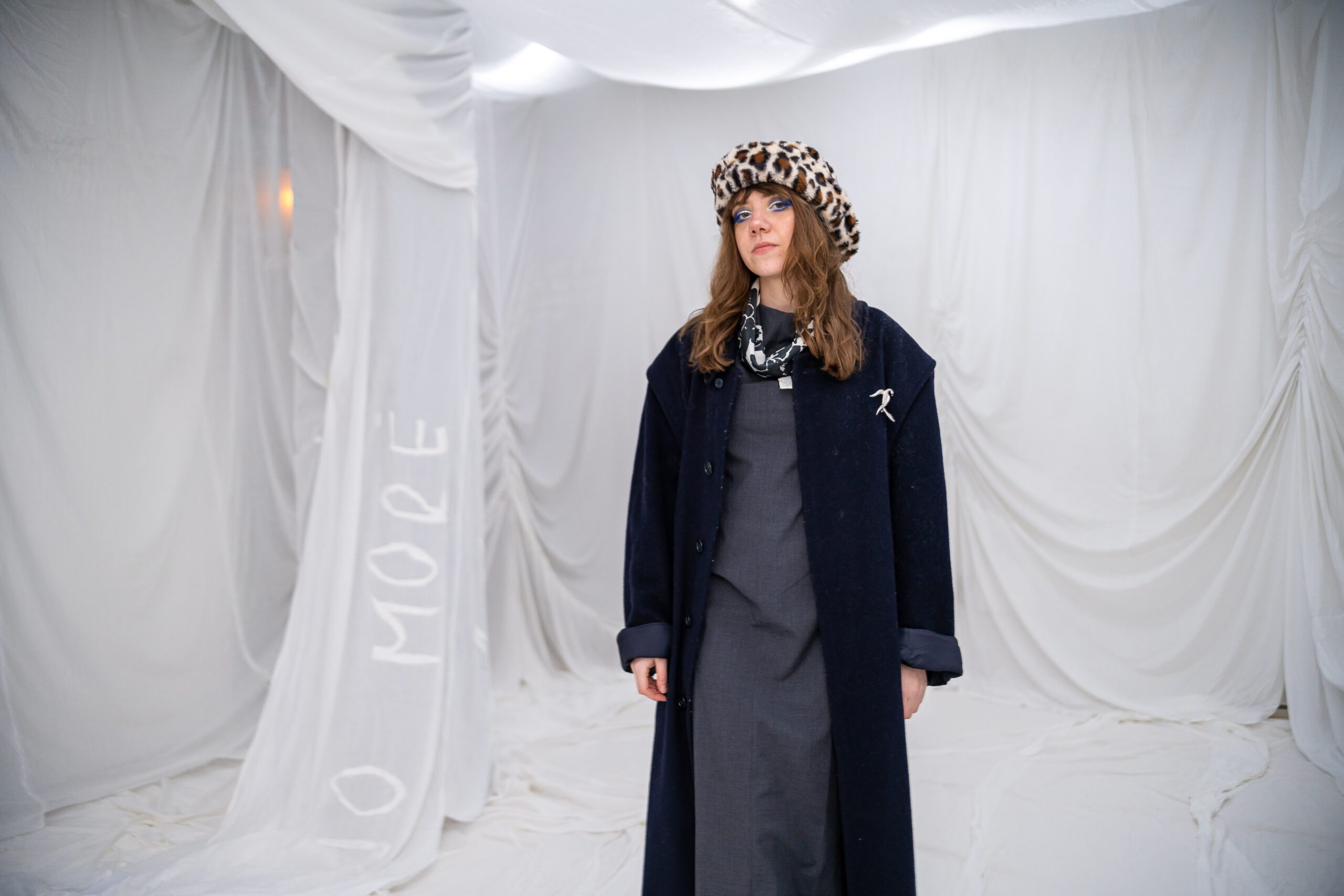
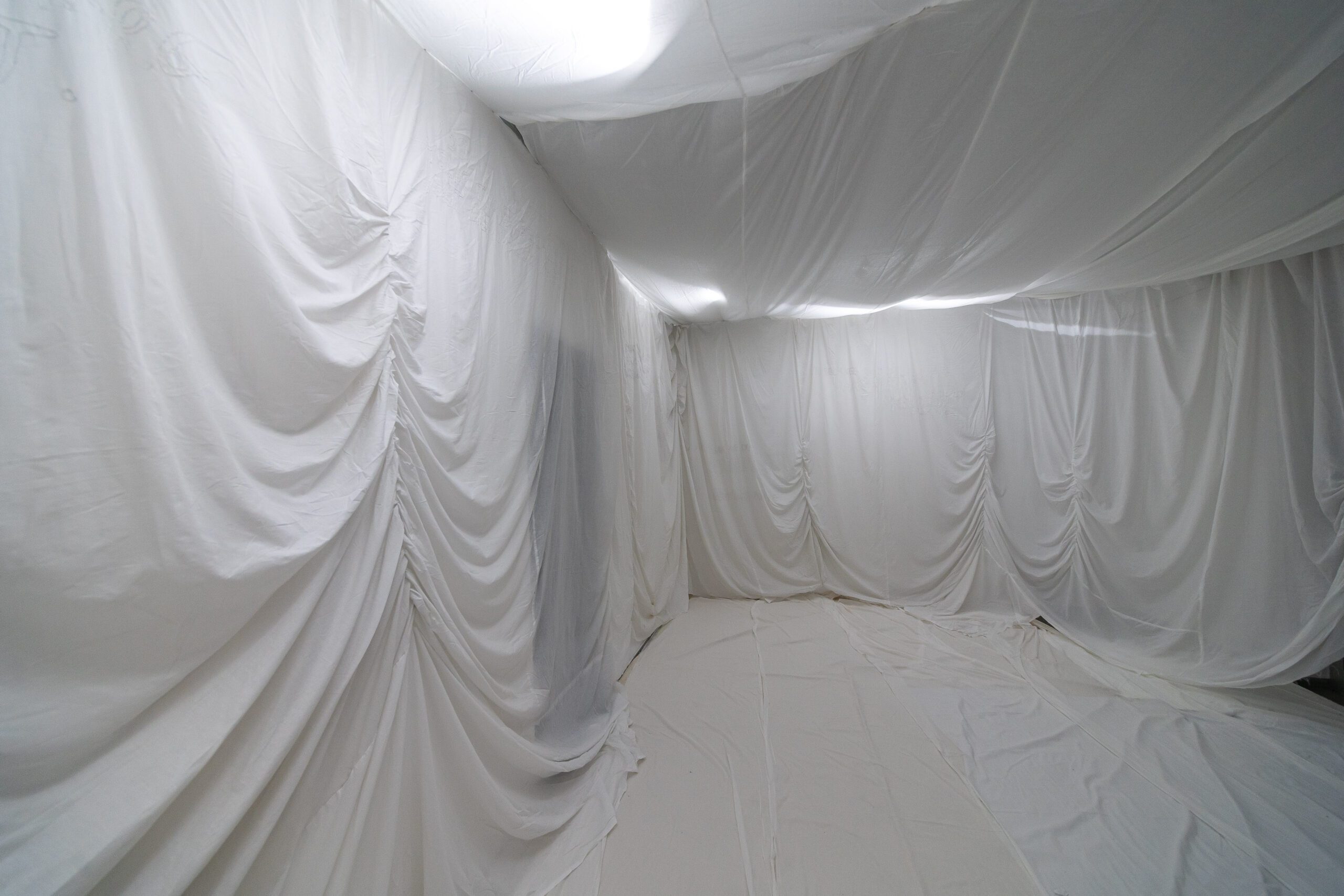
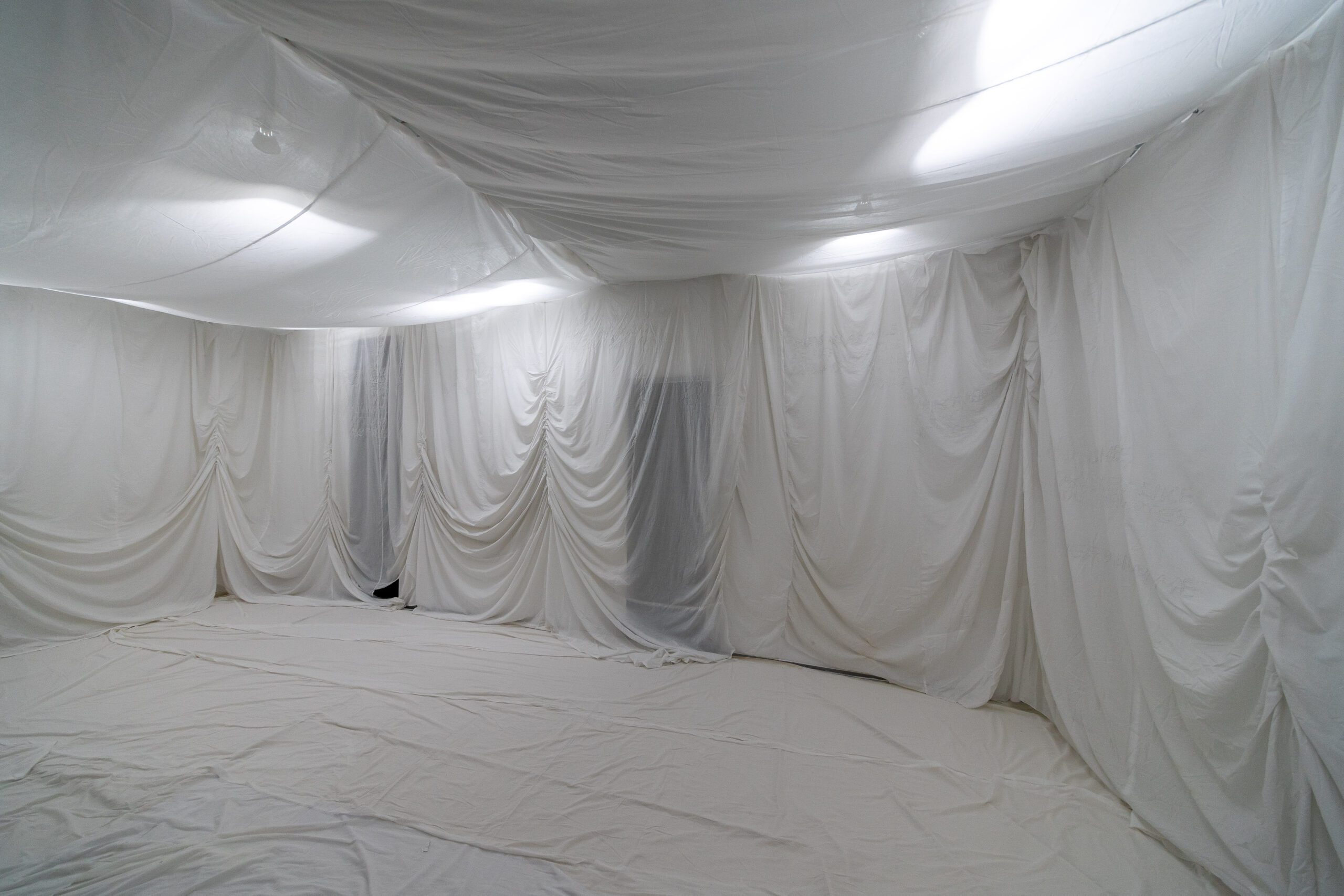
The central motif of the embroidered text is the very common phenomenon of unnecessary apology—apologizing when injustice has been done to us and taking on blame in order not to disturb the other person and to suffer even more. The artist creates a monochrome environment in which it is impossible to escape words, yet which is paradoxically soft in relation to articulated feelings. Symbolically, the color white evokes both an ending and a new beginning, while the present shadows suggest the indelible presence of experience.
Yet already in the title a decision is emphasized: the decision to stop repeating patterns, searching for excuses, and silencing one’s own voice. *More “I’m Sorry”*, in its softness and whiteness, is a subtle yet clear call to resist imposed justifications and painful silences.
Marlen Ban (1999) is a student of New Media at the Department of Animated Film and New Media,
Academy of Fine Arts at the University of Zagreb, and Public Administration studies at the Faculty of Law,
Faculty of the University of Zagreb. Through her artistic practice, she examines social and personal
relationships as well as her own states and fears. She has participated in group and solo exhibitions in
Croatia and abroad.