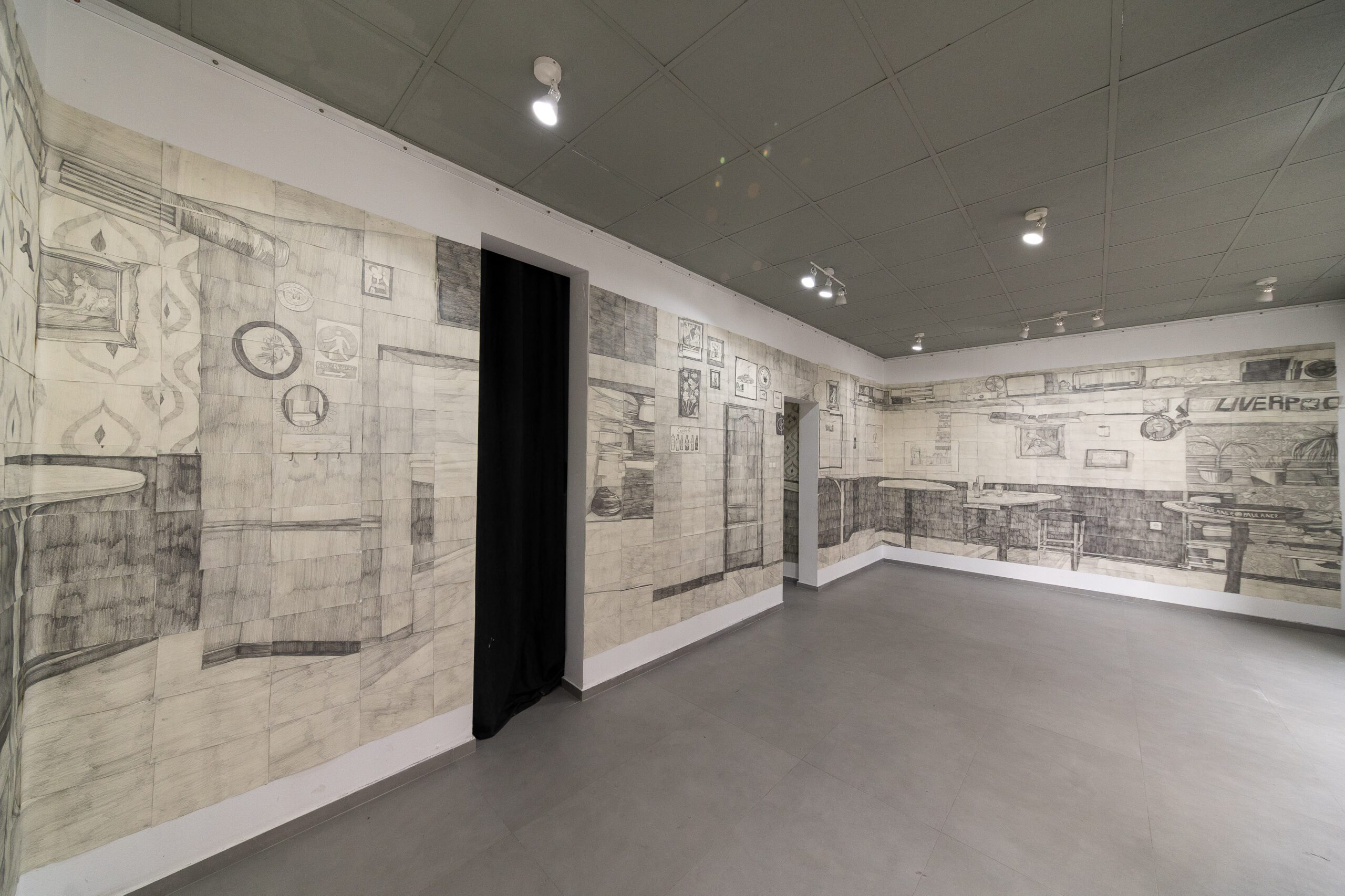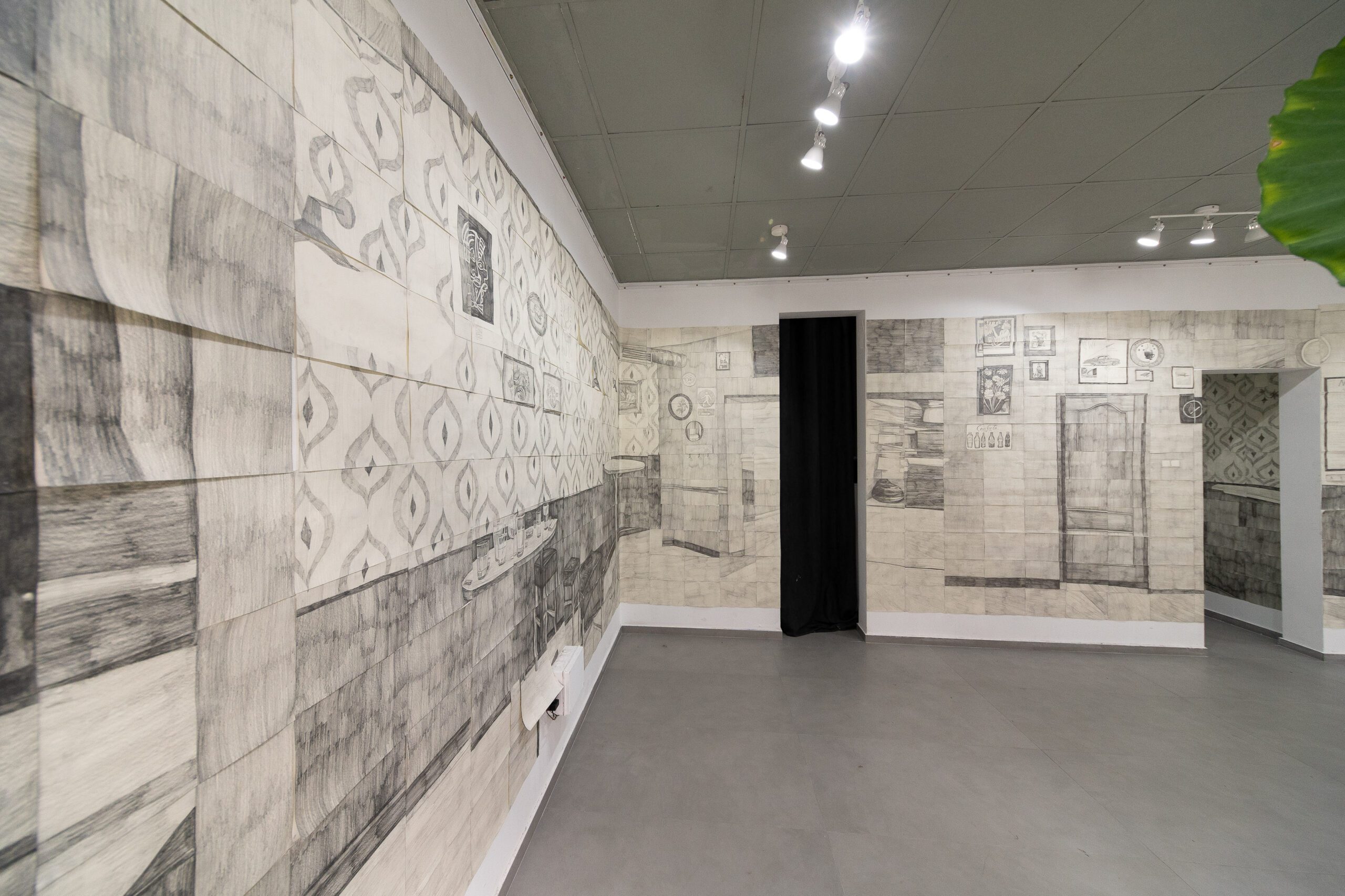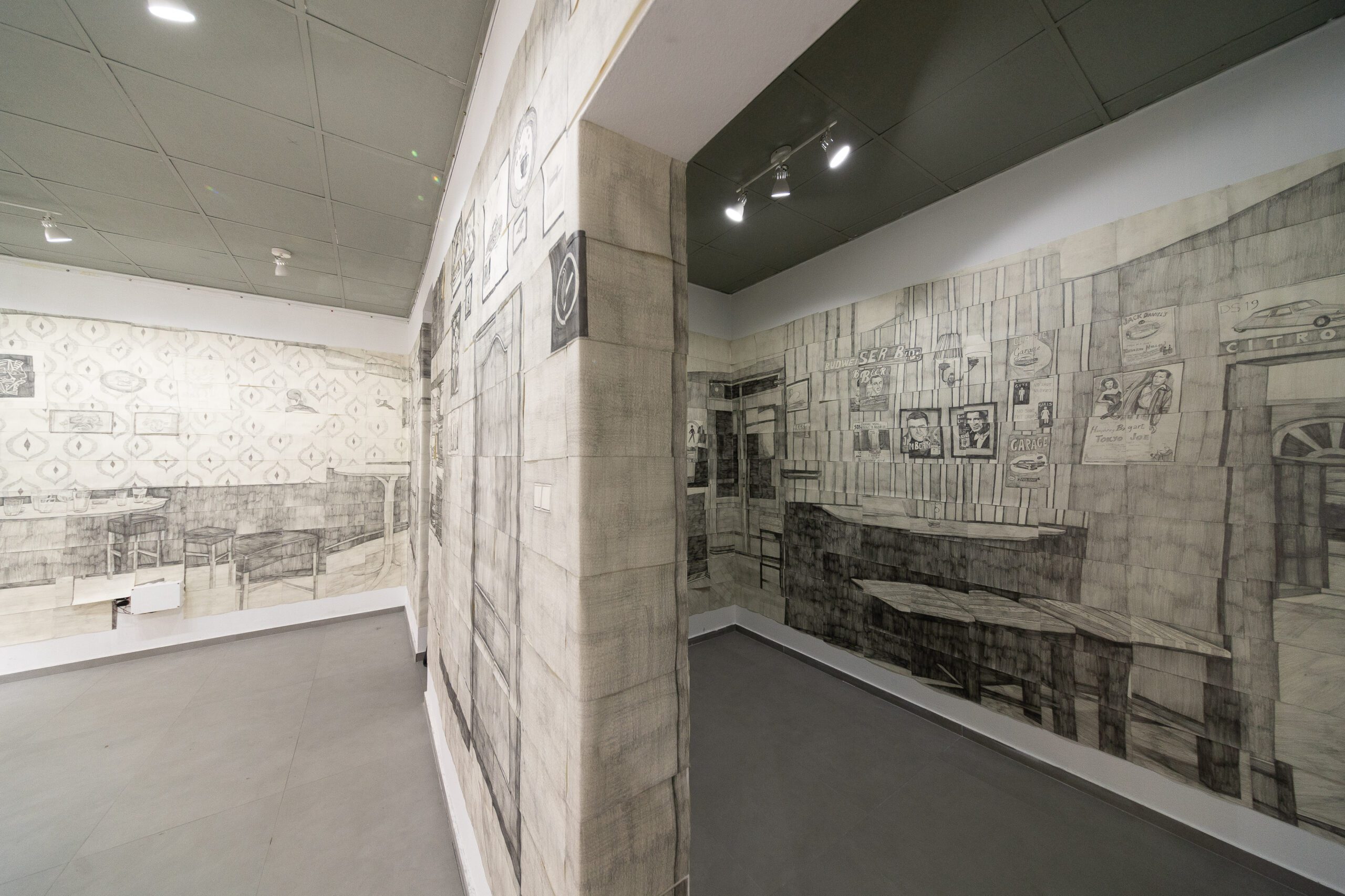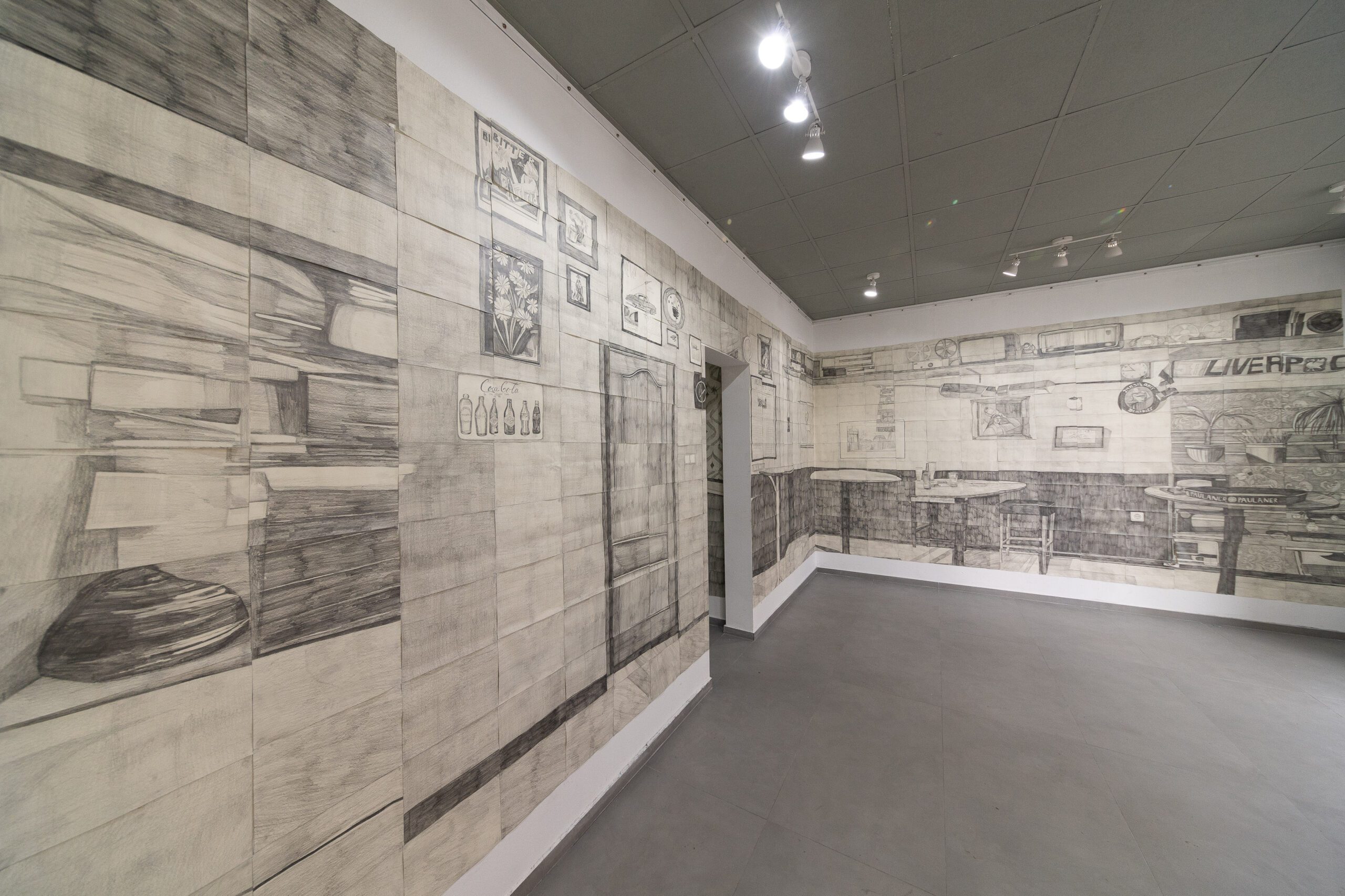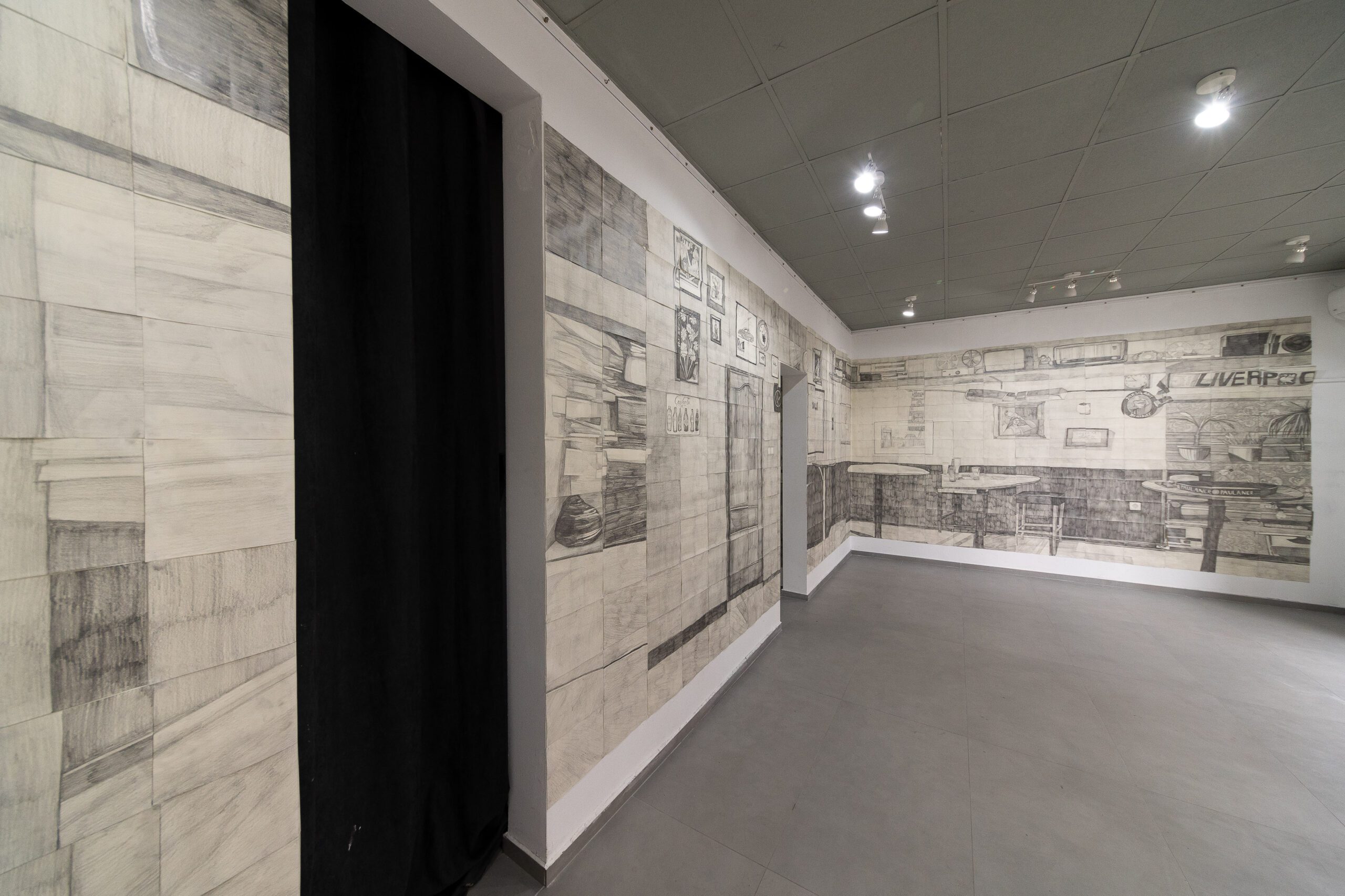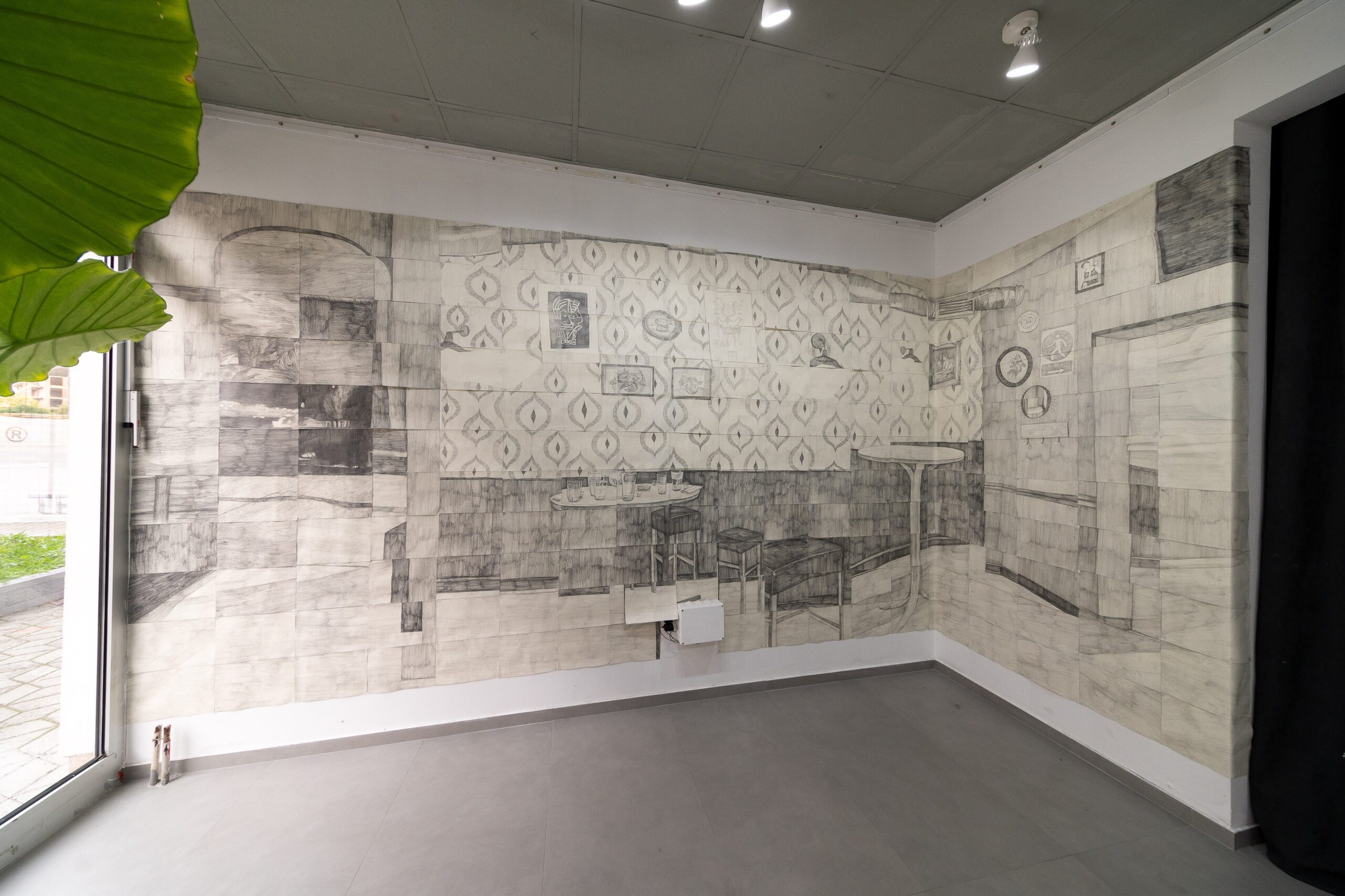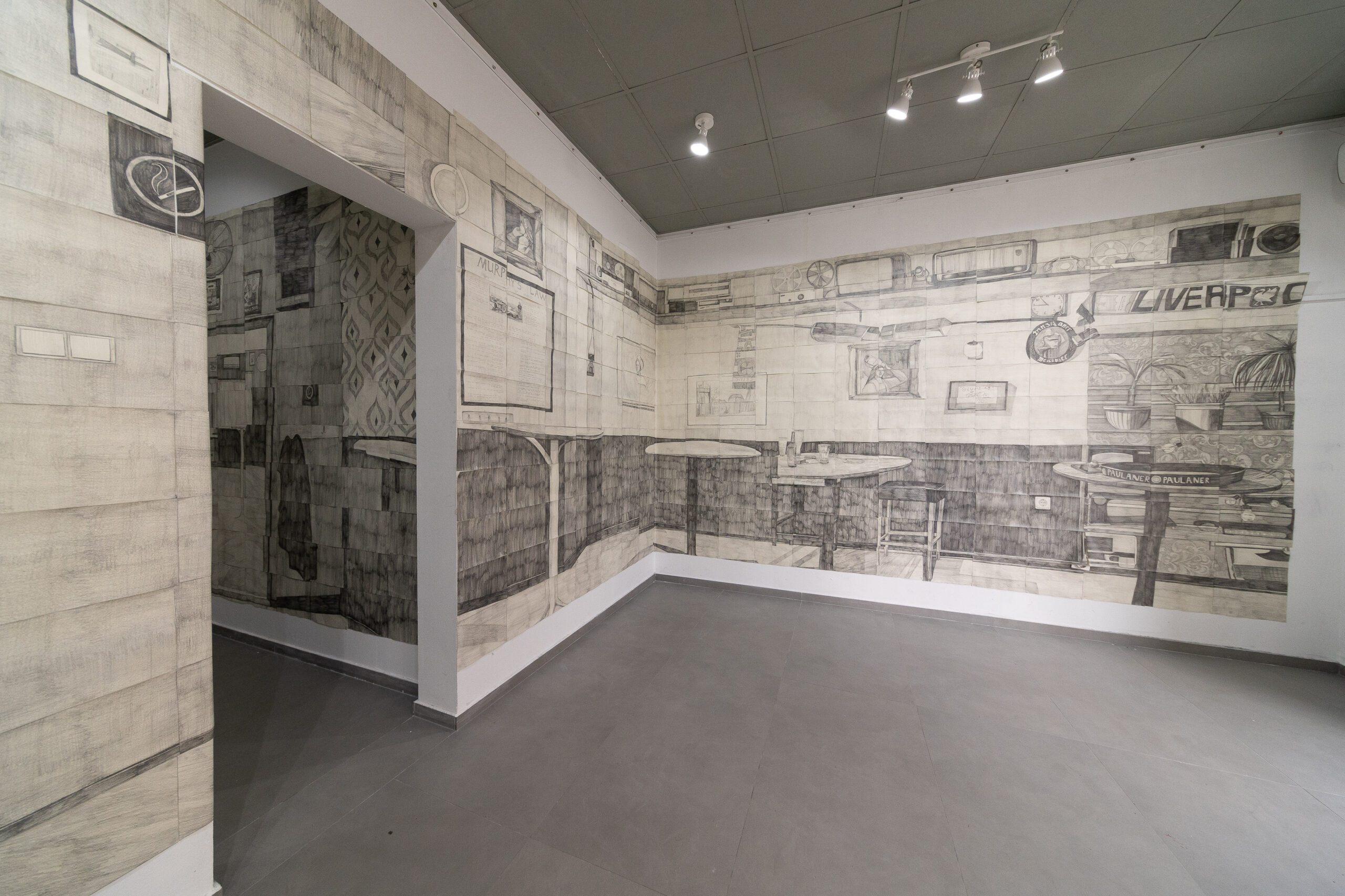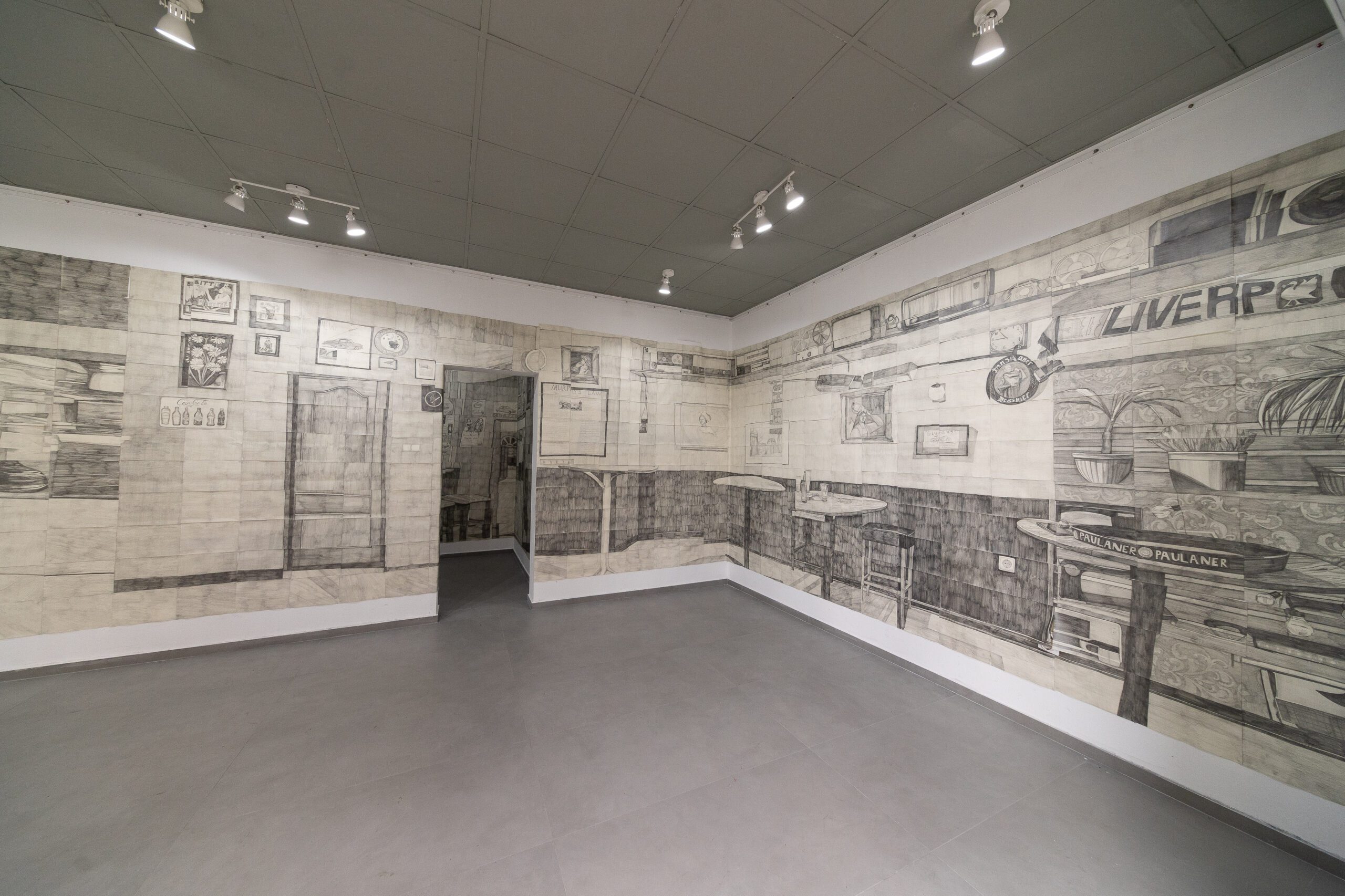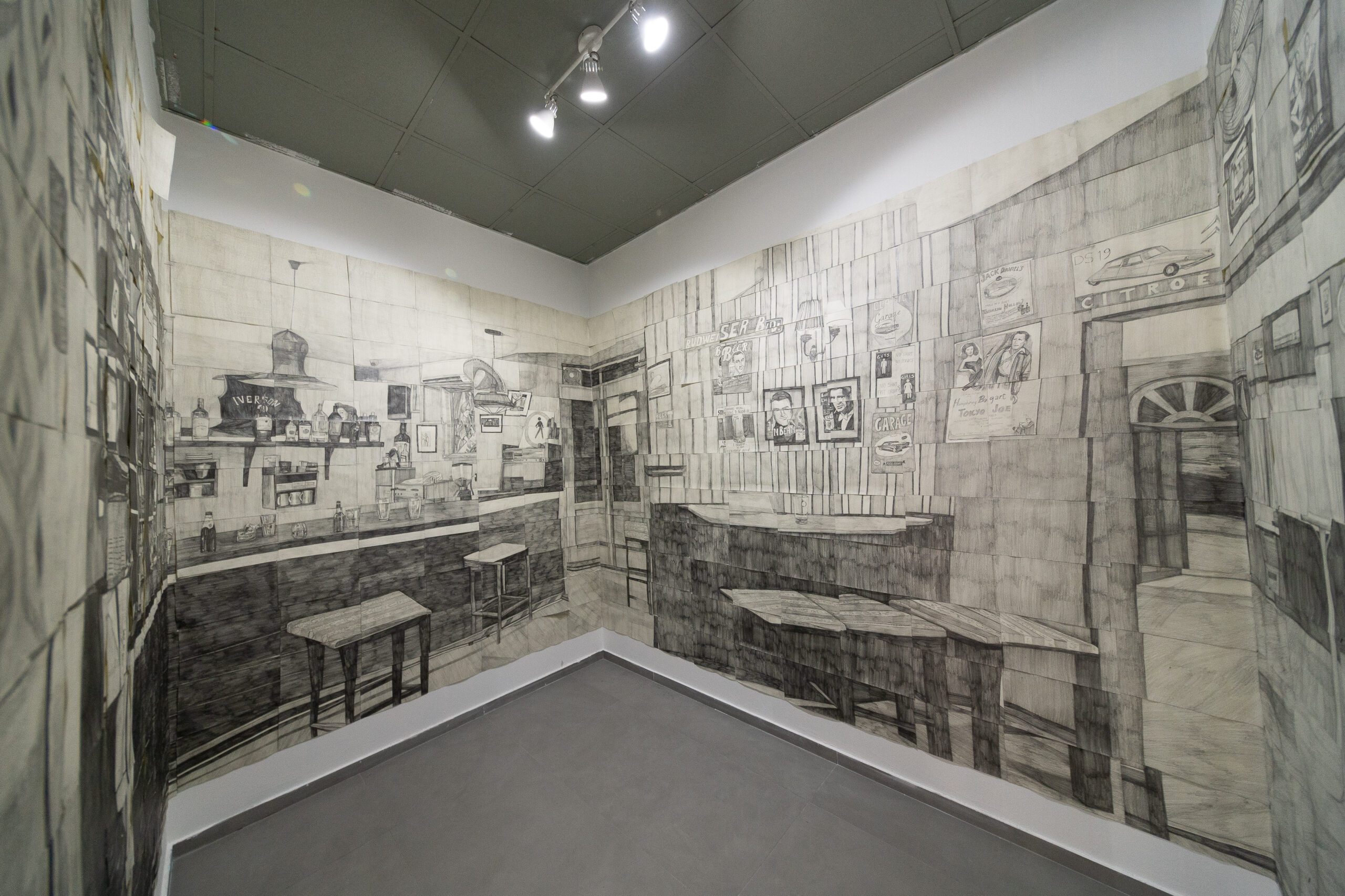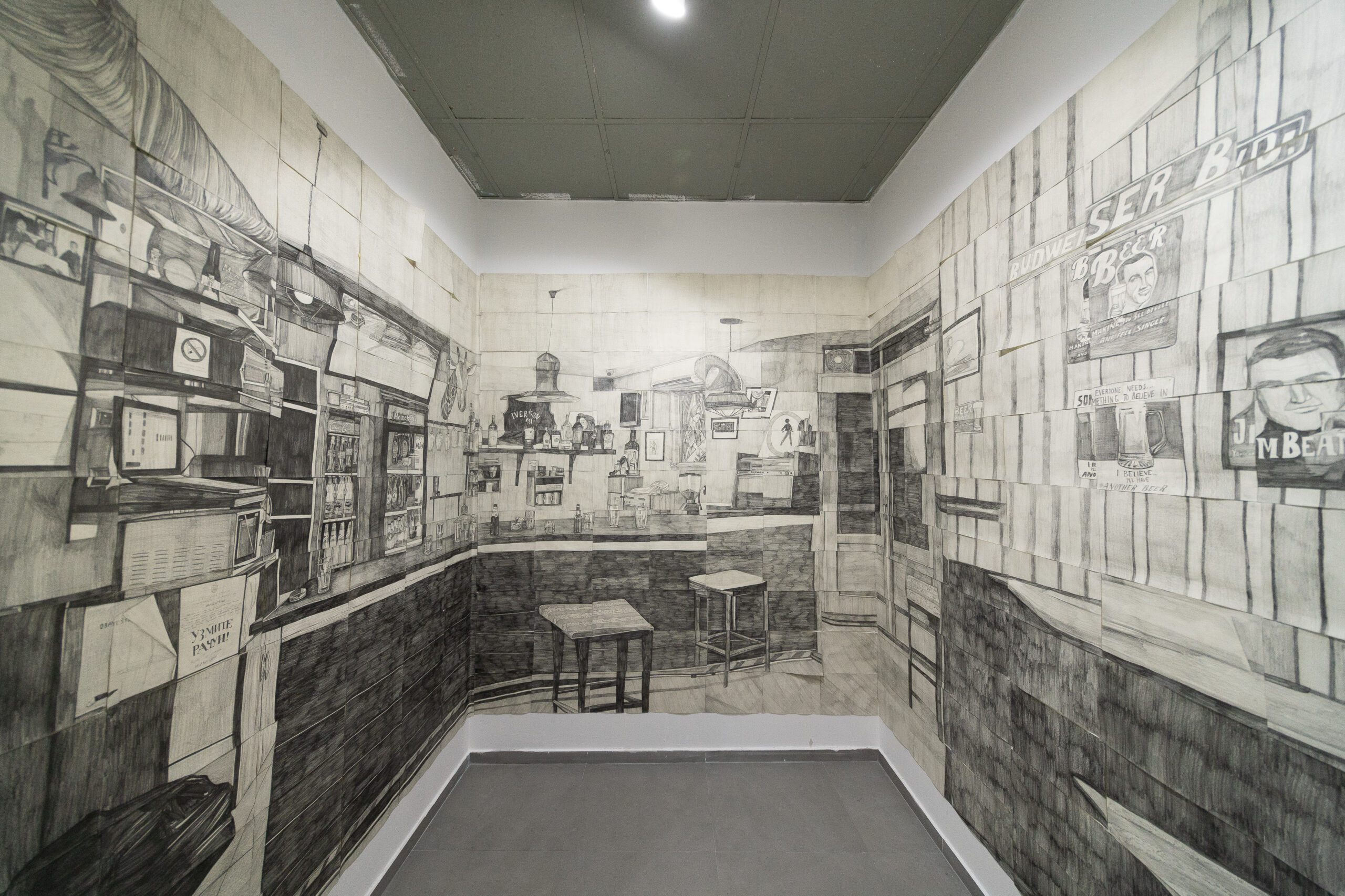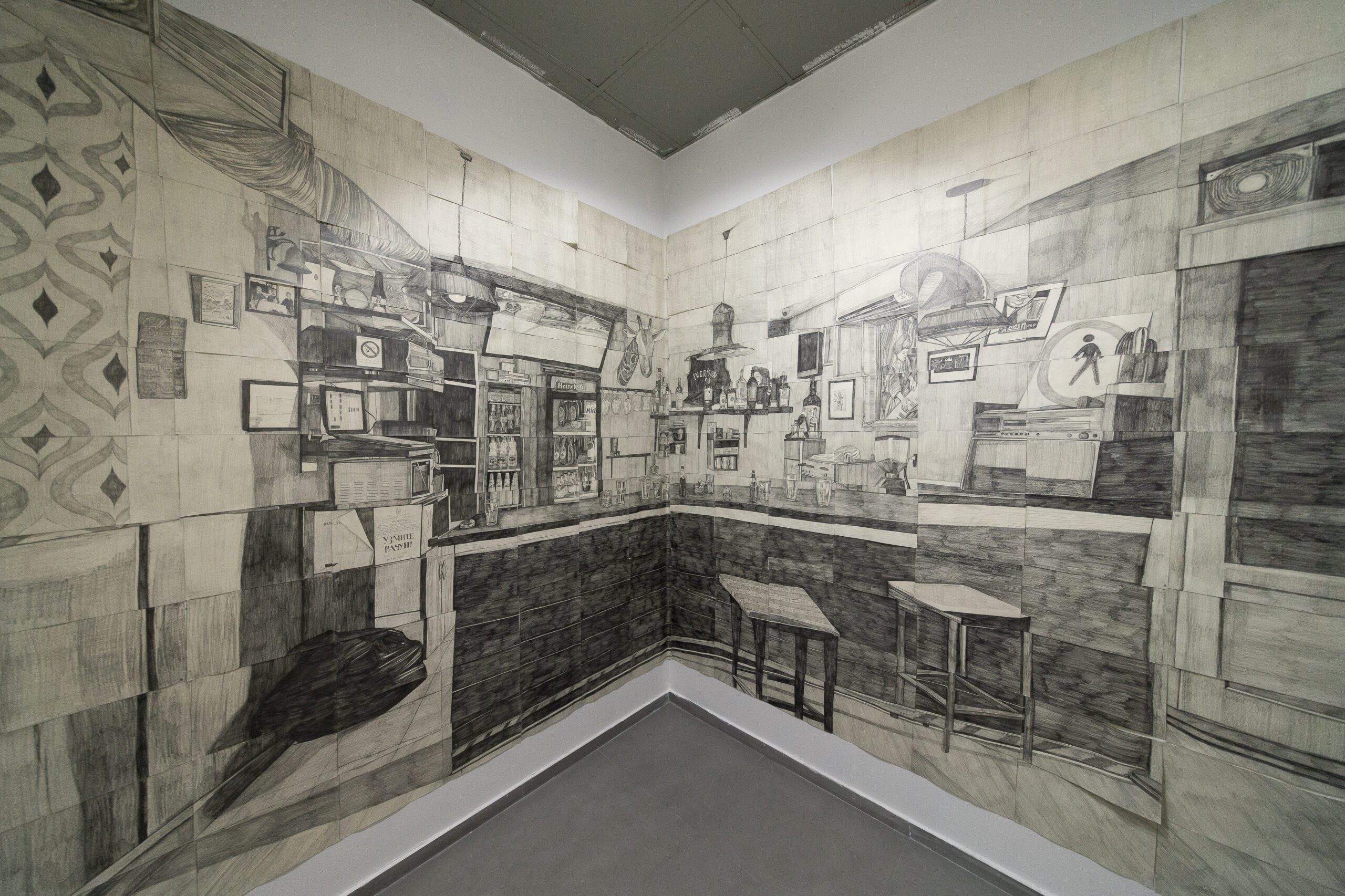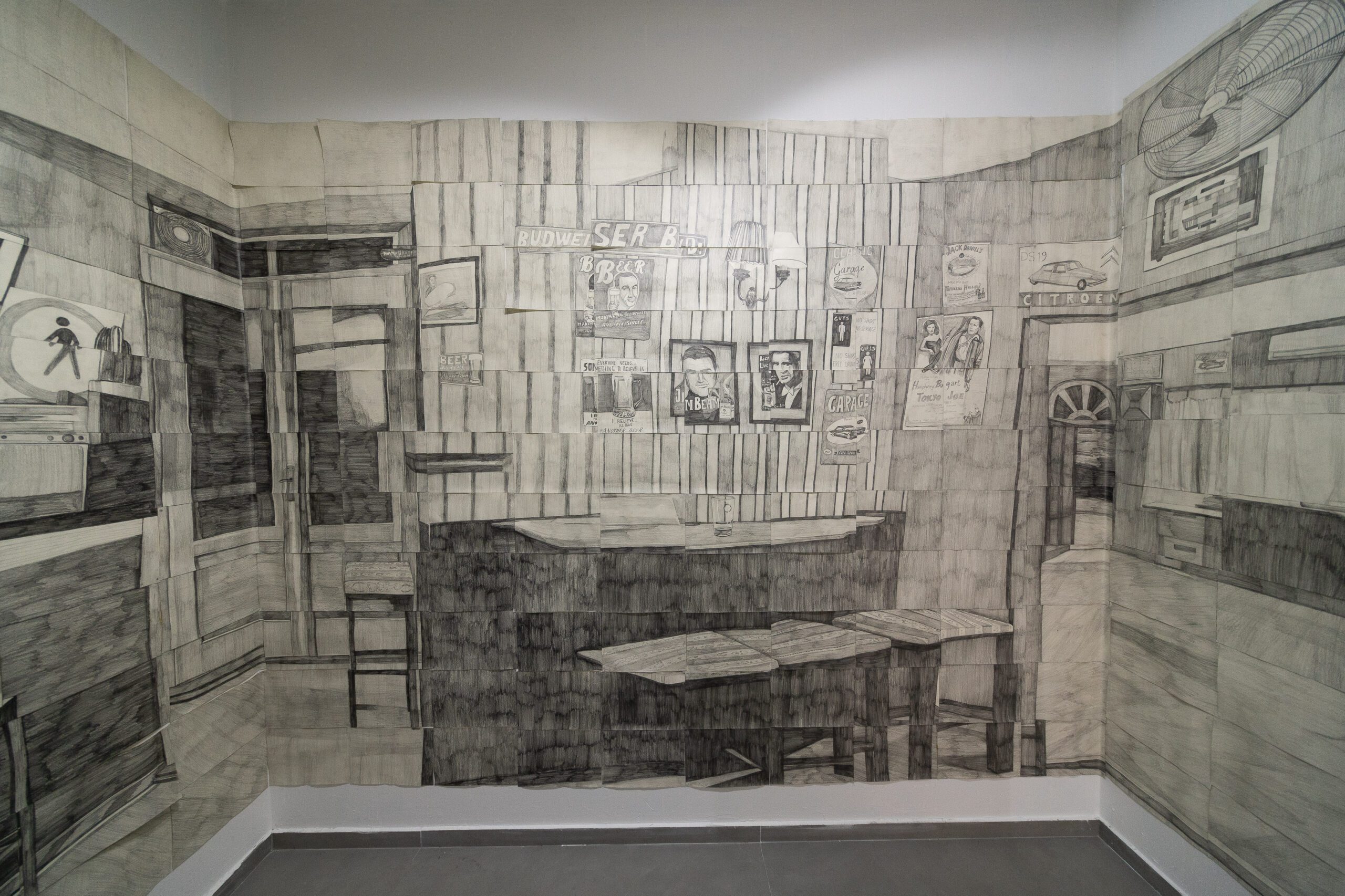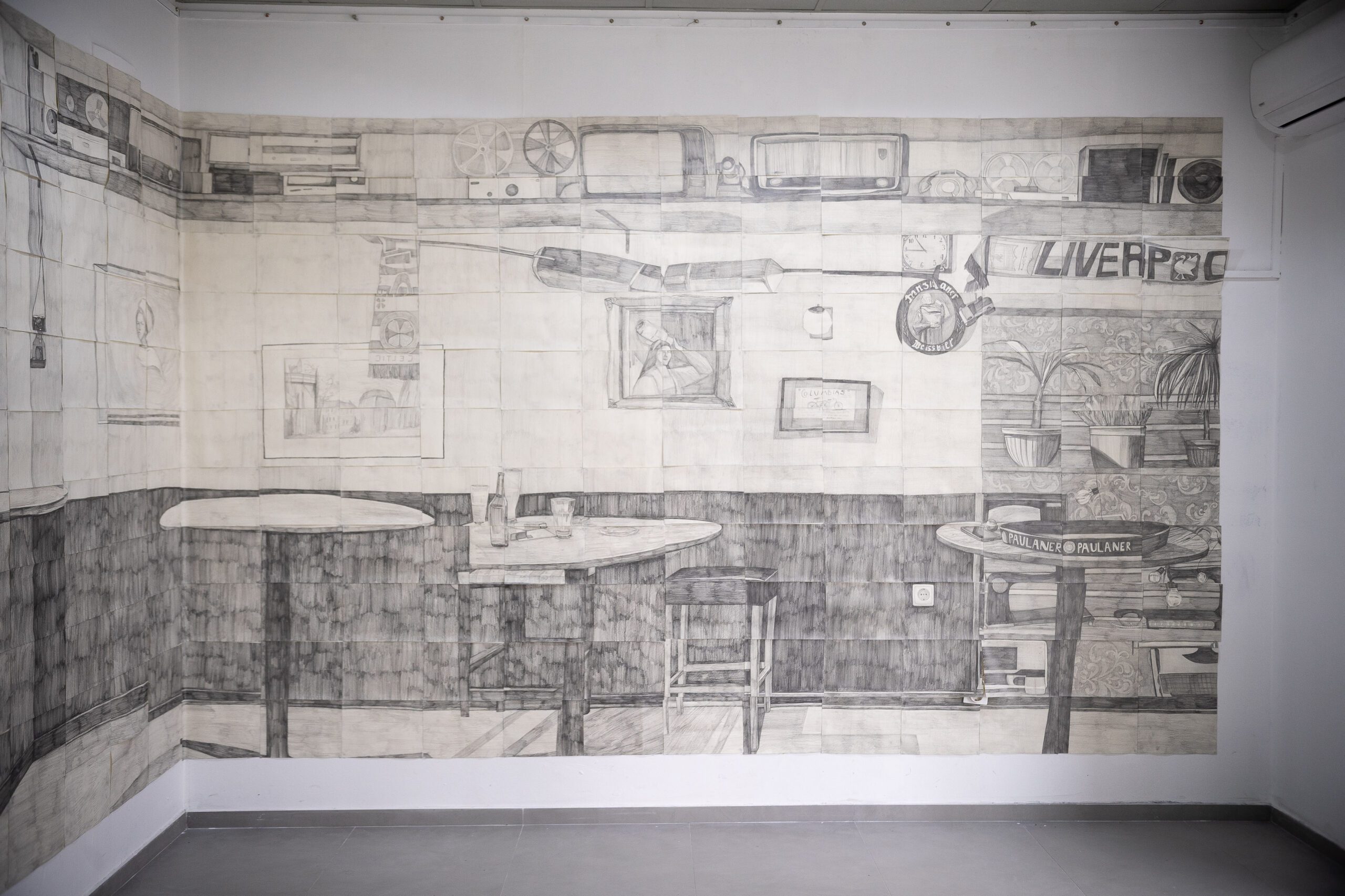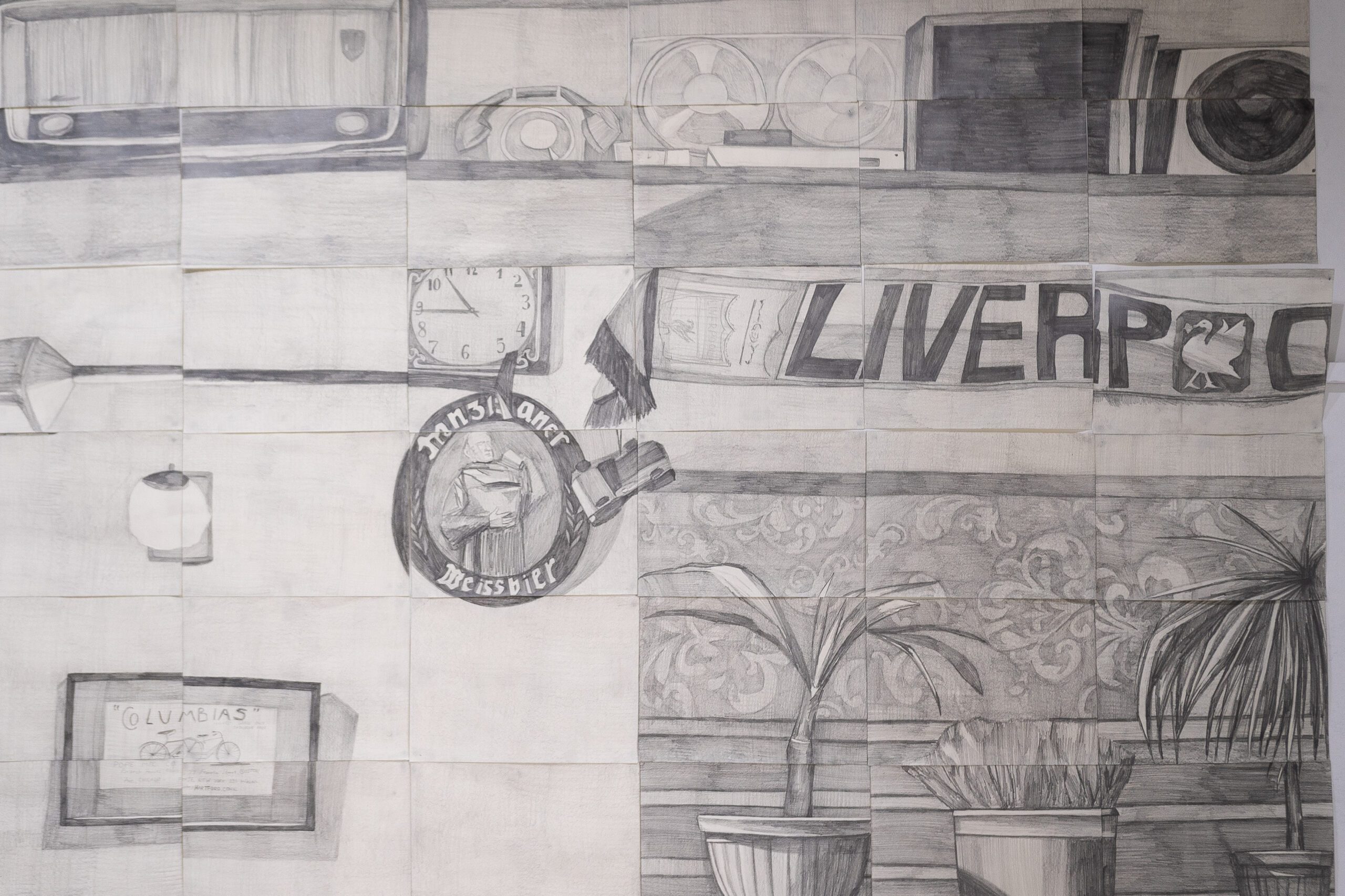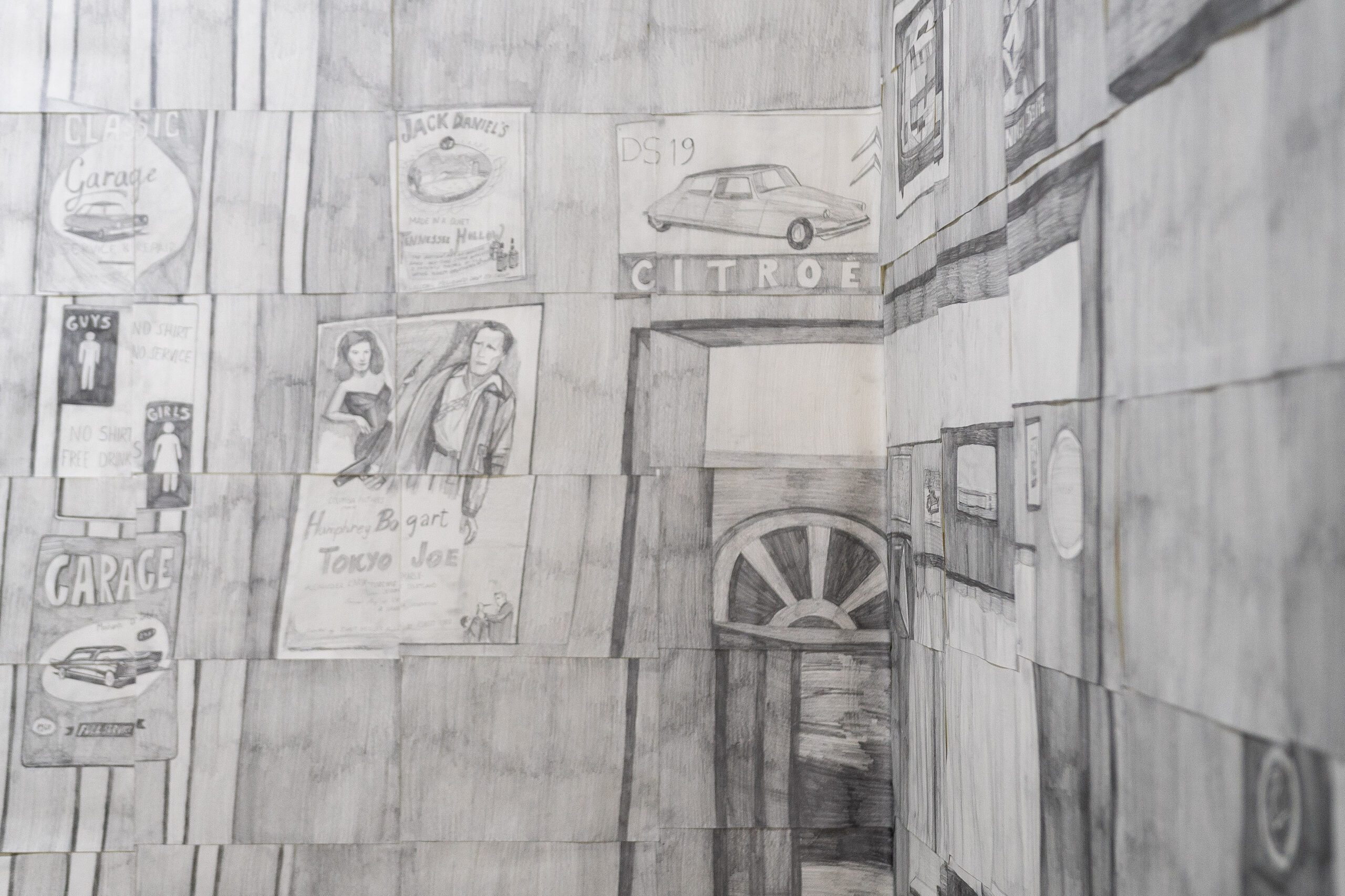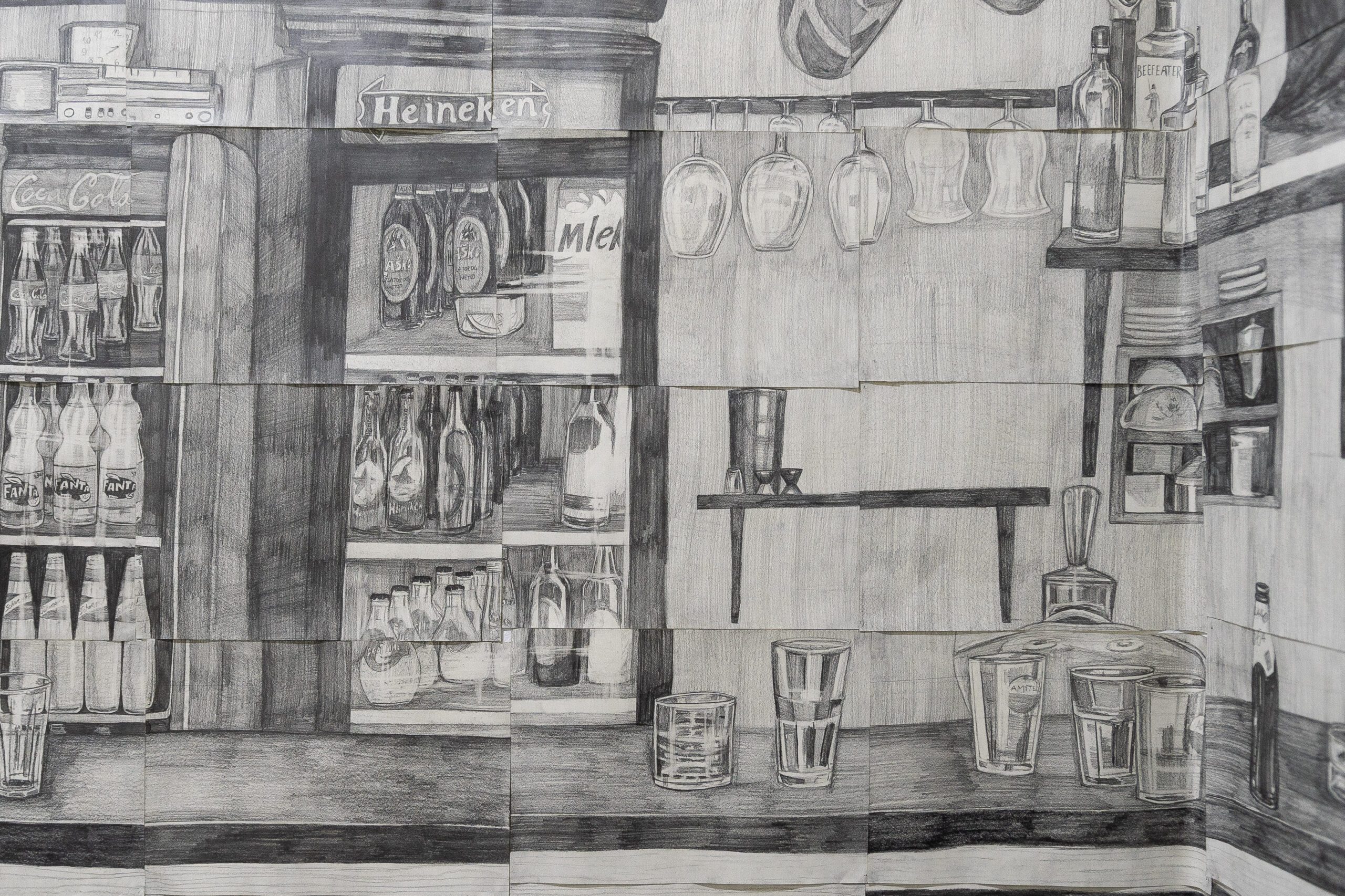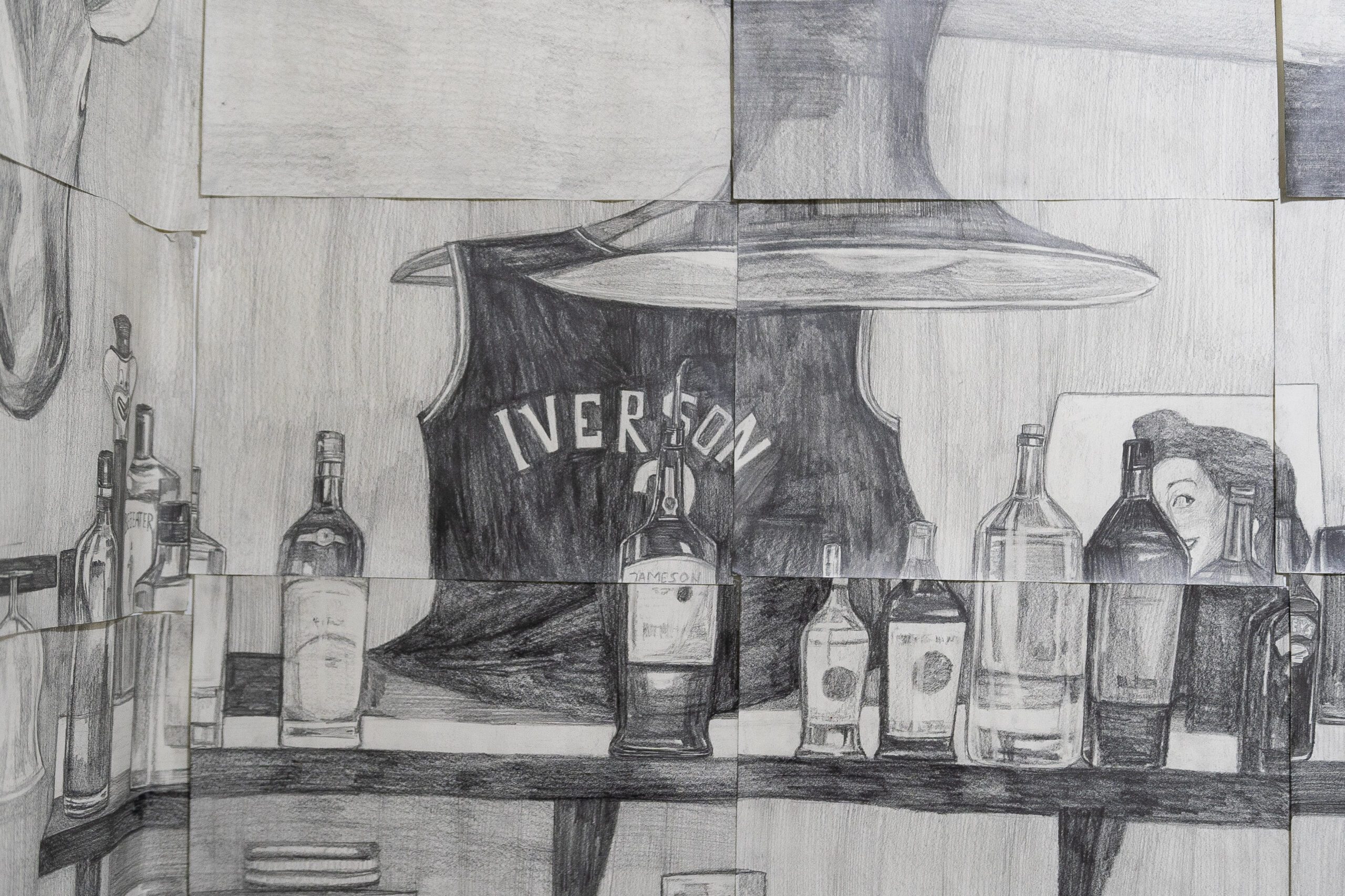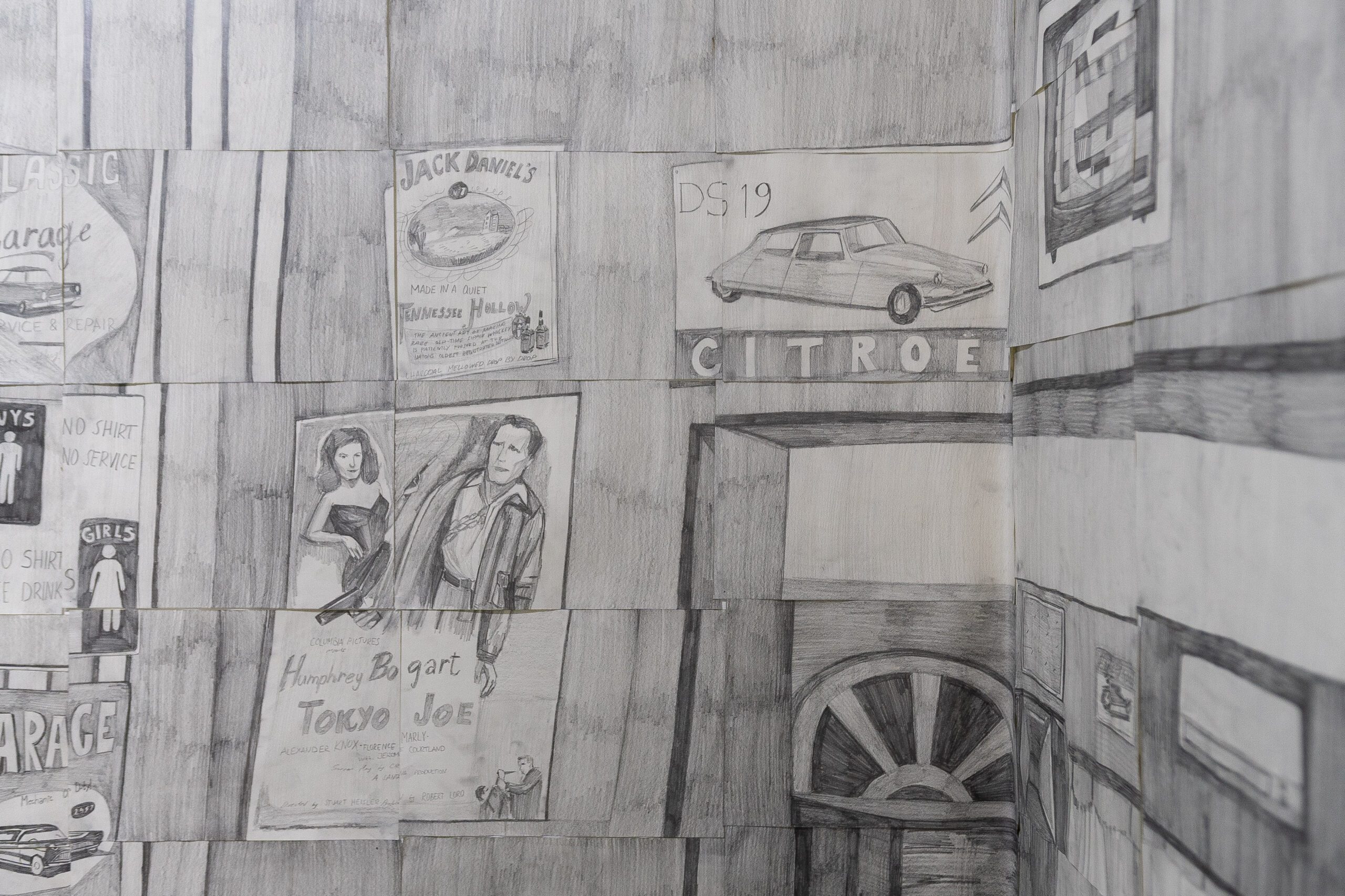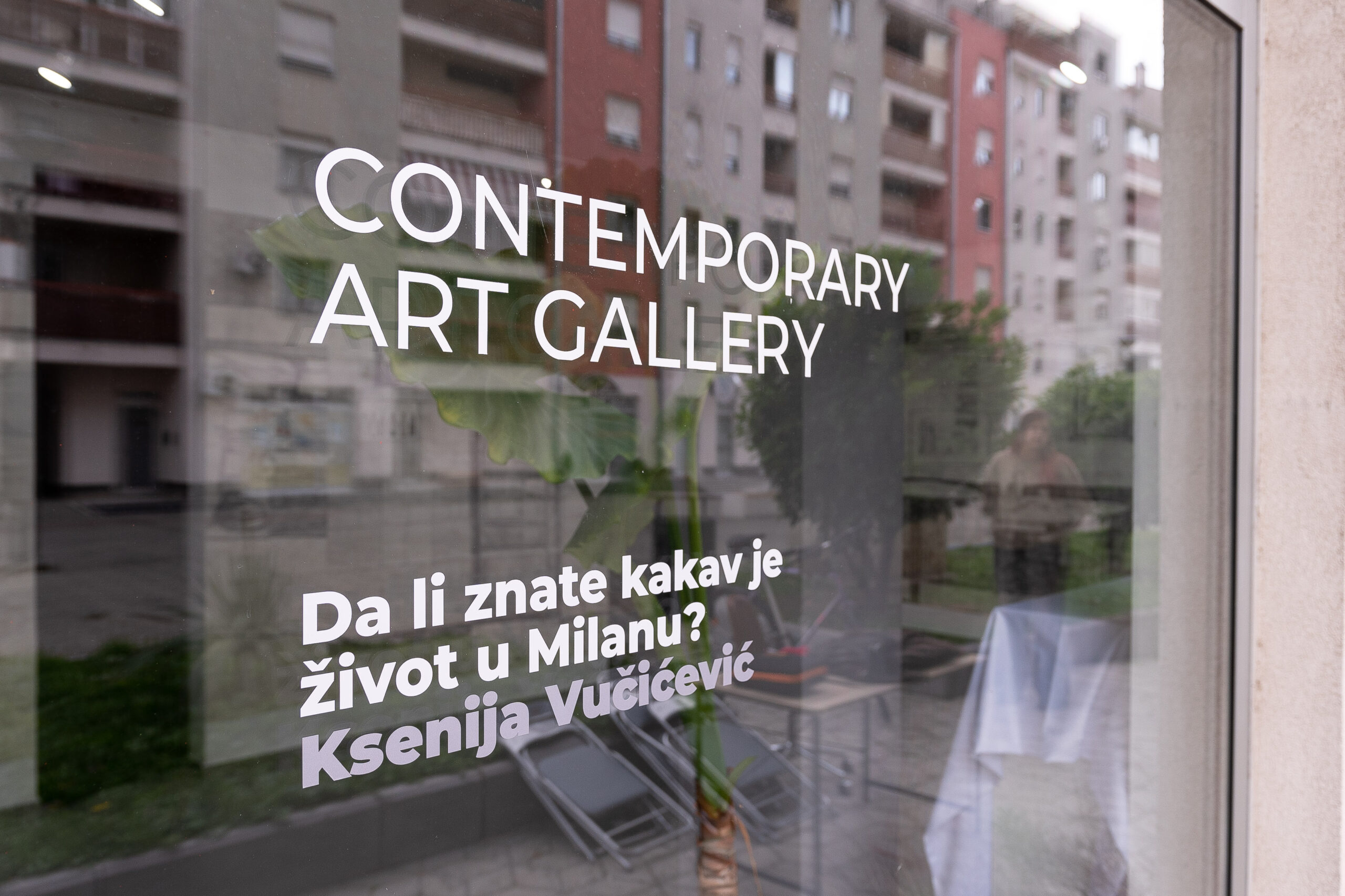
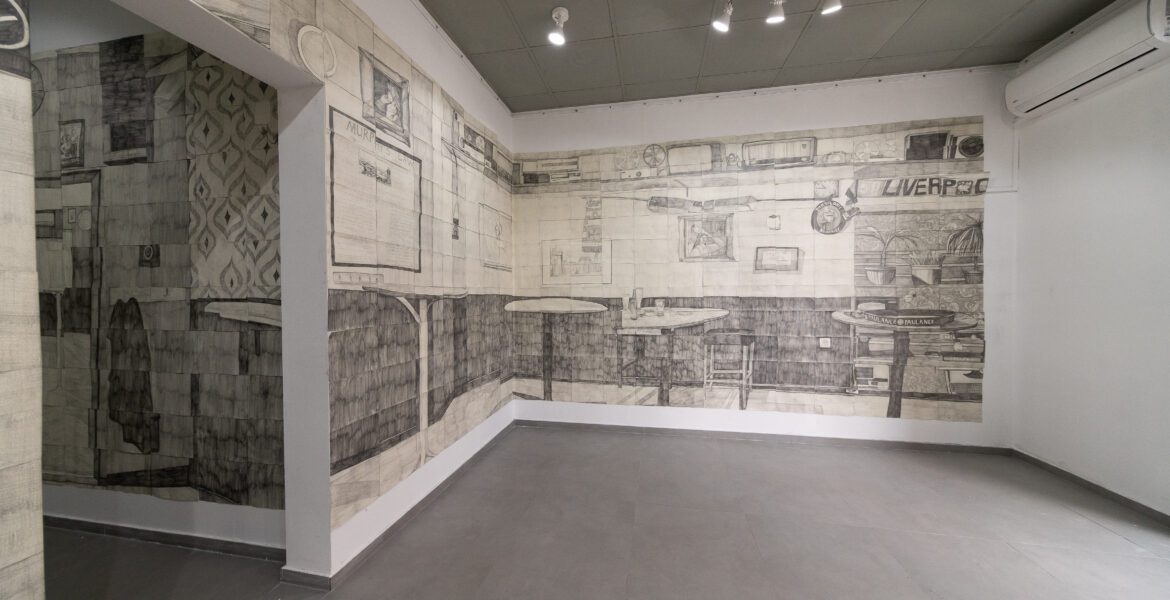
Do you know what life in Milan is like? I don’t either, actually. And in fact, we won’t directly even see where Milan really is. The works of Ksenija Vučićević deal with space, but this is not the space of the city, rather the space of perhaps a lost sense of togetherness. Milan, as a nominal reference, disappears. What remains is the interior, a private topography, a closed introspective scene. Instead of the city being a place of encounters, conflicting narratives, and public spaces, it is reduced to a shadow. A wall, a sheet of paper, a private introspective map. The works produce intimacy as a simulacrum: paper and pencil suggest authenticity, the “sincerity” of gesture, but the result is neither document nor experience, but a fiction of intimate space. What the viewer recognizes as “their own memory” is in fact a pre-coded visual cliché: tunnel, street, café, bar. The works do not reveal new meanings, but return us to a closed circle of already seen places. The artist is therefore not concerned with the city, but with the phantasm of the city—Milan as a private scenographic prop. The artistic procedure, although seemingly critical, actually produces the opposite effect: instead of destabilizing our understanding of urban space, it reduces it, compressing it into a set of private reminiscences, into narcissistic introspection. While contemporary art attempts to speak about the city as a network of social forces, migrations, economic exploitation, and political conflicts, Ksenija’s works withdraw into nostalgic decoration. Instead of urban conflict, we see private melancholy. Instead of a critical landscape—a archive of introspective fragments. What is most intriguing thematically is precisely that absence: the absence of community, the absence of the other, the absence of the political city. Milan becomes an introspective miniature, and the works, although monumental in form, reveal a fundamental emptiness in content. Ksenija’s art does not speak about the space in which we live, but about the impossibility of articulating that space outside of private memory.
Text: Isidora Branković
Ksenija Vučićević (2000, Gornji Milanovac)
After graduating from the Art School in Čačak in 2018, she enrolled in Painting at the Faculty of Fine Arts in the class of Professor Biljana Đurđević. She completed her undergraduate and master’s academic studies in 2022 and 2023, respectively, in the class of Professor Simonida Rajčević. During her studies, she was a scholarship holder of the Ministry of Education, Science and Technological Development, and during her master’s studies she also became a scholarship holder of the Youth Fund.
She is currently enrolled in doctoral artistic studies at the same faculty, under the mentorship of Nemanja Nikolić. She has exhibited in numerous group exhibitions in Serbia and abroad, such as “Masterpieces V” in Belgrade (2023), the international project “Inter/Action 2023” in Belgrade and Banja Luka, and the exhibition “Mind the Gap” (2024) at Šira Gallery in Zagreb.
She has realized four solo exhibitions: “In Search of the Great Maybe” (2024) at the Street Gallery in Belgrade, “The Fog is Rising” (2024) at the Gallery of the Belgrade Youth Center, “de:construct/re:construct” (2025) at the Modern Gallery of the Cultural Center in Gornji Milanovac, and “The General in His Labyrinth” (2025) at the U10 art space in Belgrade.
She is the recipient of an award at the 4th International Biennial of Small Graphic Forms “Between Black and White” in Poland (2021), and a commendation from the expert jury at the 16th International Biennial of Miniature Art in Gornji Milanovac (2022). She participated in the painting colony “Mina Vukomanović Karadžić 2023” in Savinac.